Electro Beat: Your monthly dose of EV news (November 2025)
If you’ve been too busy charging, driving, or daydreaming about your next electric vehicle upgrade to keep up with the latest electric vehicle news, don’t worry - we’ve rounded up the biggest electric headlines so you don’t have to. From important EU decisions, to tiny delivery vans and exciting new battery tech, here’s everything buzzing in the electric vehicle world this month.
Let’s get plugged in…
EU Agrees on Harmonised Charging & Refuelling Measurement Rules
Great news for the electric vehicle (EV) community across Europe! The European Parliament and the Council have come to an agreement on harmonised measurement rules for both electric charging and hydrogen refilling stations throughout the EU. The plan aims to ensure a smoother, more trustworthy experience for consumers and a more efficient market for manufacturers.
At its core, this amendment to the Measuring Instruments Directive is all about trust and transparency. For electric vehicle and hydrogen vehicle drivers, the new rules guarantee accurate and reliable measurements at the pump or charging point, making sure drivers get precise and transparent billing - empowering drivers by providing clarity and confidence every time they charge or refuel.
The benefits actually extend beyond the individual driver. Manufacturers will also benefit, unlocking cost savings and much faster infrastructure deployment, thanks to these unified, EU-wide requirements. This streamlined approach will naturally accelerate the rollout of clean mobility options, directly supporting the EU’s ambitious climate and energy goals.
The initiative also has a wider positive impact on the energy landscape. By introducing modern metering rules, it will promote the use of smart electricity and gas meters, which in turn increase the integration of renewable energy and support efficient energy management. These harmonised rules are a vital component of the EU’s commitment to a green and digital transition, strengthening the resilience of the evolving energy landscape and empowering citizens and businesses to contribute to a sustainable future!
Once formally adopted, these promising new regulations are set to apply 2.5 years after their entry into force, paving the way for a stronger, more confident Single Market for clean energy.
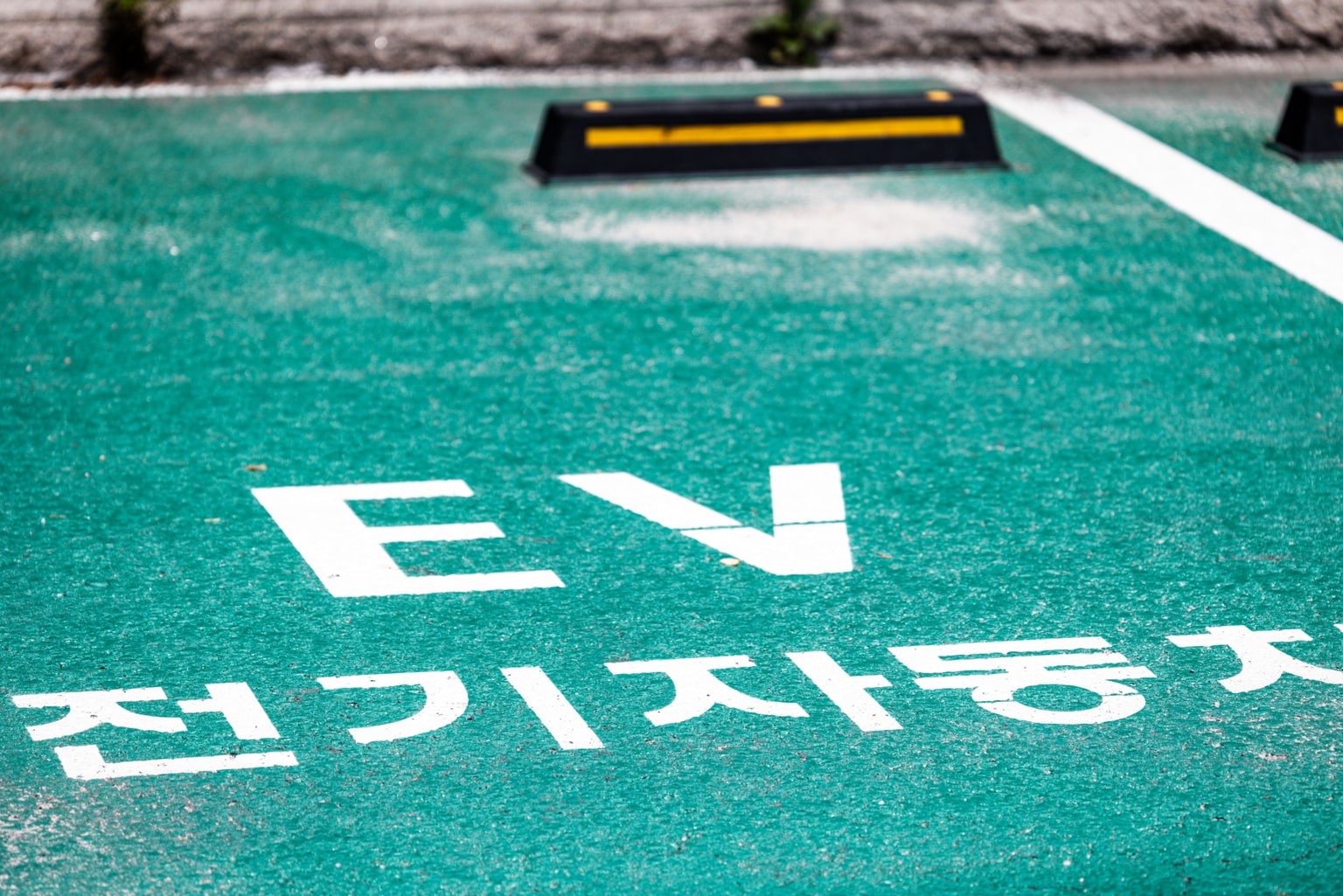
Charging Ahead: South Korea supercharges the global electric vehicle market
South Korea, home to innovative brands like Hyundai and Kia, is throwing a huge amount of support at its auto industry. This isn't just about local impact; it's about accelerating the development of the next generation of electric vehicles we'll all be driving.
The big wins?
More affordable electric vehicles faster
The South Korean government is boosting its electric vehicle purchase subsidies by a whopping 20% for 2026. Plus, they are scrapping consumption and acquisition taxes for all-electric, hybrid, and hydrogen vehicles. Why is this exciting?
Price parity: Increased subsidies put pressure on manufacturers to keep prices down. This means more high-tech electric vehicles become financially comparable to their petrol or diesel counterparts much faster.
New models: This push will encourage the release of smaller, more affordable electric vehicles globally, like the highly anticipated Kia EV3, which is great for new-to-electric fleets and consumers alike!
Faster charging and longer range are coming
The government is dedicating over $10 billion in financing to the auto sector with a clear tech-focused mission. They want automakers to hit some serious targets by 2030:
Five-minute fast charging: Imagine adding hundreds of miles of range in the time it takes to grab a coffee. That's the goal!
1,500 km (or 932 miles) driving range: Say goodbye to range anxiety forever. This is the push that makes cross-continent driving in an electric vehicle completely effortless.
A quick note on trade: US and South Korea also agreed to lower tariffs on vehicles. This might sound like trade jargon, but what it means is better market stability for key manufacturers. Stable manufacturers = reliable supply of brilliant new electric vehicles for fleets and consumers.
Royal Mail’s ‘little helpers’ for last-mile deliveries in the UK
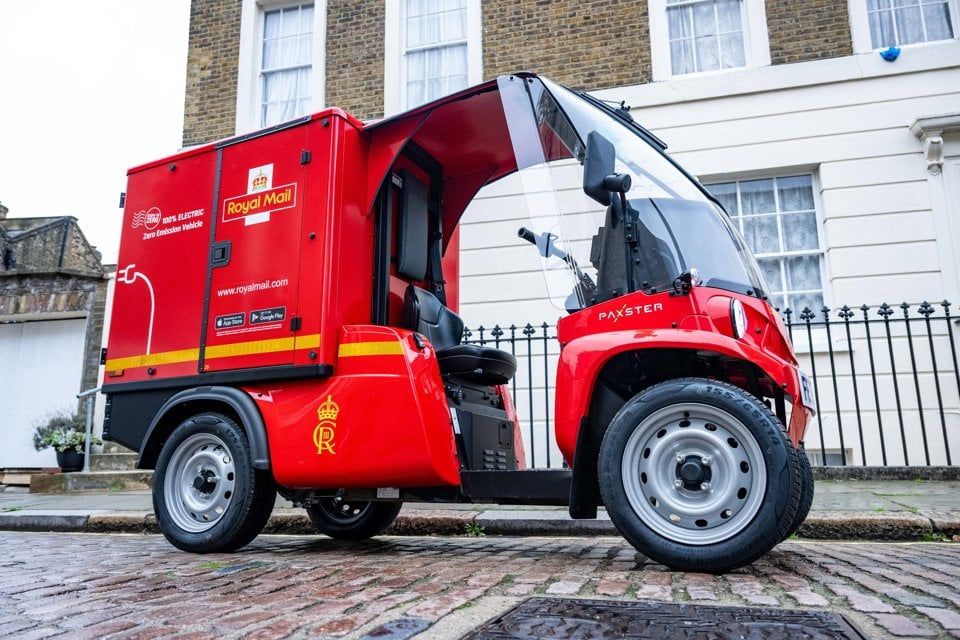
British presents will be driving home for Christmas in Royal Mail’s newest electric fleet. Set to launch 104 micro-electric vehicles across select cities in the UK, Royal Mail are hoping to increase festive delivery times - without the extra carbon emissions.
Royal Mail currently holds the biggest electric fleet in the UK - revealing their 7000th vehicle earlier this year. Although only a fraction of their entire fleet, it's a huge step towards their Net Zero goal for 2040.
Other than being adorable and eco-friendly, what’s so fun about this mirco-fleet?
As the saying goes, good things come in small packages! The smaller design of these mirco-cars allows for easy travel in urban areas.
Super easy charging - the Paxtster and Neomar D01 models can be charged with a simple 3 pin socket. For easy on the go charging, it’s great for short range deliveries.
The smaller size vehicles allow for more depots to facilitate deliveries without factoring the usual larger size of fleets. More accessibility = more presents!
Christmas is filled with joy, excitement, and presents - but that also means an increase in the global carbon footprint. These festive cargo vans are a great step towards a greener future.
Keep an eye out for the mini fleet in these UK cities:
London
Bristol
Newcastle-under-Lyme
Solihul
Brighton
Isles of Scilly
Electric vehicle battery & charging: What’s new
Smarter cooling = Faster charging with hydrohertz
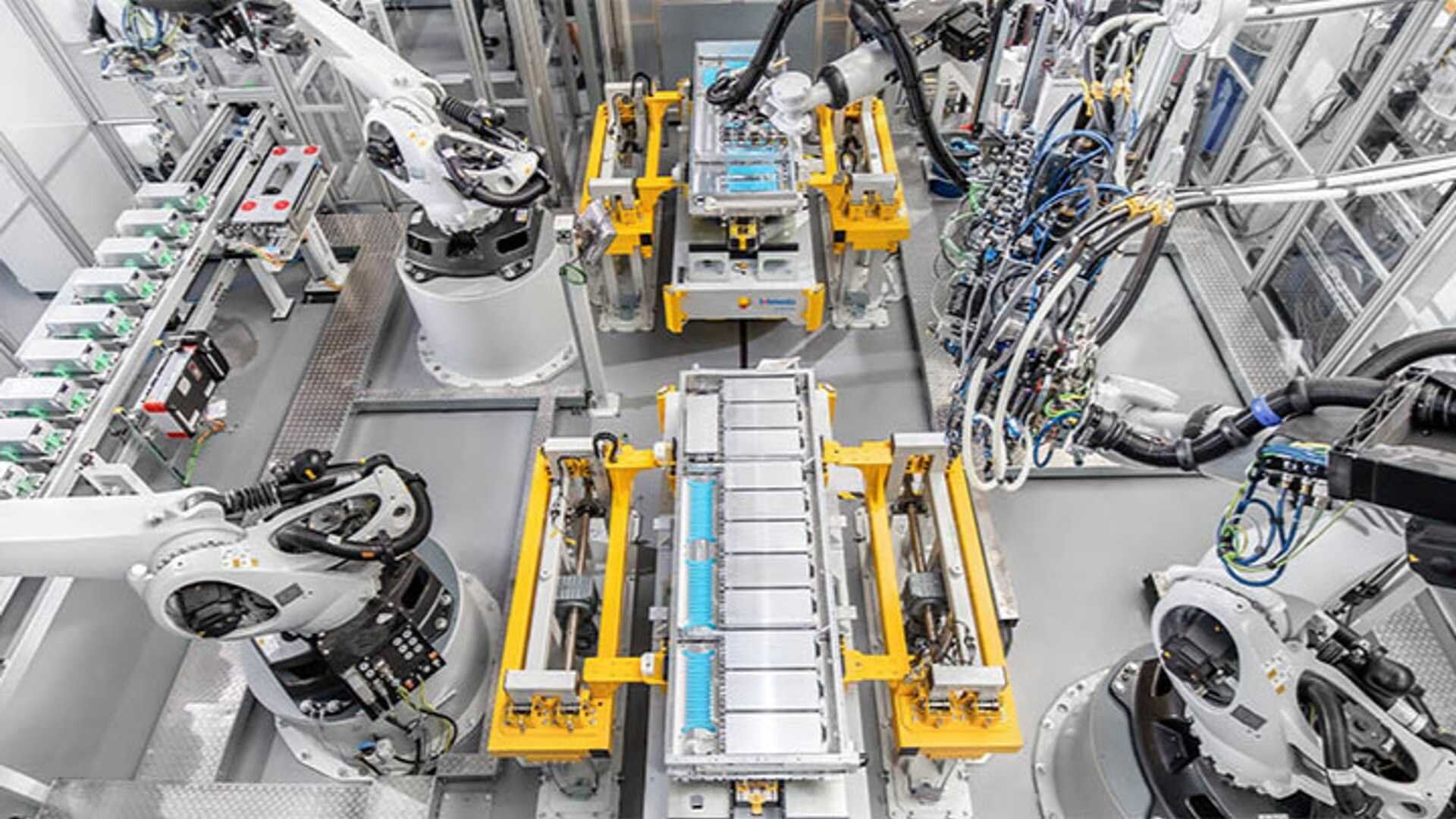
Dectravalve - a new battery-cooling system from Hydrohertz - regulates temperature at a per-module level inside electric vehicle battery packs. In tests with a 100 kWh battery: the hottest cell stayed below 44.5 °C (vs ~56 °C typical) and temperature spread across the pack was minimal.
Why it matters
On a 350 kW fast charger, 10 - 80% charging time could shrink from ~30 min to ~10 min.
Thermal management matters: Batteries heat up under fast charging. If parts of the pack get too hot, charging slows automatically to protect the cells. Solutions like Dectravalve help avoid that slowdown by keeping temperatures in check, enabling true high-speed charging with less wear on the battery.
Boosting the backbone: EU funds new battery-cell projects
Beyond battery packs themselves, thermal strain can affect motors, electronics and other electric vehicle components - especially under heavy fast-charging loads. Shell has introduced a fluid-based cooling system designed to manage the entire electric vehicle powertrain, aiming to support high-speed charging while improving reliability and longevity.
This kind of “holistic” thermal management could help standardise fast-charging performance across different electric vehicle makes and models - useful in a pan-European context where climate and vehicle types vary.
What It means for drivers and businesses
electric vehicle charging could soon feel almost as fast and convenient as petrol - removing one of the major barriers to electric vehicle adoption.
Better batteries + smarter thermal management = longer range, safer, more durable electric vehicles - good news for owners and second-hand value.
For companies in the electric vehicle space , these trends signal growing demand for high-speed charging infrastructure, and stronger business cases for expanding charges across Europe.
Government funding in the UK: what’s new?
‘Off-grid’ electric vehicle chargers
The UK is set to provide £10 million for ‘off-grid’ charger development! This is great news for rural and hard-to-reach spots across the UK, which are currently the main areas in need of public charging stations.
Development of charging stations in areas outside of the electricity grid is currently a barrier which charge point operators (CPOs) bump up against, however, with the additional funding, CPOs will be able to overcome these constraints and build more rural charging stations.
Private investors can pitch their innovative ideas, for chargers that run on things such as solar and battery storage, and will receive a share of the funds to put towards new charging solutions. Each project pitched must be able to ultra-rapid DC charge at least 12 electric vehicles at once to qualify for funding. This means towns and villages outside of major cities, without major motorway charging hubs nearby, should see a surge of local, rapid public charging stations!
Why is this exciting?
More charging stations means more accessibility for everyone! People in rural areas may have been choosing ICE (internal combustion engine) vehicles due to lack of local charging stations, but with more chargers available, making electric vehicle ownership even more simplistic, more people may want to make the electric transition.
Innovate UK’s director of mobility, Claire Spooner said:
“The programme’s outcomes will build capability and bring together energy and transport stakeholders to improve electric vehicle charging for longer journeys.”
Accessible electric vehicle charging
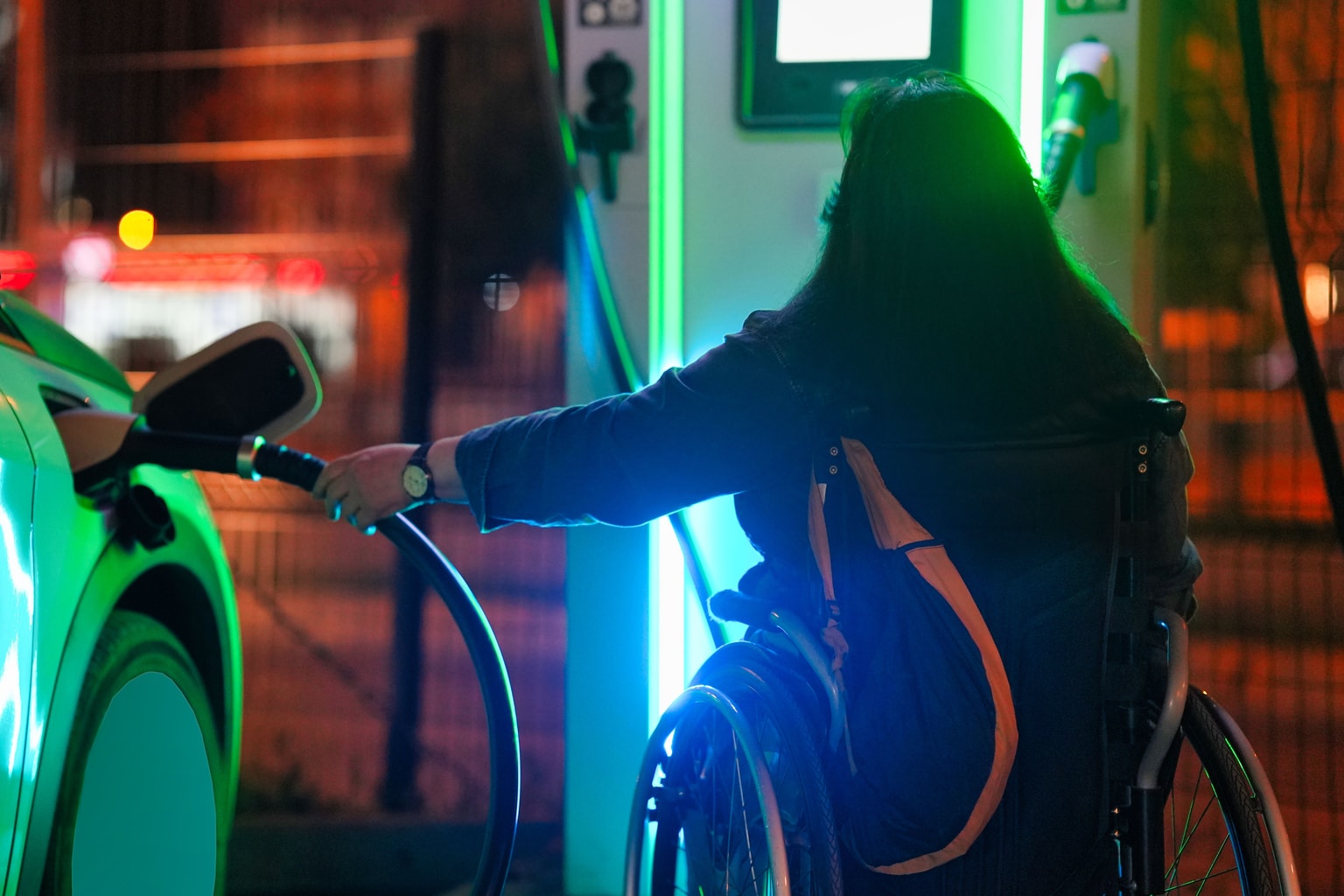
Additionally, the UK government is moving to make accessible electric vehicle charging a legal requirement! As the Planning and Infrastructure Bill reaches its final stage, the government is lining up new powers to make sure future charge points work for everyone, including disabled drivers
From narrow bays, to awkwardly placed payment terminals, sometimes electric vehicle chargers aren’t optimised for user experience, however, this new law will enable ministers to mandate accessibility standards across all new public electric vehicle charging points!
So, what kind of accessibility requirements are included?
Minimum parking bay sizes suitable for wheelchair users
Placement of bollards
Positioning and orientation of payment terminals
CEO of EVA England, Vicky Edmonds said:
“This is huge progress for all drivers, especially those with disabilities. For the first time, we have the Government’s assurance that accessibility won’t be left to chance. These enabling powers will also incentivise greater action by industry to roll out accessible charging.”
Geely grows its Renault partnership with a move to Brazil
Geely has been jumping into the Brazil market. Officially launching in July of this year, the Geely EX5 marked the brand’s first electric vehicle in Brazil. This model has been designed for global roll-out, shaking up the brand’s electric vehicle strategy. But there’s more…
Moving to Brazil? The Geely group has agreed a 26.4% stake in Renault do Brasil! As a minority stakeholder, they will have access to Renault’s industrial complex in São José dos Pinhais. Geely and Renault have a long standing relationship, but this new step in their partnership looks to help boost Brazil’s electric car market. With Renault’s solid standing in the Brazil automotive market, they are looking to increase production - and competition.
“combining our strengths will make us more competitive, more innovative, and more responsive in a fast-evolving automotive market.”
Geely gets exclusive access to build their technology in South America, and Renault gets top quality technology to roll out in the Brazilian market. It’s a win-win situation for both players, and a huge step forward for the electrification of cars accessible in Brazil. Although, seeing major growth across 2025, the Brazilian market is still heavily dependent on gasoline and diesel vehicles - until now!
What’s so cool about the new Geely technology? With a focus on the new world of electric vehicles, Geely’s GEA technology looks to improve the range of electric vehicles - a big point of improvement for many electric models. Combined with the integration of new electric tech and Artificial Intelligence, the partnership looks to revolutionise the electric car market in South America.