Electro Beat: Your Monthly Dose of EV News (December 25 & January 26)
In this double edition of Electro Beat, we discuss all the news in the EV industry you’ve missed over the last two months! From an electric car you can fix with your phone, to €3 billion in funding for electric cars in Germany, there’s plenty for you to catch up on.
Let’s get plugged in…
Aria: The DIY electric car you can fix with a smartphone
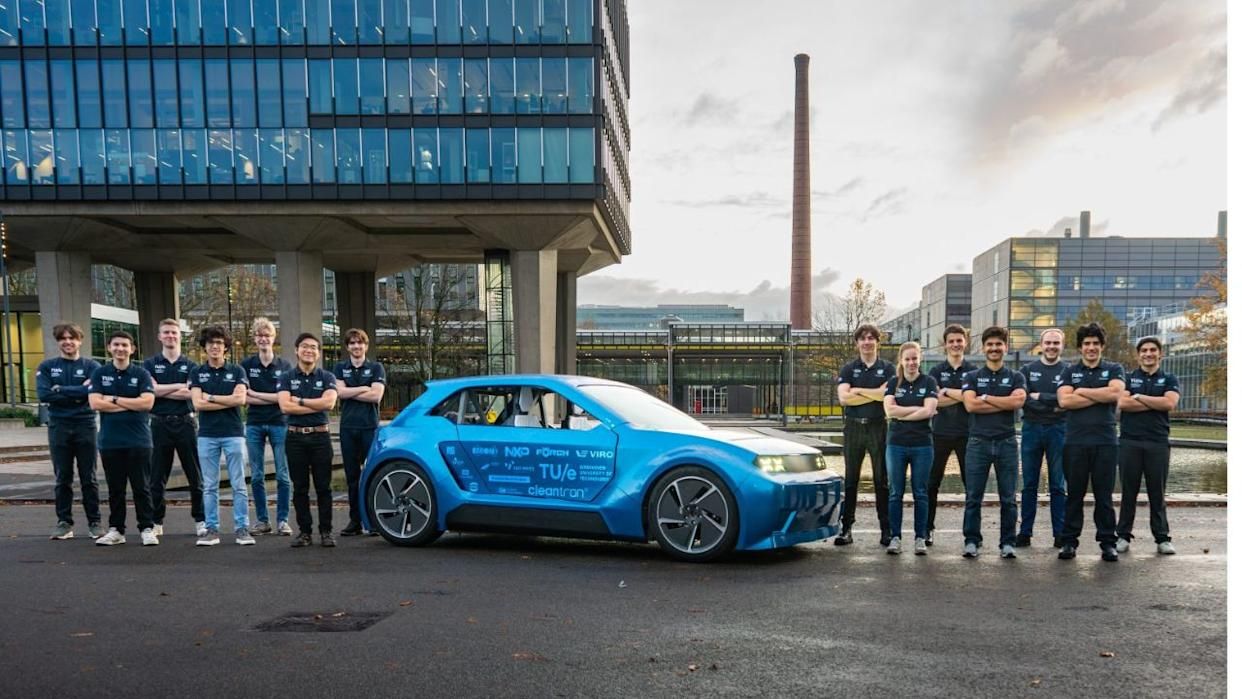
A team of university students in the Netherlands has unveiled a potential solution to the rising costs and complexity of electric vehicle (EV) ownership. Their concept car, Aria (which stands for Anyone Repairs It Anywhere), is designed specifically to allow owners to diagnose faults and perform repairs themselves.
Built by students at TU/e Eindhoven University, the vehicle challenges the modern automotive business model, which often locks owners out of their own cars through proprietary tools, sealed components, and complex architecture.
Are modern EVs hard to fix?
Open the hood of a fuel car and an electric car, and you’ll be shocked by how easy it is to play ‘spot the difference’. By integrating battery packs directly into the chassis and using non-standardised parts, fixing issues in electric vehicles requires:
Specialised Knowledge: There is a shortage of mechanics qualified to work on complex electric drivetrains.
Proprietary Locks: Diagnostic tools are often restricted to authorised service centres.
Aria’s "Repair-It-Yourself" Ecosystem
Aria is built on a philosophy of modularity and accessibility. It provides consumers with the power, tools, and knowledge to maintain their vehicles.
1. Smartphone Diagnostics
Instead of a "Check Engine" light that requires a dealership visit, Aria enables drivers to identify the problem firsthand with:
USB-C Connectivity: Owners simply plug their phone into the dashboard via a standard USB-C cable.
Visual Guidance: A dedicated app generates a 3D model of the car, pinpointing the exact location of the broken component.
Actionable Advice: The app identifies the fault, lists the necessary tools, and provides instructions on how to fix it.
"From this we know how to fix it, all the tools we need, and we will quickly be able to get it going and have our car working again." Marc Max Hoevenaars, Software Engineer on the Aria project.
2. Modular Hardware
The physical design of the car is just as accessible as the software.
Swappable Panels: Exterior components like fenders and bumpers can be replaced quickly.
Accessible Drivetrain: Electronic components and the drivetrain are designed for easy access.
Built-in Support: The car comes with a built-in toolbox and detailed repair manuals.
3. The Modular Battery System
Perhaps the most significant innovation is the battery design. While most EVs have heavy battery packs sealed into the chassis, Aria utilises a modular system.
Six Independent Modules: Instead of replacing one massive battery pack, owners can swap out any of the six individual modules.
Manual Removal: The batteries are designed to be removed by hand, without heavy lifting equipment.
"It's very easy to do by yourself, with your hand. Yeah, anyone can do this." Callum Armour, Technical Engineer.
Is Aria ready for market?
While Aria is a fully functioning vehicle, its specifications are modest, featuring a top speed of 56 mph and a range of 137 miles. However, the students emphasise that high performance is not the immediate goal.
The project is intended to prove that the inability to repair modern cars is a design decision, not a technological requirement. By proving that a repairable EV is feasible, the team at TU/e Eindhoven hopes to push the industry toward a more sustainable, consumer-friendly future.
Global EV sales soar to 20.7 million - with Europe in second place
Global EV sales reached new highs with 20.7 million units sold in 2025 - up 20% from 2024!
In December alone, EVs overtook petrol cars in the EU for the first time. With a 22.7% hold of the market in the festive month. This small but mighty change is an optimistic push to electric in 2026.
Although China holds the lead with the largest market share at 12.9 million, Europe is striving for the second biggest power in electric sales with a fast-growing increase of 33% from the previous year. China however is growing at a much slower rate, only up 17%. With the peak growth in 2024, the gap grows with a lack of incentives to promote EV uptake. China may be comfortably leading the global EV market, but Europe is fighting to catch up.
Across the pond, America has seen a minimal drop of 1% from the previous year due to an ease of federal regulations on fuel standards - reducing the pressure on manufacturers to push for electric vehicles.
Where does this change come from?
Due to many things, from government powers, finance support, and general EV love - a myriad of factors supported EV growth in the EU - and additional losses across the globe.
How has Europe sped ahead in the EV race?
Legislative changes
EU targets have been reduced from an 100% zero emissions goal for 2035, to 90%. This reduction has eased pressure on manufacturers, but legacy plans promoted the end of year boom for EVs.
Government support
Each country has their own incentives, and varies across Europe. The big push for electric in 2024 saw a growth in 2025, and countries like Germany and France are rejuvenating momentum in the early days of 2026.
Growth of charging infrastructure
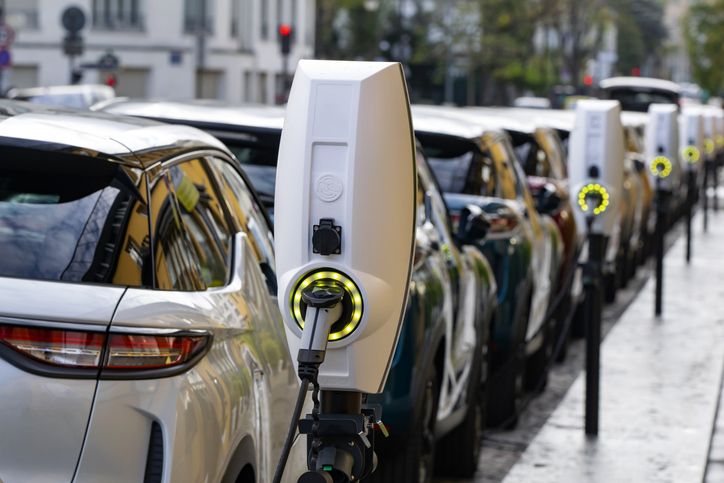
One of the concerns for people when making the switch to electric is finding a charger. The time and money put into charging infrastructure across Europe has helped the trust in electric journeys. With charge point numbers growing from 1.07 million in December 2024, to 1.28 million by the end of 2025 - and only going up from there!
People want electric!
More people are open to the electric, alongside the higher up support from the government, people across Europe do want to make the switch.
The Netherlands 🇳🇱= 156,139 units, + 18.1% from 2024
Belgium 🇧🇪= 143,849 units, +12.6% from 2024
In 2025, EVs comprised over half the UK market for 3 consecutive months. Although not part of the EU, the UK is a big power in the European region - helping boost the region to 2nd place across the globe.
Experts predict the progression may slow down over the next 12 months, to pick up again in 2027 - globally seen as the next big ‘deadline’ year. This progress so far shows resilience in the electric car market - in Europe and across the world.
Germany launches a €3 billion funding for EV incentives
Germany is taking electric car sales seriously in 2026, with huge discounts on all electric car purchases. With the starting subsidy sitting at €3,000 per car, the discounts only go up from there!
The goal is to help support an estimated 800,000 vehicles over the next half of the decade. The German government are hoping to use the €3 billion in funding by 2029, with the aim to:
“We want to do something for the environment, for our European automotive industry, and for households that couldn’t afford an electric car without support.”
Germany was the 3rd biggest EV market in the world in 2025, and is leading the way in Europe. Over the past 12 months, the country saw a 43% rise in electric vehicle registrations - minimal growth in comparison to the growth in 2023. This new program looks to boost the growth and support the individual electric car driver. It’s expected to hike electric car sales by 17% annually over the next 4 years.
What German residents need to know about the Neues E-Auto-Förderprogramm
How it works?
The program runs from January 1st 2026 with online applications opening in May
You’re not limited to buying a car, the subsidies work with leasing too
First buy, then save - you apply for the program after registering your electric vehicle
Let’s talk numbers: Starting at €3,000 per car, it’s already helpful savings, but are there ways to save more?
If you want an affordable electric car, this program is here to help! There are added discounts for less expensive car choices:
Subsidy increases by €1,000 for vehicles under €60,000
Subsidy increases by €2,000 for vehicles under €45,000
Families get extra support:
With children under the age of 18, families can hope for an extra €500 per child
Maximum €1,000 extra saving - essentially only two children included on the discount
Overall, you could save from €1,500 all the way up to €6,000 on your electric vehicle in 2026.
eHGV charging hubs land in the UK
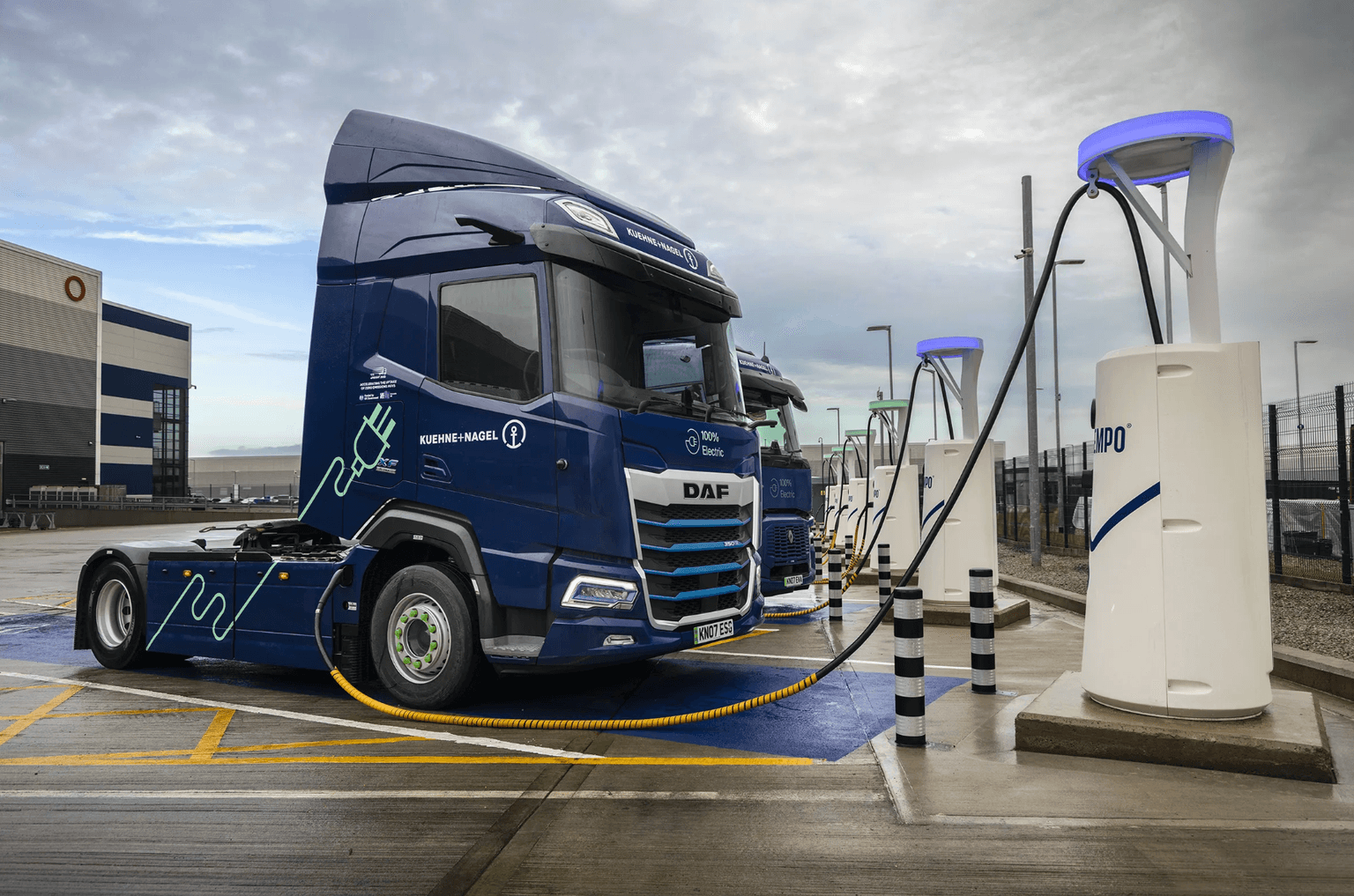
The transition to eHGV got a massive boost in the UK, with the arrival of its first megawatt charging system.
Designed by Voltempo as part of the eFREIGHT 2030 consortium, the new hub at Kuehne+Nagel’s East Midlands Gateway depot officially came online on 15 January.
How does it support freight operations?
The shiny new hub features 6 DC charging bays with a megawatt-scale HyperCharger ‘pod’ that distributes power across the network of chargers located in each bay. The design offers super flexibility - either multiple vehicles can charge at a lower power capacity on a slower speed, or a single vehicle charging at the full megawatt capacity, resulting in an eHGV recharged in 30 minutes.Positioned adjacent to the M1 and East Midlands Airport, the site sits at the centre of one of the UK’s most critical logistics corridors.Kate Broome, Sustainability and Social Impact Director at Kuehne+Nagel, commented:“Located at the heart of our UK road logistics operations, the combination of the HyperCharger and our new electric fleet enables us to deliver more sustainable logistics for our customers at real operational scale.”
Expansion of flexible eHGV hubs
The East Midlands Gateway installation is just the beginning. It’s the first of 25 planned national hubs, supported by the UK government’s £200 million Zero Emission HGV and Infrastructure Demonstrator (ZEHID) programme.It’s a great example of how collaboration across industry, government, and innovation partners can bring about solutions to support the electric transition. Plus, examples are cropping up all over the world for eHGV operations.In July last year, Iceland saw the first commercial development of Autel’s MaxiCharger MCS with CPO ON Power - delivering up to 640kW DC, with a modular platform engineered to scale up to 1.2MW and 1,500A. And then in October, clean energy tech firm VNT (Vrinda Nano Technologies) launched what it claimed is the first 1MW (megawatt) EV charger in India in October last year, again targeting the heavy-duty EV segment.
It’s an exciting time of innovation for fleet operations - and with the introduction of more megawatt charging systems, fleets will have even more options to power their larger vehicles and electrify their fleets faster.
Bigger batteries, faster charging, longer range: What’s new in electric vehicles
If last year’s Electro Beats are anything to go by, developments in electric vehicle batteries move fast. But what about batteries in hybrid cars? For those drivers who aren’t quite ready to make the full electric switch, buying a hybrid vehicle has been seen to be a good in-between; however, with electric range in plug-in hybrids (PHEV) averaging 30 - 80 miles, the fuel-powered elements of the vehicle are still heavily relied upon.
But what if the electric range was increased?
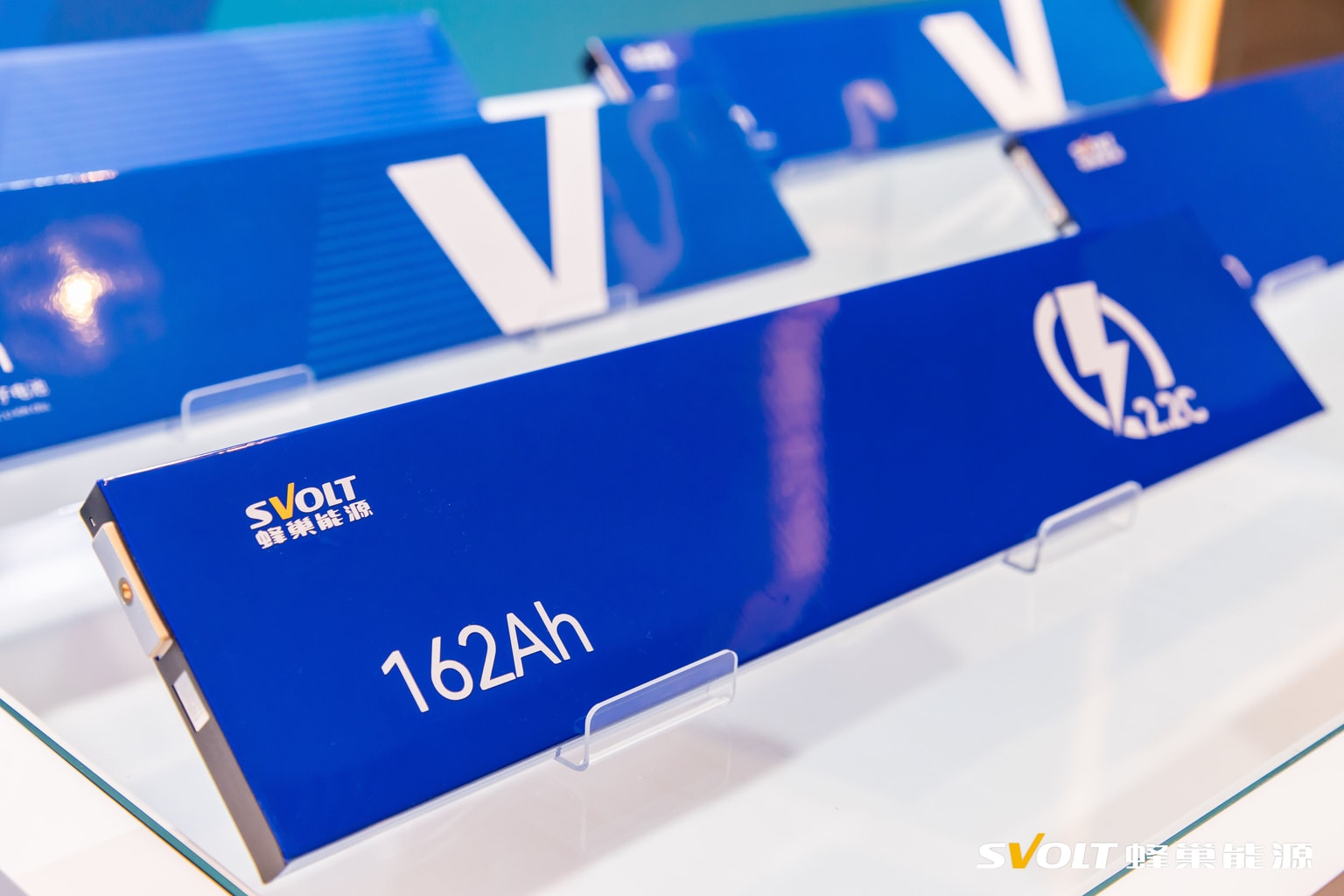
Fortunately, that’s just what Svolt Energy has created with the release of Fortress 2.0, an 80 kWh battery pack - the largest capacity battery currently available for plug-in hybrid vehicles.
What’s so special about the Fortress 2.0?
In recent months, developments in the chemistry of electric vehicle technology have been thick and fast, so, interestingly, the Fortress 2.0 isn’t a change in chemistry at all - it’s a change in methodology.
What does this mean? Improved performance without an increase in manufacturing costs:
The system uses intelligent current control interspersed with brief "relaxation phases." This allows lithium ions to oscillate and redistribute more evenly, improving their entry into the anode. This means a 25% reduction in total charging time compared to the previous generation.
Record Capacity: At 80 kWh, the pack rivals those found in full Extended-Range Electric Vehicles (EREVs), such as Leapmotor’s D19 SUV (80.3 kWh).
Improved Density: A highly integrated design boosts volume utilisation and overall energy density by 6% compared to the previous generation.
Ultra-Fast Charging: Using improved graphite technology, the pack can charge from 10% to 80% in approximately 10 minutes.
Have there been any other recent developments in electric vehicle batteries?
Yes, lots! The most recent developments coming from the Chinese automaker Chery and the motor technology startup Donut Lab in solid-state batteries:
Chery and the 1,500km range electric vehicle
Chinese automaker Chery (parent company of Omoda and Jaecoo) has announced that its premium brand, , will deploy a solid-state battery in a vehicle this year. The technology, developed by Chery’s internal institute, features a humongous cell energy density of 600 Wh/kg. And the vehicle utilising this massive battery? The Exeed Liefeng.
What are specs for the Exeed Liefeng?
Massive Range: An estimated range of 1,500 km (approx. 932 miles)
Performance: 0 - 100 km/h in under 3 seconds, with a top speed of 260 kph.
Cold Weather Resilience: In an industry first, Chery claims "unmatched performance" in sub-zero conditions, with the battery operating reliably at -30°C.
While the technology launches this year, Chery is taking a cautious, data-driven approach to its phased rollout:
Phase 1 (2026): Deployment in ride-hailing and rental fleets to gather operational data.
Phase 2 (2027): Full mass production for the consumer market.
Donut Lab: 5-Minute Charging is Here
While Chery is targeting cars, battery startup Donut Lab is claiming the title for the world’s first commercially available, production-ready all-solid-state battery. The company states it can already produce gigawatt-hours of capacity without using rare earth materials (in fact, the cells are reportedly made from "100% green" materials found globally), and has partnered with Verge Motorcycles to launch the world's first solid-state-powered production EV in Q1 of this year.
Longer range: The new battery increases the bike's range from 217 miles to 370 miles.
Ultra-ultra rapid charging: The battery supports full charging in 5 minutes. Verge notes they actually slowed the charging to 10 minutes for the consumer product, simply to give riders time for a coffee break.
Increased use cycle: Rated for 100,000 cycles (compared to ~5,000 for traditional Li-ion).
Improved state of charge retention: Retains >99% capacity in temperatures ranging from -30°C to 100°C
England eases driveway rules for home EV chargers
Did you know that the UK government has made it even easier to get a home charger? In an exciting new regulation change, as of summer 2025, the government removed the need for planning permission for most home chargepoints!
What does this mean?
Homeowners in England are now able to install a wall-mounted or pedestal EV charger on their driveway without applying for planning permission, as long as the unit is:
Under 0.2 cubic metres
Positioned at least two metres from a public road.
The exciting change is designed to cut costs, reduce delays, and speed up EV adoption, with drivers potentially saving up to £1,100 a year compared to running petrol or diesel cars! So not only will EV drivers be saved from a headache after going over multiple hurdles for installation, they’ll also be saving money.
“We’re cutting down on paperwork to power up the EV revolution so that drivers, businesses and those looking to make the switch will have more chargepoints to power from and less red tape to deal with,”
- said Lilian Greenwood, Labour Party minister.
Are there still restrictions?
Leaseholders, residents in new-build developments with restrictive deeds, and those with shared driveways may still face barriers to installation. Some of these specific scenarios may still involve legal complications due to shared consent and other discussions.
But, despite these caveats, the rule change is widely seen as a significant step forward. Backed by more than £2.3 billion in government investment, the regulation is part of a wider push to expand charging infrastructure and support the transition to cleaner transport - making electric vehicle ownership more practical and affordable for many households across England!