Electro Beat: Your monthly dose of EV news (March 2026)
We are back with the March edition of Electro Beat - your monthly roundup of the biggest stories shaping the electric vehicle world. This month’s lineup is a good one: the rollout of driverless EVs across Europe and Japan, ultra-fast charging breakthroughs from BYD, and plenty more worth checking out!
Let’s get plugged in…
Driverless cars? The Robotaxi partnerships taking over the world in 2026
Last month’s Electrobeat chatted about flying cars, this month introduces Robotaxis!
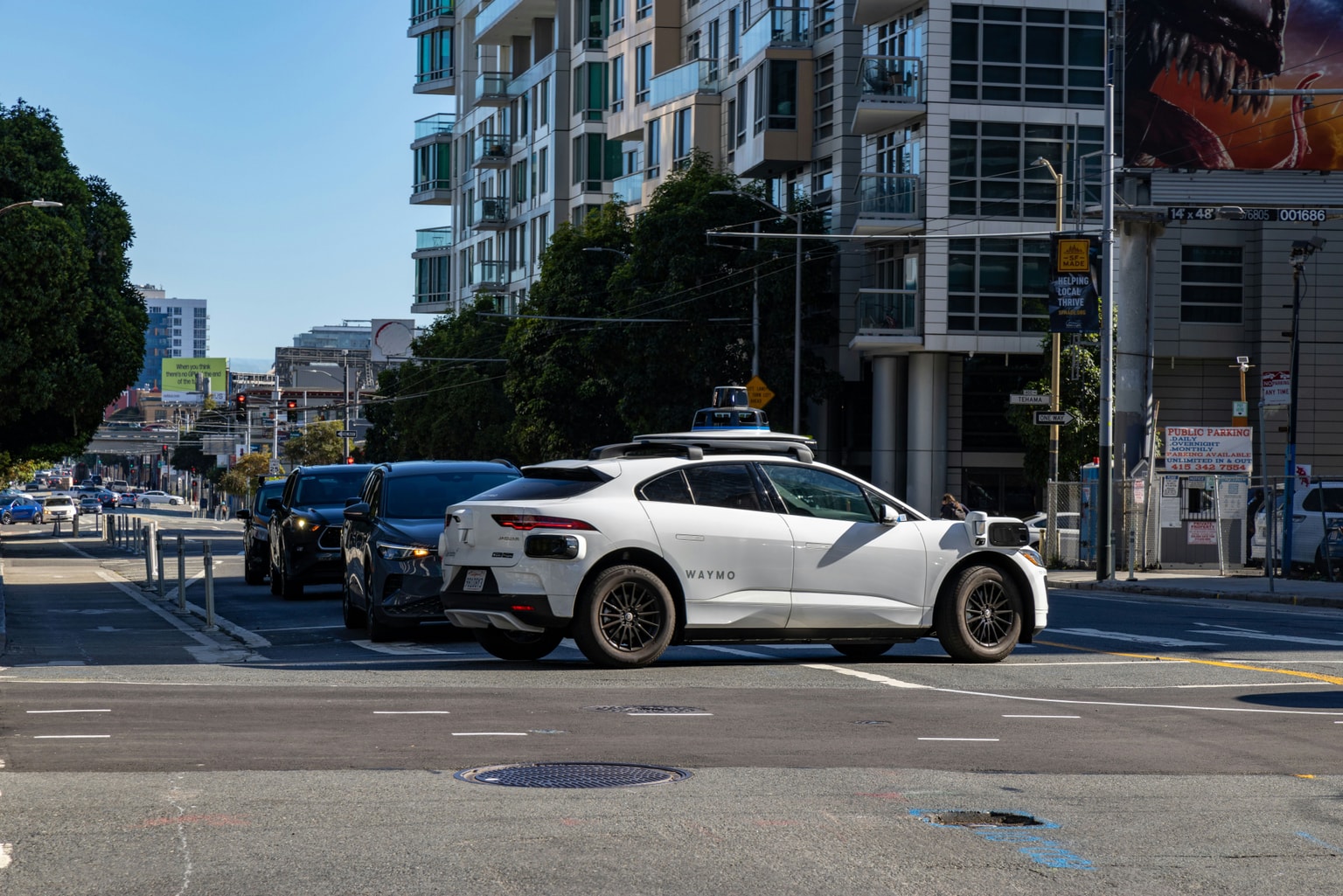
Already zooming around London streets, the Waymo taxis have been mapping the streets of London since late 2025. With safety and security screens inside - but no driver, these new vehicles are looking to change the way people hail and ride.
Waymo are not the only ones! Big companies are banding together to get these Robotaxi’s off the ground and on the roads. A deal has been reached between big players Wayve, Uber, and Nissan to get these fully autonomous taxis on Tokyo’s roads later this year! Really pushing the speed limits…
The partnership has distinct roles:
Wayve = the AI software, using deep learning development rather than HD maps to quickly adapt
Nissan = integrating the tech into the electric Nissan LEAF
Uber = utilising the services’ widespread taxi network to put this tech into practice
Uber is scaling ahead with over 25 partnerships worldwide. The taxi fleet is striving to be the world’s biggest self-driving taxi service. However, rather than creating a robotaxi monopoly, the international ride service is hoping for wide investment in the new tech, mostly to prevent other players taking over the race.
Outside of the deal, Nissan vehicles are upgrading the driver-support tech, providing cheap to run tech while achieving advanced driver mobility. Although these consumer rides offer driver assistance, it’s limited to Level 2 AI models: aka braking and steering but still needs a fully competent driver at all times. This Uber/Nissan/Wayve deal takes this tech one step further - working towards a fully autonomous fleet.
This revolutionary tech is not limited to the other side of the world - with Bolt and NVIDIA focusing on the European effort. Using Bolt’s driving data and NVIDIA’s autonomous AI driven tech, this partnership looks to scale the tech across the whole fleet.
The new tech looks specifically at:
Learning from active driving
GDPR priority
Next gen tech for scalable growth
In house progress: looking to support EU education
Both these efforts are working towards a future of AI travel, utilising the tech to track and learn journeys with an intention to scale internationally.
Other players in the push for driverless cars include Tesla - whose approach is to find the cheapest scalable option. Although cost reduction is a hot topic, the understandably high safety standards are halting any sort of speedy progress.
Nearly half of U.S. fleet vehicles could be electrified by 2029
Fleet electrification in the U.S. is picking up pace, with new research suggesting that nearly half of all commercial vehicles could be electrified within the next few years. While that doesn’t mean a full shift to battery-electric vehicles, it does signal a major transformation in how fleets are powered.
Key takeaways
46% of U.S. fleet vehicles expected to be electrified by 2029
Up from around 26% today
Fully electric (BEV) adoption remains relatively flat
Biggest growth comes from hybrids and plug-in hybrids
Gas and diesel vehicles are set to decline, but not disappear
A shift to “electrified”, not fully electric
At first glance, the numbers suggest a rapid move to electric. But the reality is more nuanced. Rather than a full transition to battery-electric vehicles, fleets are adopting a mix of powertrains.
Hybrids (HEVs) and plug-in hybrids (PHEVs) are seeing the fastest growth, alongside smaller gains in range-extended EVs. Meanwhile, fully electric vehicles are expected to hold relatively steady.
This points to a more gradual, flexible transition - where different technologies play different roles depending on the job.
Sustainability is still a key driver
Despite changing policy signals, sustainability remains firmly on the agenda for fleet operators. In fact, many decision-makers report an increased focus year-on-year.
However, the definition of sustainability is evolving. It’s no longer just about emissions - it’s also about:
cost efficiency
vehicle uptime
long-term business viability
Fleets are balancing environmental goals with operational realities.
What this means for fleets
Electrification isn’t a one-size-fits-all solution - and that’s shaping how fleets plan for the future.
Fleet managers can expect:
More complexity - managing mixed fleets with multiple powertrains
Greater infrastructure needs - especially for depot charging and route planning
More data-driven decisions - using analytics to optimise cost and performance
The bigger picture
Rather than a sudden switch to fully electric vehicles, fleets are moving towards a diverse electrified ecosystem. This opens the door for a wider range of technologies - and gives operators more flexibility in how they transition.
The direction is clear: electrification is happening. But it’s arriving as a spectrum, not a single solution.
What does “electrified” include?
It covers a mix of technologies, including hybrids (HEVs), plug-in hybrids (PHEVs), and fully electric vehicles (BEVs).
Why aren’t fully electric vehicles growing as quickly?
Factors like cost, infrastructure, and operational requirements mean many fleets are adopting hybrid solutions as a stepping stone.
Are petrol and diesel vehicles disappearing?
Not yet - but their share is expected to decline as fleets diversify their powertrains.
Why “range anxiety” is losing its charge
If you’ve been scrolling through EV forums or chatting with sceptical neighbours, you’ve likely heard the big "what if": What if the battery dies after three years? It’s a fair question and one that continues to pop up when chatting about anything EV related.
But according to recent developments in the automotive world, car batteries are proving to be reliable, predictable, and surprisingly stubborn.
EVs still retain 90% of their battery capacity after nearly 100,000 miles, a new study has found
A massive new study of 24,000 battery health reports by leasing firm Arval has dispelled the "dead battery" myth. After analysing EVs across 11 countries, the data shows that even after six years on the road - or roughly 99,419 miles - the average battery health remains above 90%.
To put that into perspective:
At 45,000 miles: Most batteries still have 93% of their original usable capacity.
On average, batteries only drop about 1% of health for every 13,670 miles driven.
The stress test: The German motoring association (ADAC) put this to the ultimate test, giving a VW ID.3 for over 107,000 miles of "hard use." The result? It lost just eight miles of total range.
The good news is that modern batteries aren't fragile. They are engineered with sophisticated cooling and management systems, proving that they’re able to stand the test of time.
Total transparency is coming
While the hardware is proving its worth, the way we measure that worth is getting a major upgrade too. Gone are the days of taking a seller's word for it.
By 2027, new regulations will introduce a "Battery Passport." There will also be a standardised display called SOCE (State of Certified Energy). This means checking an EV’s "heart health" will soon be as common and easy as checking the mileage on a dashboard.
Think of it like a digital logbook that lives with the car, tracking its chemistry, history, and performance data.
Brands like Kia and Volvo are already leading the charge here, realising that transparency is the best way to make used EV buyers feel 100% confident.
Battery health gets a funding boost to go global
This shift toward transparency isn't just happening in Europe. Aviloo, a specialist in EV battery diagnostics, recently secured €30 million in funding to take its independent testing global.
Their goal is to make an independent battery health certificate a standard part of buying or selling a car, not just a "nice to have" extra. With the global electric fleet expected to triple to 150 million vehicles by 2030, having a "certified" stamp on a battery will be the gold standard for anyone looking to trade in or buy used.
Electric cars outsell petrol: a shift in momentum!
Back in December 2025, just under 218,000 new fully electric cars (battery electric vehicles - BEVs) were registered across Europe! Comparatively, only 216,500 petrol cars were registered, meaning the market share for BEVs was 22.6%, whilst petrol sat at 22.5%.
Whilst the margin is relatively small, BEVs outselling petrol cars for the first time is a huge deal! An exciting, big step forward in the overall aim to transition to electric vehicles across Europe.
This, however, was not just a sudden spike in numbers! The amount of electric vehicles registered in the EU has been growing exponentially. In 2025, electric vehicle sales grew by around 30%! At the same time, petrol car sales declined by 19% in December (2025) alone.
With electric vehicle purchasing incentives appearing all over Europe, the push for the electric transition is still very much alive! Whether it’s cash incentives, tax depreciation, local incentives or business (fleet) incentives, funded schemes are cropping up across multiple markets, encouraging more people to join the electric car club. Here are a few examples:
Social leasing - a government-backed scheme in France which provides funding for longterm car rental, otherwise known as leasing!
Tax Depreciation - companies in Germany can write off 75% of their electric vehicles’ value in year one and then have 10 years of depreciation.
Electric Car Grant - The UK government has officially revived the Electric Car Grant, scrapped in 2022 but now returning with up to £3,750 off a brand-new electric car.
Flash charging UK: BYD five minute charge?
Five minute charging might sound like an electric vehicle fantasy - but it’s getting closer to reality!
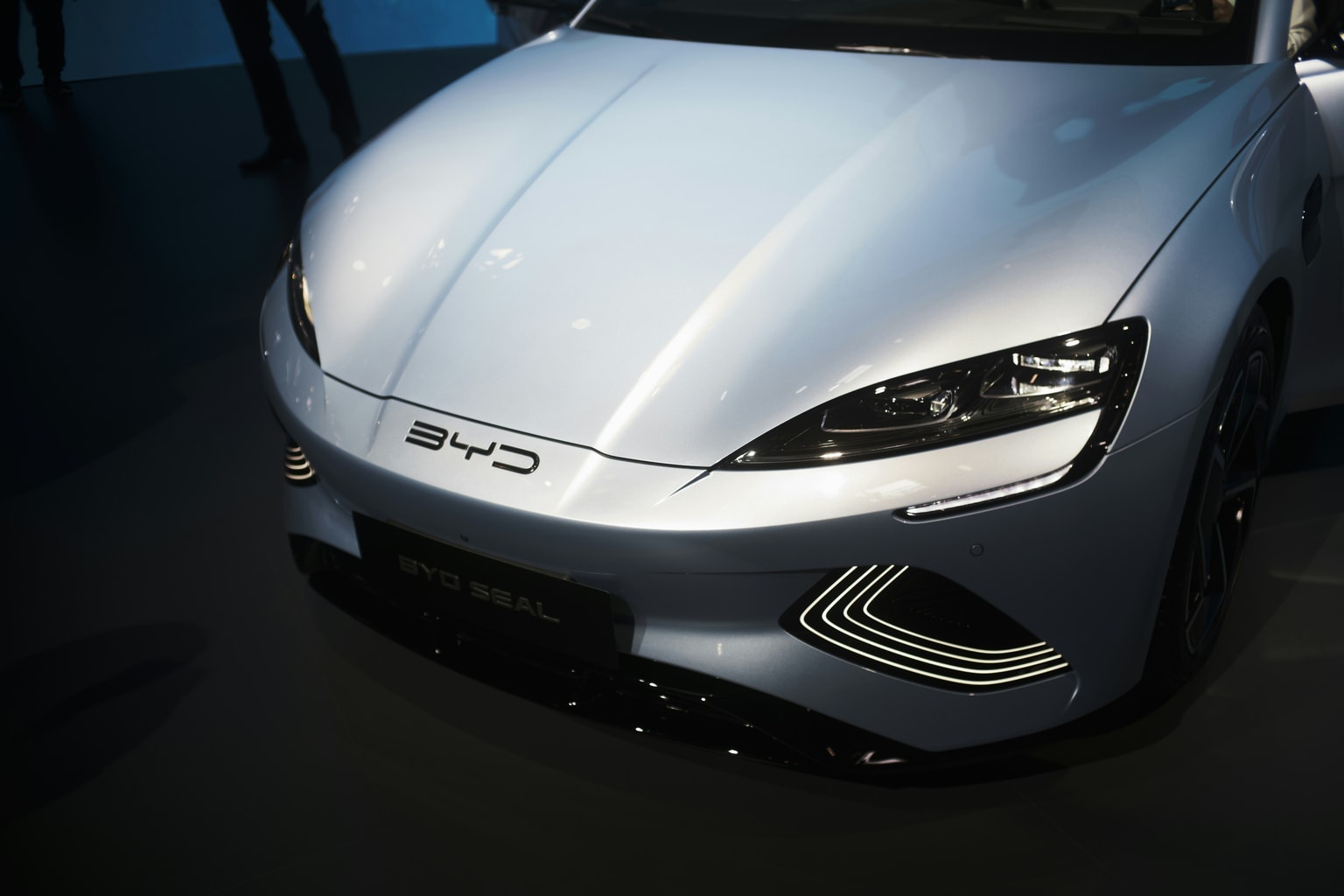
Chinese manufacturer BYD is bringing its ultra-fast “flash charging” tech to the UK, with rollout expected to begin later this year. And if it delivers on its claims, it could seriously alter what drivers expect from public charging! We’re talking up to 1,500kW of power - around four to five times faster than today’s typical ultra-rapid chargers!
Of course this requires a specific type of battery, as not all battery electric vehicles (BEVs) will be equipped with a battery which has the capabilities to charge this quickly! But, paired with BYD’s new flagship model, the Denza Z9GT, 1,500kW of power translates to a 10% - 70% charge in about five minutes, and close to full in under ten.
Whilst currently only the Denza Z9GT is able to achieve the ultra-fast charging speeds, the Chinese manufacturer has promised that BYD models will be released with the battery capabilities before long!
On top of the battery speed, it is also said to have high endurance when it comes to weather. Being able to withstand extreme cold temperatures without the charging speed decreasing due to advanced batteries and charging systems engineered by BYD.
The UK is set to get an initial 300 flash chargers, part of a wider push that’s already seen thousands installed across China. Globally, BYD is aiming for 20,000 by the end of 2026! Such a large amount of energy requires a set-up which avoids updating the entire energy grid, so BYD has formulated a work-around where on-site battery storage is used to deliver high output. In addition, dual DC charging plugs need to be used to provide such a high amount of power.
On top of this, BYD is aiming to make their flash charging cheaper than current ultra-rapid networks - rumours have suggested around £0.60/kWh vs the current £0.80 - £0.90.
These charging speeds won’t be available widely for now - first chargers may appear at dealerships or controlled sites, however this is exciting evidence of where the future of electric car charging will go in the future! Making public charging even more convenient for electric vehicle drivers.
Feeling enlightened or do you think something was missing? Let us know by sharing your feedback.