Electro Beat: Your monthly dose of EV news (February 2026)
Welcome to the February edition of Electro Beat - your monthly roundup of the biggest stories shaping the electric vehicle world. This month, there’s no shortage of buzz: EVs with personal aircrafts, the winner of the car of the year, BYD overtaking the EV incumbent and becoming the global bestseller, and so much more!
Let’s get plugged in…
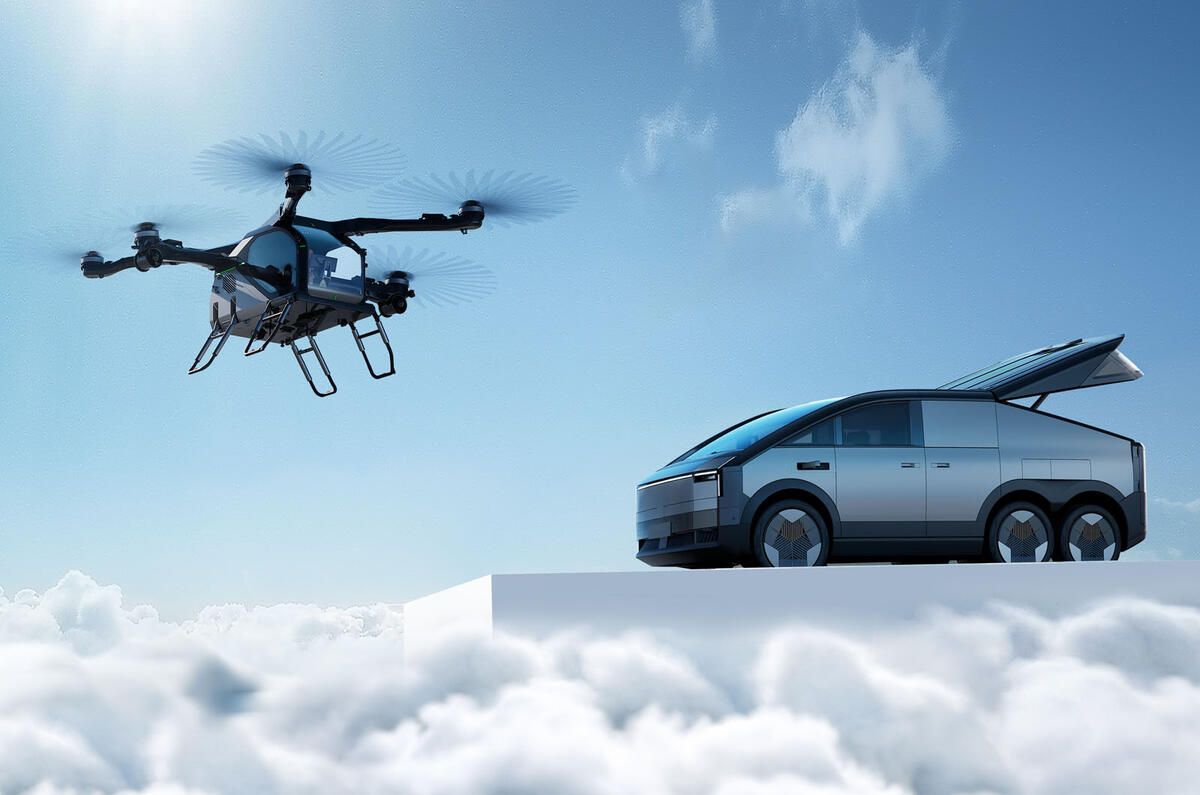
Flying cars? Xpeng’s newest aircraft tech for EVs
Who hoped for flying cars by this time in the millennium? Well, we’re still not quite there yet, but Xpeng has done something pretty cool. Their new concept EV offers a new solution to traffic jams - the skies. After an intense 10 day traffic jam in 2010 Beijing, these car makers were looking for some out-of-the-box thinking. What's more inspired than a flying car - only 10 years later than the Back to the Future movie prediction.
Although not an official flying road vehicle, the company name for this pre-production tech is ‘Land Aircraft Carrier’. With 7,000 orders already in place - this wild new creation is hoping to hit the roads later this year.
Before next steps can be made, Xpeng leadership wants their management team to not only trial, but master these aircrafts. Imagine that item on your work to-do list - drive a car, fly a drone…The company's aim is to make flying as easy as driving, hoping to make this the future of EV transport. Although a wacky concept, we’re intrigued to see where this new tech goes.
Now, we can’t imagine you’ll see passenger drones across the world just yet - what with the skills and licensing necessary to operate a consumer aircraft. However, it’s a funky step in EV tech. So, other than the obvious flying aspect, what's so cool about this new creation:
Not just the extended range, but it can charge the aircraft while on the go! The mobile charging tech works while driving and parking - with a full charge offering up to 6 flights.
Now, a passenger carrying drone will have a hefty payload - not for the 6-wheel suspension of the van. The optimised payload capacity allows for rear-wheel steering.
Car of the Year 2026
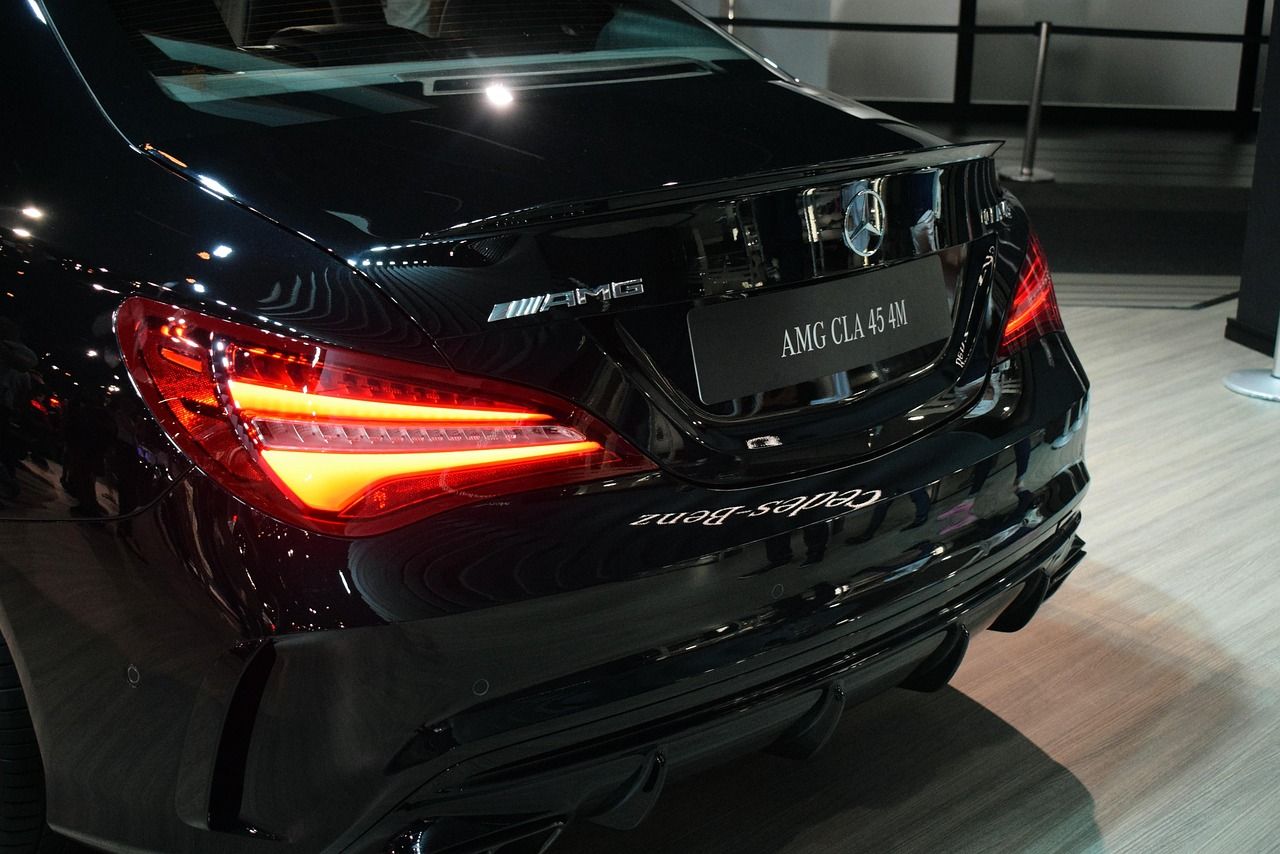
The Car of the Year Awards are back with the Mercedes Benz CLA model taking the first place position for 2026. An exciting win for Mercedes with their last success in this competition being 52 years ago for their Mercedes-Benz S-Class.
Voted the king of cars for 2026, the Mercedes Benz CLA was credited for its extreme efficiency. With a top range of up to 792km, it trumps many models in the market for the longest journey on a single charge.
The model won for more than its usefulness on a long road trip. The sleek design helps the speed of travel, which in technical terms the aerodynamics offer a drag coefficient of 0.21 - pretty speedy in the world of electric cars. This goes in hand with the super efficient and powerful battery tech, allowing for 325km of charge in just 10 minutes with an Ultra-fast charger - all thanks to the 800-volt battery technology.
Running since 1964, the Car of the Year awards are a multi-company annual recognition of the top tech in car manufacturing across Europe. Held in Brussels this year, the results were determined across 23 countries and 59 jurors - all working within the automotive industry but impartial to the financial gains of car manufacturers.
All cars entered must hit the top 3 criteria:
Be a completely new model
Be available in at least 5 European countries
Have a sales expectation of minimum 5,000 units per year
The criteria for points ranges from general design, to technical innovation, but the main winning features cover: tech, value for money, design, and sustainability. This year, almost all shortlisted models offer a fully electric version of their car - with only one hybrid vehicle in the mix. This is an incredible push to the electric car market, with the top tech showing up in all-electric models across Europe.
The official Car of the Year award results:
Winner: Mercedes-Benz CLA (320 points)
2nd: Skoda Elroq (220 points)
3rd: Kia EV4 (208 points)
4th: Citroën C5 Aircross (207 points)
5th: Fiat Grande Panda (200 points)
6th: Dacia Bigster (170 points)
7th: Renault 4 (150 points)
BYD overtakes Tesla to become the world’s largest EV maker
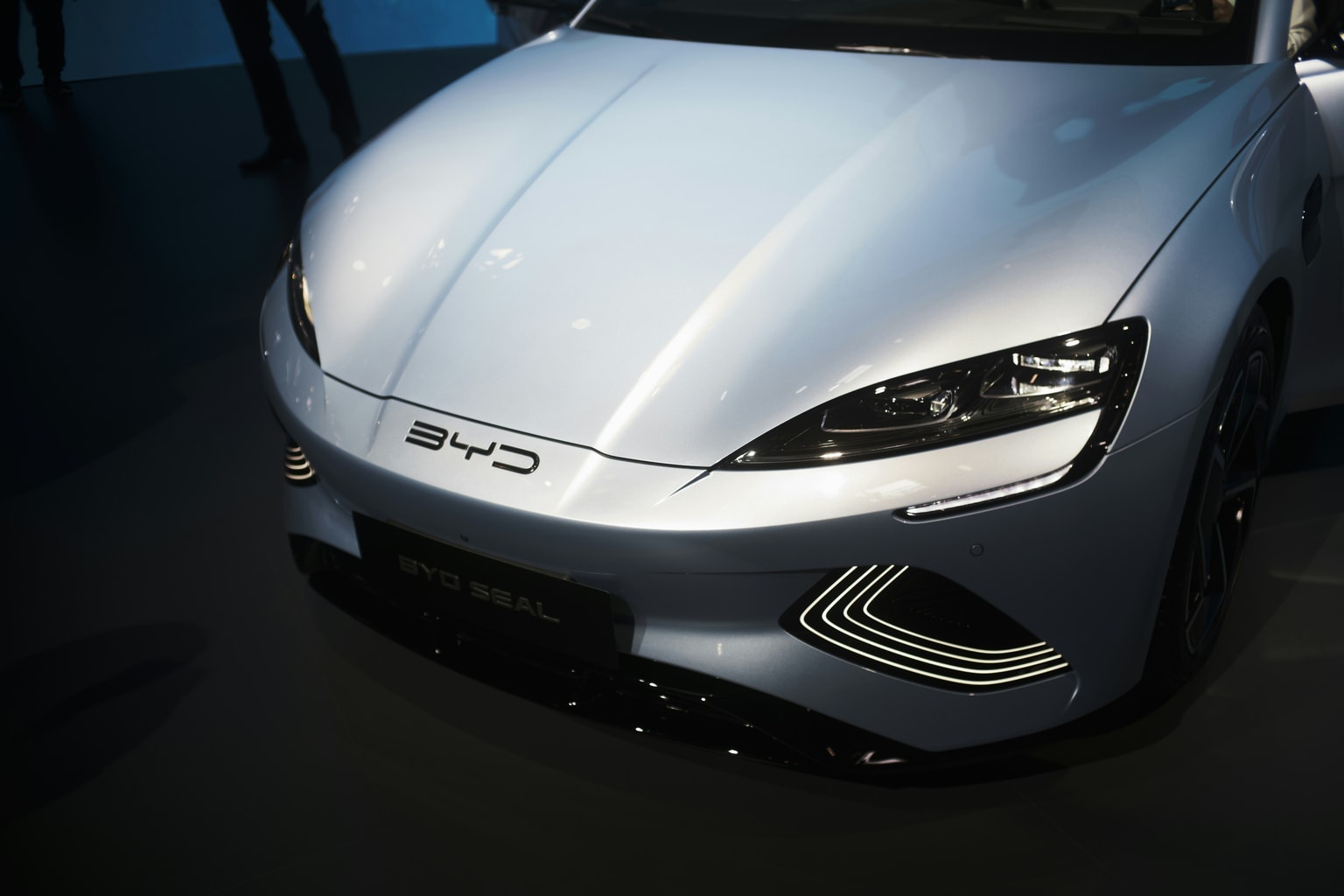
BYD has officially overtaken Tesla to become the world’s largest electric vehicle manufacturer - a major milestone in the global EV race.
Last year, BYD delivered around 4.6 million vehicles worldwide, including just under 2.3 million fully electric cars. That marks a 7.7% increase in total deliveries year-on-year, with pure EV sales jumping by an impressive 28%.
Meanwhile, Tesla delivered just over 1.63 million vehicles across the year - an 8.5% decline - marking its second consecutive annual drop in deliveries.
The shift highlights a changing global EV landscape, with Chinese manufacturers scaling rapidly while Western brands navigate subsidy changes and intensifying competition.
The numbers at a glance
BYD total deliveries: 4.6 million (+7.7%)
BYD pure EVs: ~2.3 million (+28%)
Tesla total deliveries: 1.636 million (−8.5%)
Tesla Q4 deliveries: 418,227 (−15.6%)
What’s driving the shift?
The global EV market is maturing - and getting more competitive.
Both manufacturers are feeling pressure:
US EV subsidies were removed at the end of September, impacting demand for Tesla.
China is gradually scaling back certain EV purchase incentives.
A wave of new EV models is intensifying domestic competition.
Trade barriers are slowing international expansion for Chinese brands.
Despite a December dip, BYD’s overall annual growth suggests it has successfully diversified across price points and global markets.
What this means for drivers
The biggest takeaway? Competition is increasing - and that’s good news for consumers.
More manufacturers competing globally typically means:
Greater choice across price ranges
Faster tech innovation
Improved battery efficiency
More pressure to keep pricing competitive
As legacy brands, US players, and Chinese manufacturers battle for market share, the EV space is becoming less about early adoption - and more about mainstream dominance.
Taiwan is paying people to go electric - and it’s working
If you’ve ever waited at a red light in Taipei, you’ll know what happens when it turns green: a tidal wave of scooters surges forward.
In Taiwan, scooters outnumber cars roughly two to one - making them one of the country’s biggest sources of transport-related pollution. So in 2022, the government launched a simple but powerful policy: pay people to replace older combustion vehicles with electric ones.
Fast forward to the end of 2025, and the results are starting to show.
According to Taiwan’s Ministry of Environment, the nationwide “vehicle replacement and matching” programme has helped replace 124,798 older vehicles since launch.
The reported environmental impact? A cumulative reduction of 529,212 metric tons of CO₂ equivalent.
How the scheme works
The policy focuses on scrapping older combustion engine motorcycles and cars and replacing them with electric alternatives.
Incentives vary depending on:
Vehicle type
Fuel type
Pollution level
Replacing heavily polluting vehicles - such as diesel trucks - can unlock payments of up to NT$16,000 (around US $500).
In Taiwan, that’s significant. NT$16,000 can be close to a monthly salary. And when new electric scooters from brands like KYMCO can cost well under NT$30,000 (around US $1,000), the maths starts to make sense - especially when fuel savings are factored in.
Quick impact snapshot
Since 2022:
124,798 old vehicles replaced
529,212 metric tons CO₂ reduced
Nationwide rollout
Backed by local governments including Tainan and Kaohsiung
What makes Taiwan different?
Taiwan’s transport culture makes this policy uniquely powerful:
Scooters dominate daily commuting
High-density urban environments
Established battery-swapping infrastructure
Financial incentives meaningful relative to income
Nearly 125,000 replacements won’t transform every traffic junction overnight. But cutting over half a million metric tons of CO₂ while modernising one of the world’s most scooter-heavy transport systems shows that targeted financial incentives can shift behaviour at scale.
Renault takes full control of electric van maker Flexis
The commercial EV space is heating up. Renault Group has confirmed it will take full ownership of electric van manufacturer Flexis, ending its joint venture with Volvo Group and logistics giant CMA CGM - subject to antitrust approval.
Previously, Renault and Volvo each held a 45% stake in Flexis, with CMA CGM owning the remaining 10%. A binding agreement has now been signed that will see Renault acquire 100% of the business.
The move signals Renault’s intent to double down on the fast-growing electric light commercial vehicle (LCV) market.
What is Flexis?
Created in 2024, Flexis was designed to build a new generation of fully electric medium vans, aimed at urban logistics operators navigating tighter emissions rules and rising delivery demand.
At launch, Flexis revealed three models:
Step-in Van
Cargo Van
Panel Van
All are built on an EV-native skateboard platform, with electronic architecture developed by Renault’s Ampere division - the company’s dedicated EV arm.
Flexis has also developed a software ecosystem to help fleet operators manage electrification, optimise routing and tackle growing urban logistics challenges.
What happens next?
Renault will now oversee development of the new all-electric LCV range.
The first confirmed model:
Renault Trafic Van E-Tech electric
Production expected to begin by the end of 2026
From 2027 onwards, Volvo Group - through Renault Trucks - will also market the vehicle, continuing the long-standing Renault-Volvo LCV partnership.
Importantly, Renault has stressed that the acquisition won’t change the original industrial plan or product ambition. The goal remains to deliver “breakthrough products and services” in the electric medium van segment.
Built for the job - powered for the future!
Plenty of fleets out there have already begun, or are thinking about, the beginning of their electric transition. While we often focus on electric cars, the electrification of trucks, buses and commercial fleets is just as important in the broader energy transition - electrification is going beyond passenger vehicles. Here are just two examples of fleets who are working toward a cleaner, more efficient mode of transportation!
Electric “garbage” trucks deployed in Chicago
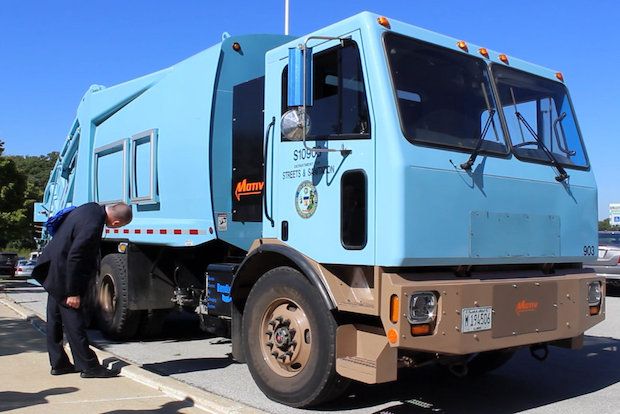
On August 14th 2025, leaders from Republic Services, Mack Trucks and ComEd gathered in Chicago to celebrate the deployment of the city’s first electric refuse fleet (waste disposal)!
The milestone marks the arrival of two new “Mack LR Electric” garbage trucks, helping bring zero-emission waste collection to local streets.
The Mack LR Electric is specifically built for waste collection. It delivers zero-tailpipe emissions while maintaining durability and performance which is essential for the bin men who manoeuvre it everyday. For busy city routes, that means no compromise on capability!
Electrification brings more than just cleaner air:
Quieter operation - ideal for early mornings in residential areas
Reduced local emissions - supporting healthier urban environments
Smooth electric drive - a more comfortable ride, suited to stop-start collection patterns
Improved maneuverability - thanks to its low, cab-forward design and tight turning circle
For cities like Chicago, where residential and commercial waste collection runs daily through dense neighbourhoods, these features make a real difference!
Why does it matter?
Heavy-duty vehicles, such as trucks, play a significant role in urban emissions. Transitioning garbage truck fleets to electric power is an exciting step toward cleaner streets and more sustainable city infrastructure!
Partnerships like the one between Republic Services, Mack Trucks and ComEd show how utilities, manufacturers and operators can collaborate to accelerate change.
Go-Ahead hits 1,000 zero-emission buses in london
Go-Ahead London has officially reached 1,000 zero-emission buses in operation across the capital - making it the largest zero-emission bus fleet owner in the UK.
The milestone vehicle was charged in London in the presence of Deputy Mayor for Transport Seb Dance.
Go-Ahead London operates more than 2,500 buses across 170 routes, carrying over one million passengers per day. With 1,000 zero-emission vehicles now in service, around 40% of its routes are fully electric.
The bigger picture
Zero-emission operations began over 12 years ago
13 depots across London now support electric buses
Northumberland Park is one of Europe’s largest electric bus depots
Full UK fleet (5,000 buses) set to go zero-emission by 2035
Across the UK, zero-emission buses exceeded 2,500 units in 2025, marking a 17-year market high.
For London, it’s another signal that large-scale fleet electrification isn’t future talk - it’s already well underway.
BEVS and PHEVs take prime position!
The UK strides ahead in EV sales with electric taking over the region market sales - a great way to kick start the year. Although neither individually take the lead, the collective push is towards electric with BEVs and PHEVs making up 33.5% of new EV registrations in January 2026.
With low to no emission cars making up a third of new car registrationsin January 2026, it’s a super positive push to the future of electric vehicles across Europe. For the UK, it’s an incredible stat following the uptake in electric vehicles in 2025, with 1 in 4 new registrations for the entirety of the year. Over half of these new registrations were related to business and fleet vehicles according to the SMMT reports.
Of this high uptake in electric registrations, the Kia Sportage model took top spot for January with over 4,500 registrations in a month. Offering a combined range of 450 miles with the Plug in Hybrid model, popular in the UK as an introductory model to electric cars and charging. Super popular as a family friendly model, or even a smooth company ride - it takes top place for UK plug-in registrations so far this year.
Where’s this growth coming from?
With car manufacturers pushing to hit the UK’s ZEV mandates to reduce their petrol and diesel models in production, there were increased discounts on electric vehicles at the end of 2025. What’s considered the sales ‘hangover’, the legacy push for electric has trickled into the new year.
Increased trust and opportunity within the electric car industry is helping make the switch more affordable for interested drivers.