Bidirectional charging is one of the most exciting developments in the EV world - and in 2026, it's finally moving from niche technology to mainstream reality. EV batteries are no longer just a way to get from A to B; they're becoming powerful energy assets that can power your home, support the grid, and even earn you money.
In this guide, we explore what bidirectional charging is, how each type works, which UK EVs support it, and whether it's worth investing in right now.
Let’s get plugged in…
What is bidirectional charging, and how does it work?
Bidirectional charging does exactly what the name suggests: instead of energy only flowing one way (from the charger into your EV's battery), it can also flow back out again - to your home, the grid, or other devices.
For this to work, both your EV and your charger need a bidirectional converter, which transforms the EV's stored DC energy into AC so it can be safely used by your home or sent back to the grid. Think of your EV as a giant, mobile power bank - one that can discharge on demand as well as charge up.
There are four key types of bi-directional charging which you can invest in as an EV owner, each involving different recipients:
1. Vehicle-to-Grid (V2G)
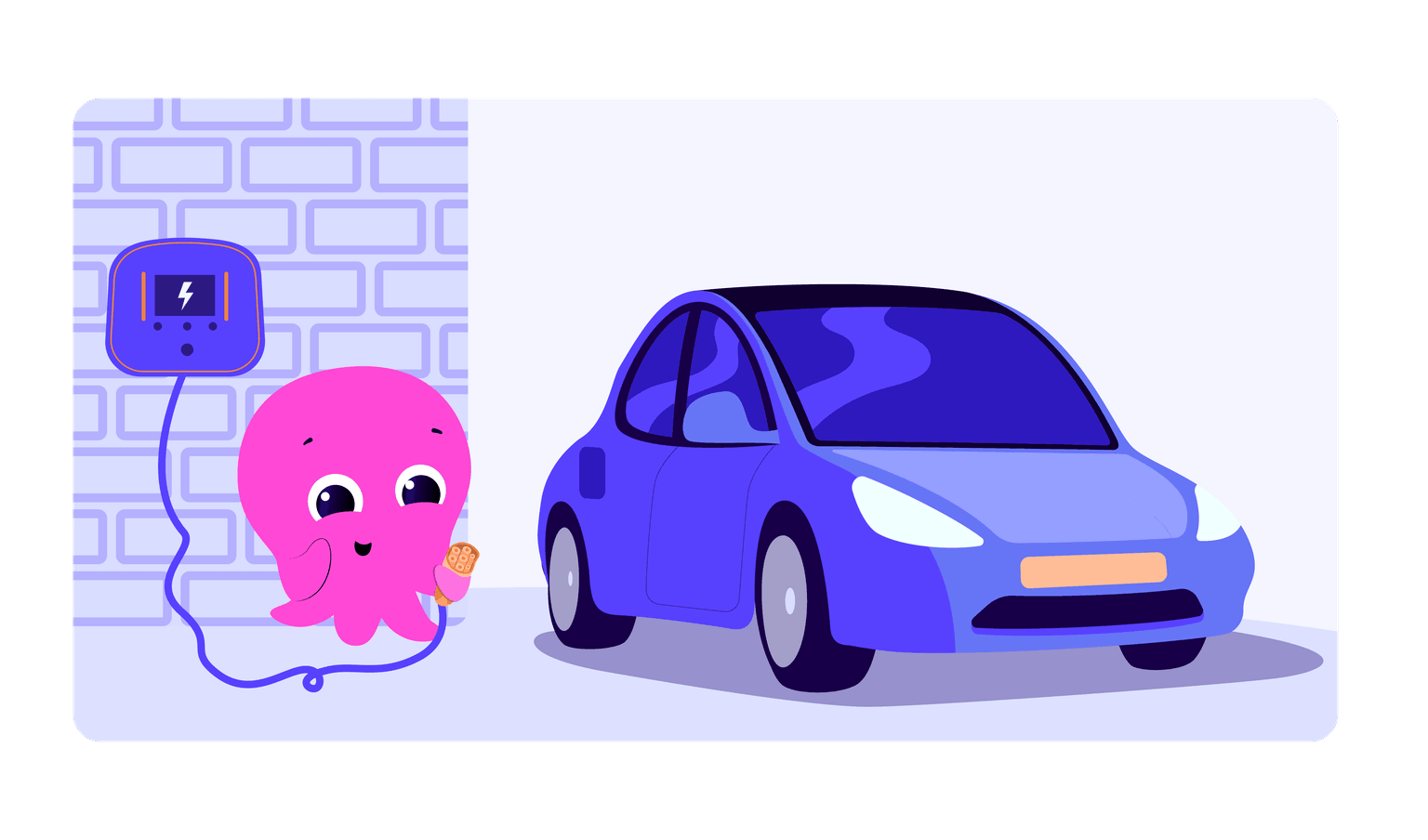
Vehicle-to-grid (V2G) charging is arguably the most talked-about form of bidirectional charging, and it's the one that could actually put money back in your pocket. Using V2G technology, you can sell stored energy from your EV back to the grid during periods of high demand - and buy it back cheaply when demand is low (often overnight or when renewables are generating surplus power).
Beyond the financial benefit, V2G plays an important role in grid balancing - helping ensure supply and demand stay in sync. During periods of low demand, your EV charges from the grid; during peak times, it feeds energy back in, reducing strain on fossil fuel generation.
As of 2026, the majority of UK-certified V2G chargers are still based on the CHAdeMO standard. However, the more common CCS (Combined Charging System) standard used in most modern European EVs is rapidly gaining bidirectional capability through the ISO 15118 protocol - meaning V2G is set to become far more widely accessible in the near future. Notably, Nissan has received the UK's first G99 grid certification for AC-based V2G following a successful University of Nottingham trial.
A bidirectional charger and a compatible EV are required.
If you’d like to learn more about V2G technology and EV tariffs that are utilising this technology, visit the Octopus Electric Vehicles website and check out some FAQs!
2.Vehicle-to-Home (V2H)
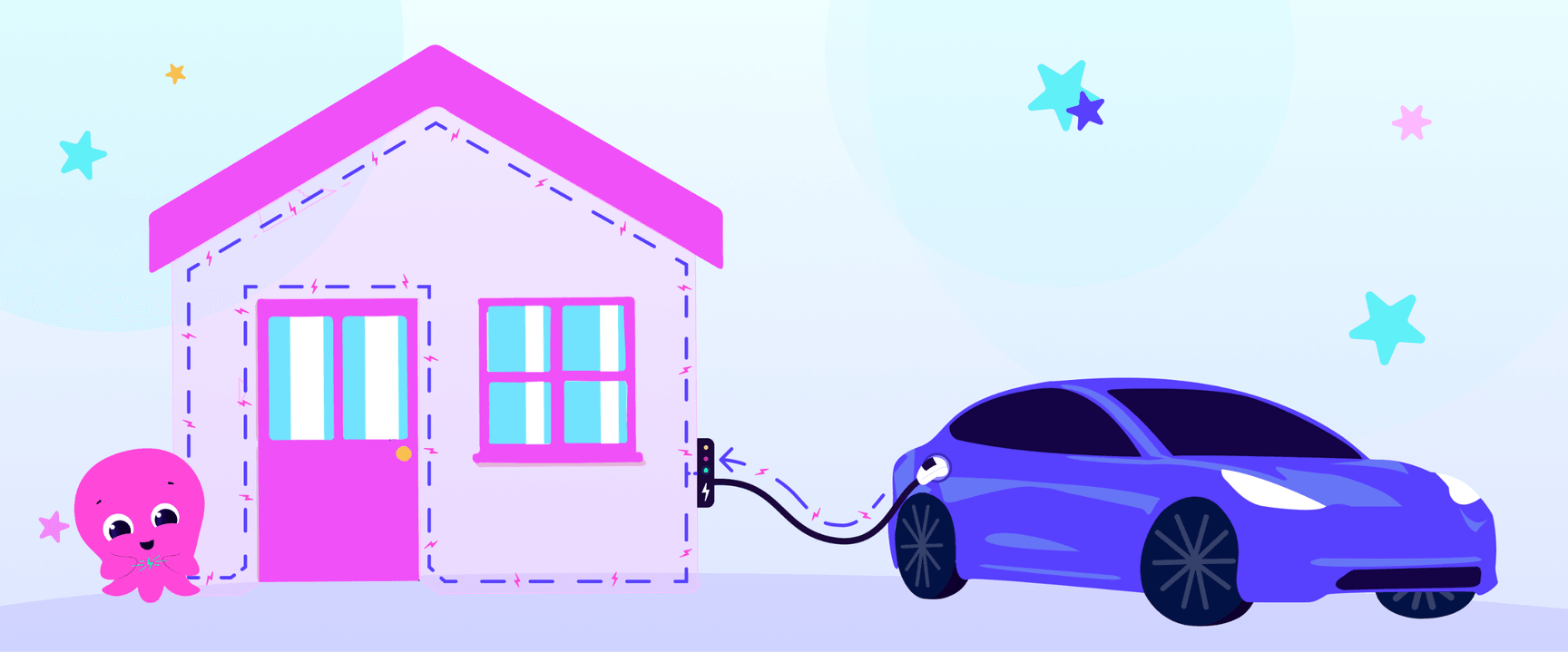
Vehicle-to-home (V2H) charging allows your EV to power your household directly. Energy stored in your car's battery — whether charged overnight on a cheap tariff or topped up from solar panels during the day — can run your home appliances, reducing your reliance on the grid.
This makes V2H technology particularly valuable during power outages (your EV becomes a home battery backup) and during peak energy pricing periods, when drawing from your car instead of the grid can deliver real savings.
What you'll need for V2H:
A compatible EV with V2H capability
A bidirectional home charger (such as the Wallbox Quasar 2 or the Indra Smart Pro V2H)
A CT (Current Transformer) meter installed at the main grid connection point to manage loads above 100 Amps
One of the biggest 2026 developments for V2H in the UK: Volkswagen has confirmed that all ID. models with the 77 kWh battery are "BiDi ready" — and bidirectional capability is being unlocked via a free over-the-air Software 3.5 update, with V2H as the initial focus. Given there are tens of thousands of VW ID. vehicles already on UK roads, this is hugely significant.
The MG ZS is one EV model that features V2L bidirectional charging. Once the V2L adapted lead is connected the EV is essentially turned into a portable battery!
3. Vehicle-to-Load (V2L)
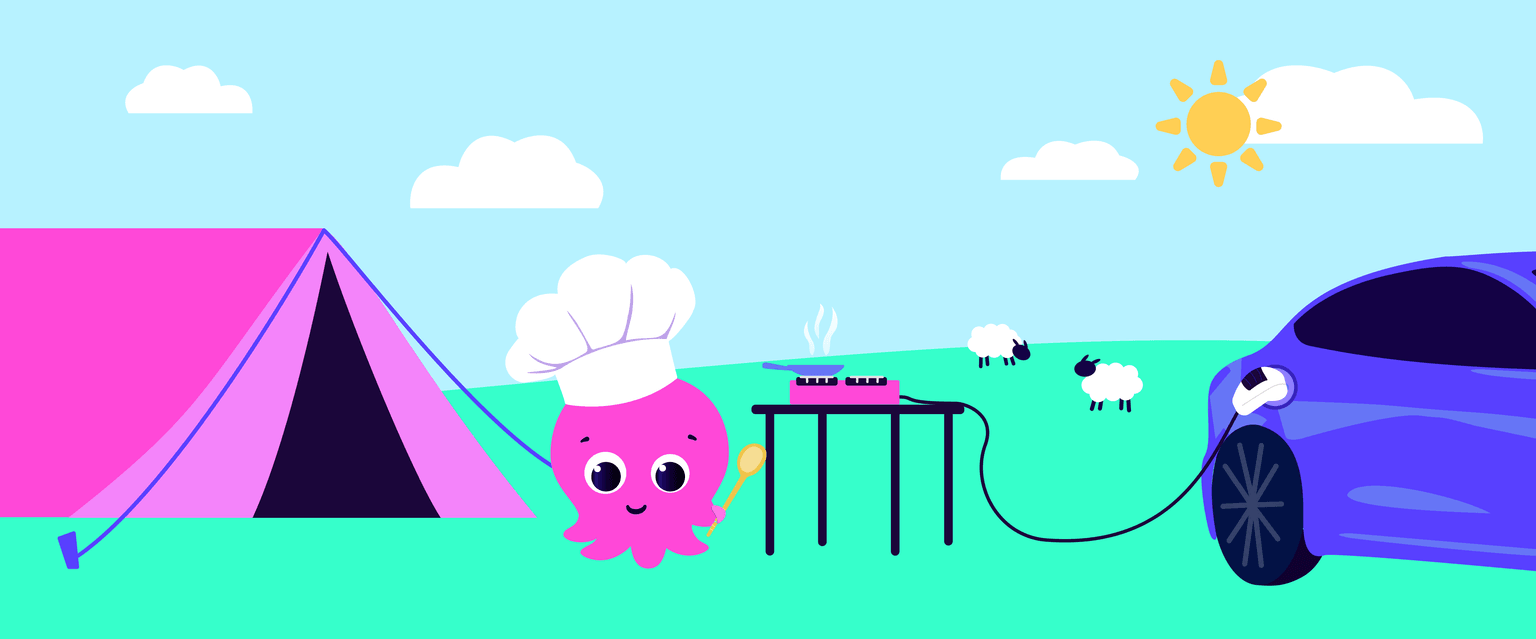
Vehicle-to-load (V2L) technology lets you use your EV's battery to directly power external devices — from laptops and camping equipment to power tools and appliances. It's the most accessible form of bidirectional charging because it doesn't require a bidirectional home charger; just a compatible EV and a V2L adapter.
V2L is especially popular with:
Lorry drivers and tradespeople powering tools on the go
Campers and van-lifers in remote locations
Anyone who needs a portable power source without a generator
A compatible EV is required, but a bidirectional home charger is not.
4. Vehicle-to-Vehicle (V2V)
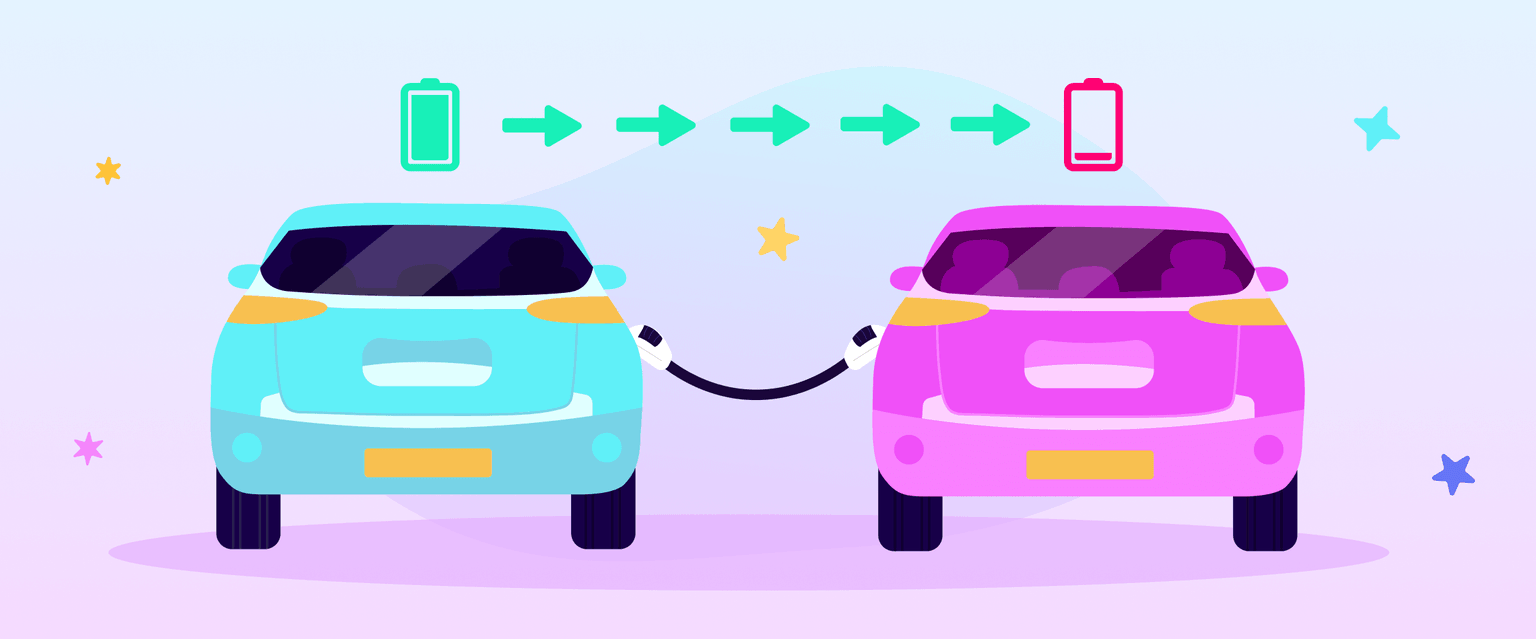
Vehicle-to-vehicle (V2V) charging is the least common type, but it could be a lifesaver in a pinch. If your EV runs flat in a remote location, another compatible EV can charge it directly. It's not widely implemented yet, but as bidirectional capability becomes standard across more models, V2V has the potential to become a practical emergency solution.
Two compatible EVs and a bidirectional connection are required.
Which UK EVs support bidirectional charging in 2026?
Not all EVs are created equal when it comes to bidirectional charging - the clever tech that lets your car not only take power but give it back too. In the UK, models like the Nissan Leaf, Nissan e-NV200, and Mitsubishi Outlander PHEV are already capable of vehicle-to-grid (V2G) or vehicle-to-home (V2H) charging thanks to their CHAdeMO connectors. A few newer models, such as the Kia EV9 and Hyundai Ioniq 5, support vehicle-to-load (V2L) via their CCS ports, letting you power appliances directly - but not yet feed energy back to the grid.
The reason most EVs can’t do this (yet)? It’s a mix of hardware limitations, charging standard differences, and the fact that CCS-based V2G tech is still rolling out across Europe. But things are changing fast - here’s a look at which UK EVs already support bidirectional charging and which ones are next in line.
Which electric cars can charge bidirectionally?
V2L (Vehicle-to-Load) compatible EVs
BYD Atto 3, Dolphin, Seal
Hyundai Ioniq 5, Ioniq 6
Kia EV6, Niro EV
MG4, MG5, MG ZS EV
Polestar 2
Peugeot e-3008
Renault 5 E-Tech Electric
Nissan Leaf (older models)
V2H and V2G compatible EVs
Kia EV9 — widely regarded as the first mass-market V2H car in the UK
Volkswagen ID. family (77 kWh battery, via Software 3.5 OTA update) — including the ID. Buzz
Audi Q4 e-tron
Cupra Born / Tavascan (via Wallbox Quasar 2, CCS2)
Nissan Leaf (CHAdeMO-based V2G, UK grid certified)
Skoda Enyaq
Volvo EX90
Polestar 3
Mitsubishi Outlander PHEV
Mercedes-Benz GLC (2026) — announced for V2H via MB.CHARGE Home
BYD Dolphin — available in the UK bundled with a Zaptec wallbox and Octopus Energy tariff
Renault 5 E-Tech / Megane E-Tech — V2G service via Mobilize extending to UK in 2026
It's worth noting that Tesla does not currently support V2G or V2H via third-party chargers in the UK, though the Cybertruck supports V2H in some markets via its Powershare feature.
What bidirectional home chargers are available in the UK?
The V2G charger market is developing fast. Key options in 2026 include:
NexBlue Point 2 — Currently the most affordable bidirectional AC charger on the UK market. Supports OCPP 2.0.1 and includes a CT clamp and tariff automation out of the box. Best for most UK homeowners.
Wallbox Quasar 2 — The most powerful DC bidirectional charger available in the UK, supporting CCS2 with V2H and V2G modes, solar charging integration, and home energy management. Priced at approximately £6,100 before installation.
Indra Smart Pro V2H — Developed specifically for the UK market by Welsh manufacturer Indra.
Zaptec Go 2 — ISO 15118 compliant and V2G-ready; a strong option for those wanting an established brand.
Charge your EV cheaply overnight and use that energy to run your home during the day -reducing your reliance on peak-rate grid electricity and cutting your monthly bills.
Earn money (V2G)
Sell surplus energy back to the grid via a V2G tariff and get paid for it. Mobilize Power customers in France using this approach have reportedly saved around €600 in their first year.
Portable charger (V2L)
Use your EV as a giant power bank for tools, appliances, or camping gear - no generator needed.
Emergency backup power (V2H)
During a power cut, your EV battery can keep your home running. A typical 60–77 kWh battery is enough to power an average UK home for one to two days.
Energy independence (V2H)
Store solar energy generated during the day in your EV and use it in the evening. With the right setup, your home can run largely independently of the grid.
Intelligent Octopus Go is a smart tariff that uses its knowledge of the variation in energy pricing to reduce Octopus Energy customers’ bills - find out how on their website!
Intelligent Octopus Go customers also get 8% off charging with Electroverse.
V2G (feeding back to the National Grid) requires regulatory approval, which is still being finalised for some vehicle and charger combinations. The VW ID. family's over-the-air V2H update, for example, prioritises V2H first while V2G regulations catch up.
Vehicle compatibility
Not every EV supports bidirectional charging - and the capability needs to be built into the vehicle's hardware. CCS-based V2G is still rolling out across Europe, and as of early 2026, certified V2G chargers in the UK are still predominantly CHAdeMO-based. Of 14 UK type-testing applications for bidirectional chargers, 11 have reportedly failed — highlighting that this is still a maturing technology.
Cost
Bidirectional home chargers remain significantly more expensive than standard EV chargers. The Wallbox Quasar 2 costs around £6,100 before installation - more than five times the price of a standard home charger. More affordable AC options are emerging (like the NexBlue), but cost remains a real barrier for many.
When will bidirectional charging become mainstream?
The trajectory is clear: bidirectional charging is moving from early adopter territory to the mainstream. The key developments to watch in the UK:
VW ID. BiDi rollout - tens of thousands of vehicles already on UK roads gaining V2H capability via a free software update
CCS V2G certification - as ISO 15118-based chargers receive UK grid approval, compatibility will expand rapidly
Nissan's affordable V2G offering - aiming to bring V2G charger costs in line with standard home chargers
Mobilize V2G service - extending from France to the UK in 2026, covering Renault 5, Megane E-Tech, and Alpine A290
OEV (Octopus Electric Vehicles) have been working on a V2G project, aiming to boost renewable energy on the grid, called Powerloop. Find out more here!
Bidirectional charging allows electricity to flow in both directions between an EV's battery and an external source - whether that's the grid, your home, or a device. Rather than just taking power in, a bidirectional-capable EV can also give it back out.
How does Vehicle-to-Home (V2H) technology work?
A compatible EV is connected to a bidirectional home charger, which converts the car's stored DC energy into AC power for household use. A CT meter monitors the load at the main grid connection to ensure the system operates safely.
What is V2G charging?
Vehicle-to-grid (V2G) technology allows your EV to feed electricity back into the National Grid, typically during periods of high demand. Some energy suppliers pay you for this energy, turning your car into an income-generating asset.
Which UK EVs support V2H charging?
As of 2026, confirmed UK V2H-compatible vehicles include the Kia EV9, VW ID. family (77 kWh, with software update), Volvo EX90, Cupra Born/Tavascan, Nissan Leaf (CHAdeMO), and Mitsubishi Outlander PHEV, among others. The list is growing rapidly.
What equipment is needed for bi-directional charging?
You'll need a bidirectional-compatible EV, a certified bidirectional home charger (such as the NexBlue Point 2 or Wallbox Quasar 2), and - for V2H setups - a CT meter at your main grid connection point.