Driving an EV from the UK to Europe: Everything you need to know
So you've decided to take your EV across the Channel. Good call - it's one of the most sustainable ways to see the continent, and with Europe's charging network growing fast, it's easier than ever to plan a route that doesn't leave you watching the battery percentage like a hawk.
But "driving in France" and "driving in Germany" are two very different guides to "how do I actually get there in the first place?" That's the bit we're filling in here. Consider this your jumping-off point: the practical stuff for the UK-to-Europe leg, plus links to everything else you'll need once you've landed.
Getting your EV across the Channel
You've got two options: LeShuttle (formerly Eurotunnel) or a ferry.
LeShuttle is the quicker of the two - the crossing itself takes just 35 minutes, and you stay with your car the whole way. It's also properly set up for EV drivers: there are free rapid chargers at both the Folkestone and Calais terminals, so if you're cutting it fine on charge, you can top up before or after you cross rather than before you even leave home.
Ferries are a bit more of a mixed bag. Most operators don't have onboard charging, and a few routes have even introduced maximum charge restrictions for safety reasons, so it's worth checking the specific rules for your crossing before you book. The general rule of thumb: arrive with enough charge to comfortably reach your first charging stop on the other side, and don't assume you'll be able to top up on board.
Quick pre-departure checklist:
Valid passport (with at least 6 months left) and driving licence - a UK licence is fine for EU driving
A GB identifier if your number plate doesn't already include one
A Crit'Air sticker (Vignette Crit'Air) if you're heading into France - Paris, Lyon and several other cities require it for low-emission zones
Breakdown cover that's valid in Europe - check it covers EV-specific issues like recovery to a charger, not just fuel
Your car charged to at least 70-80% before boarding, with a backup charging point identified for the other side
The app you'll actually need
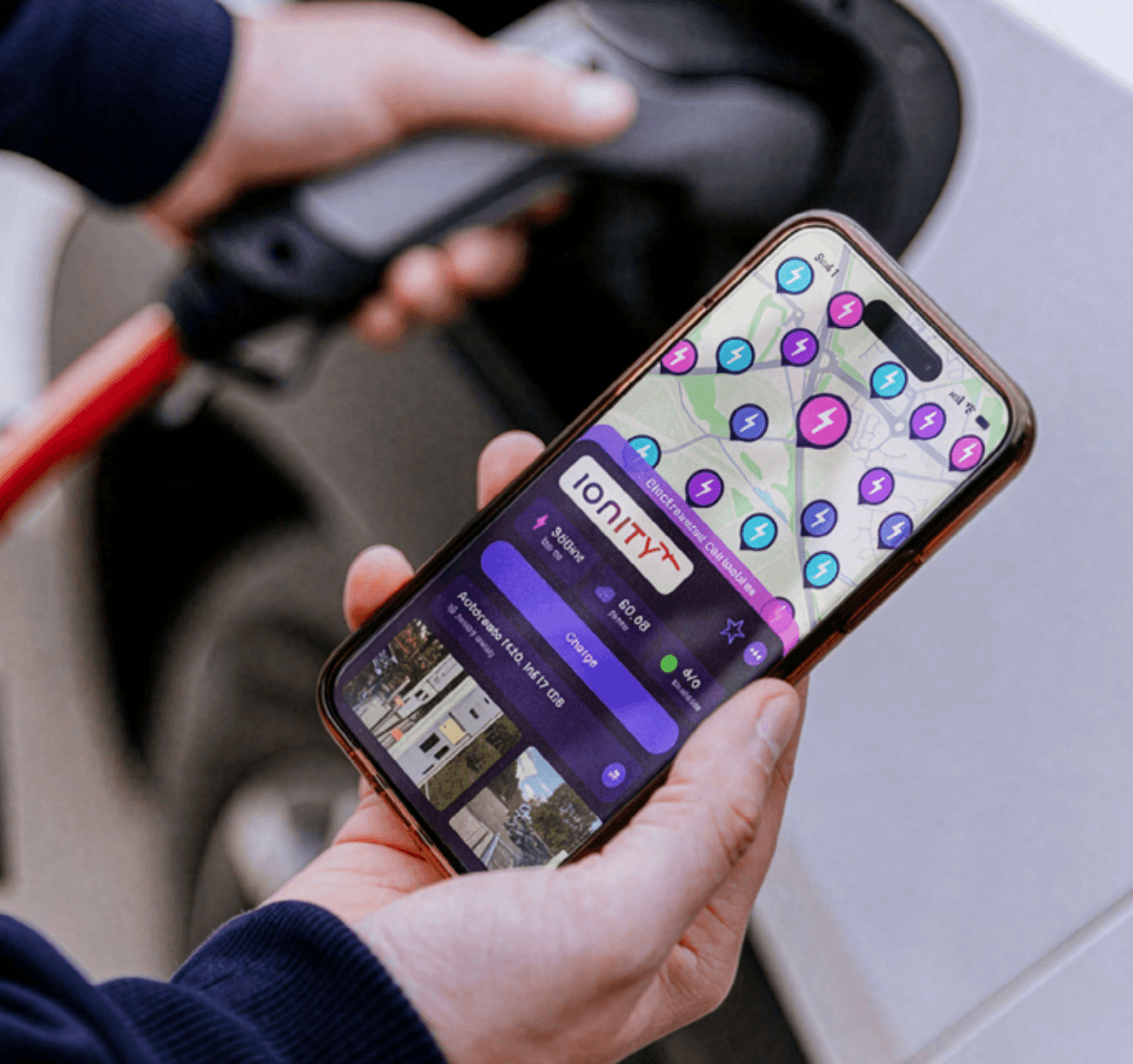
Europe's charging network is brilliant but fragmented - dozens of operators, each historically with their own app, card and pricing. The days of juggling half a dozen apps at every border are largely over, though: a good roaming app does the heavy lifting for you.
That's exactly what Electroverse is built for. One account and one card give you access to a huge roaming network across the UK and Europe, so you're not stuck downloading a new app every time you cross a border. Before you set off, it's worth:
Downloading the Electroverse app and adding your payment details in advance, so you're not doing it at the roadside
Checking coverage along your planned route
Getting familiar with the app's route planning tools before you're relying on them mid-journey
One app, sorted before you leave, is worth more than five apps you're figuring out on the go.
What will it actually cost?
This is where Europe gets genuinely varied. A full charge for a mid-size EV can cost as little as a few euros in countries like Turkey or Hungary, and upwards of €30 in places like Ireland, Germany, Belgium or Italy. The UK itself sits toward the pricier end of that scale too, so don't assume charging abroad will automatically be cheaper - it depends entirely on where you are and which network you're using.
The best way to keep costs sensible: stick to roaming networks with transparent per-kWh pricing rather than paying premium walk-up rates, and use an app that shows cost before you plug in.
How big is the network, really?
Bigger than most people expect. Europe's public charging network passed 1.3 million charge points in 2026 - a jump of around 6% in just the first four months of the year. Fast and ultra-fast chargers are the fastest-growing segment, which means the "will I actually find somewhere to charge" anxiety is becoming less and less justified, especially on major motorway corridors where rapid chargers now typically appear every 60km.
That said, coverage still isn't even. Western and Central Europe are well served; rural areas and parts of Eastern Europe can require a bit more planning. Worth bearing in mind if your route strays off the motorway network.
Who runs all these chargers?
You'll come across dozens of different operators on your travels - high-power motorway networks, country-specific providers, hotel and retail car park chargers. Rather than trying to learn them all individually, this is exactly the fragmentation a roaming network like Electroverse is designed to smooth over: it's the difference between needing one account and needing twelve.
Your country-by-country reading list
Once you've crossed over, here's where the detail lives. We've covered driving know-how and hotel stops for five of the most popular destinations for UK EV drivers:
Driving guides:
Where to stay:
A UK-to-Europe EV road trip isn't the logistical headache it might have been a few years ago. With Electroverse set up on your phone, a sensible charge before you cross, and a bit of route planning, the charging network genuinely holds up - and you won't be stuck fumbling for a new app at every border. Pick your destination above and get planning.
Feeling enlightened or do you think something was missing? Let us know by sharing your feedback.
Interested in learning more? Head over to our Electroverse Community area for more electrifying content.