Electro Beat: Your Monthly Dose of EV News (August 2026)
Welcome back to Electro Beat, your monthly pit stop for the latest updates from across the electric mobility landscape. From mini-Fiats taking over the golf course, to the $40 million Ferrari that’s completely rewritten the hypercar playbook, over the last 30 days we have collated plenty of interesting, electric stories for you to discover.
Let’s get plugged in…
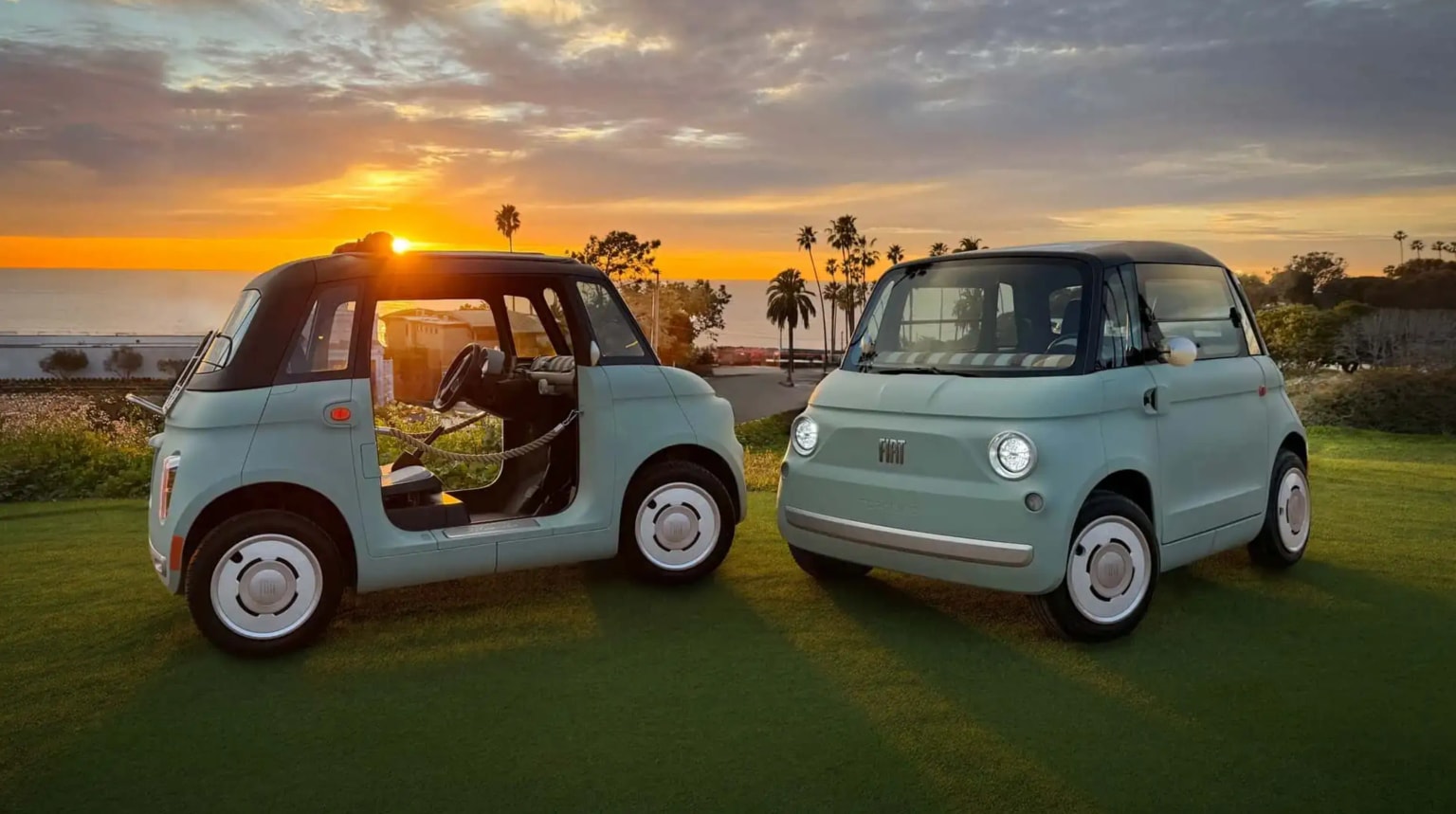
Fiat Topolino shakes up the U.S. golf buggy market
It turns out that the Fiat Topolino might just be the next-best thing for people who are buying golf carts.
According to the National Golf Foundation, 29.1 million people play on physical golf courses per year in the U.S., with 16,000 courses across the nation. And on top of that, the market for golf carts is huge - around $1 billion annually, plus 2.3 million people in the U.S. actually own one.
Enter the Topolino
Initially, Fiat shipped 300 of its Topolino model ahead of the October U.S. launch date. The model gets around 46 miles of range and charges on a normal outlet with a 5.4 kWh battery. Reaching speeds of 28 MPH (capped at 19 MPH in the U.S.), it’s no wonder people are eyeing them up for their round of 18.
Topolino Fact Sheet
Battery Capacity
5,4 kWh
Top speeds
28 MPH (capped at 19 MPH in the U.S.)
Range
46 miles
Cost
$13,995 (USD)
The reception says it all - according to Automotive News, Fiat have had to ship more units earlier than planned:
In Florida, Alfa Romeo Fiat of Daytona sold its first six Topolinos immediately.
In Minnesota, Schmelz Countryside Alfa Romeo and Fiat sold five before they hit the lot.
Golling Alfa Romeo Fiat in Michigan has sold 10 of its 14 and already ordered an additional nine.
Flying into the future: Airports are going electric
From fully electric planes to overhead EV charging in airports, America is taking electric flying to new heights!
The world largest electric plane
Meet Heart X1, officially the world’s largest electric plane! This battery-powered aircraft went for its first test flight on the 12th August at Plattsburgh International Airport in New York and proved that it could take to the skies. As the largest, zero-emission, commercial plane, this is a major leap forward in the aviation industry!
Built by Heart Aerospace, this all-electric plane hit 1,100ft (335.28 meters), which is around as tall as the Eiffel Tower - if not a little higher! But the most striking takeaway from the 27 minute test flight? The total electricity used to power the 25,000lb+ (11,300kg+) aircraft into the air cost roughly $5 (£3.68)!
Here are some fun stats about the plane and the flight for aviation fans:
Wingspan: 106 ft
Length / Height: 76 ft / 24 ft
Weight: 25,000+ lbs
Powertrain: 100% electric battery (>1 MW power output)
Flight Duration: 27 minutes
Max Altitude Reached: 1,100 ft
Max Speed / Load: 140 kts (VNE) / 1.5G
Flight Crew: 1 Pilot
Energy Cost: ~$5 USD
"Electric commercial aircraft have the potential to fundamentally reshape airline economics and, ultimately, lower the cost of air travel for passengers." - Anders Forslund, Founder and CEO of Heart Aerospace.
Overhead charging for electric vehicles at airports to accelerate rental fleet electrification
Continuing the conversation surrounding electric, aviation progression: whilst electric planes are taking to the skies, overhead EV chargers are being built at Portland airport!
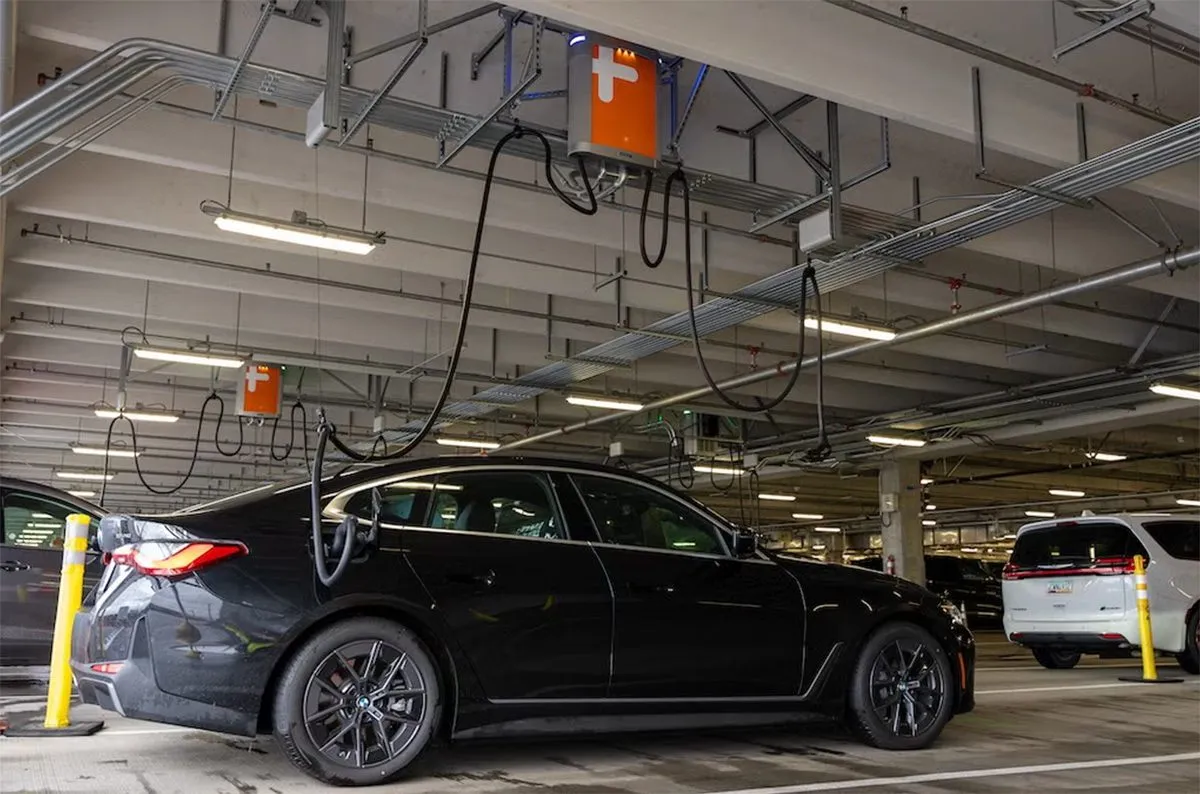
ChargePoint has announced the installation of an innovative, overhead DC (fast charging) system at Portland International Airport (PDX). Designed specifically to support rental car fleets, the system addresses major space, cost, and infrastructure constraints typical of busy airport operations.
The new installation is located inside the airport’s Quick Turnaround (QTA) Facility, the hub where rental car companies clean, inspect, and process vehicles between customer rentals.
By taking charging off the ground and mounting it overhead, ChargePoint and the Port of Portland have solved two primary pain points for dense fleet charging hubs: physical footprint limitations and hardware vulnerability. In essence, there will be more space and therefore chargers are less likely to get damaged in the turnover process!
Some of the best features the overhead charging provides:
Capacity - 10 dual-port fast chargers so 20 EVs can charge at once
Overhead retractable reels - no dragging heavy cables across dirty floors
Damage control - 0% chance of a tired driver reversing into a charging pole
Cost saving - massive cuts in installation costs by skipping ground trenching, conduit (a tube for protecting electric wiring), and heavy floor wiring
"The Port of Portland’s investment demonstrates how fast charging can integrate into existing parking lots without sacrifices for equipment placement." - Rick Wilmer, CEO of ChargePoint.
Ferrari jumps into the EV lane
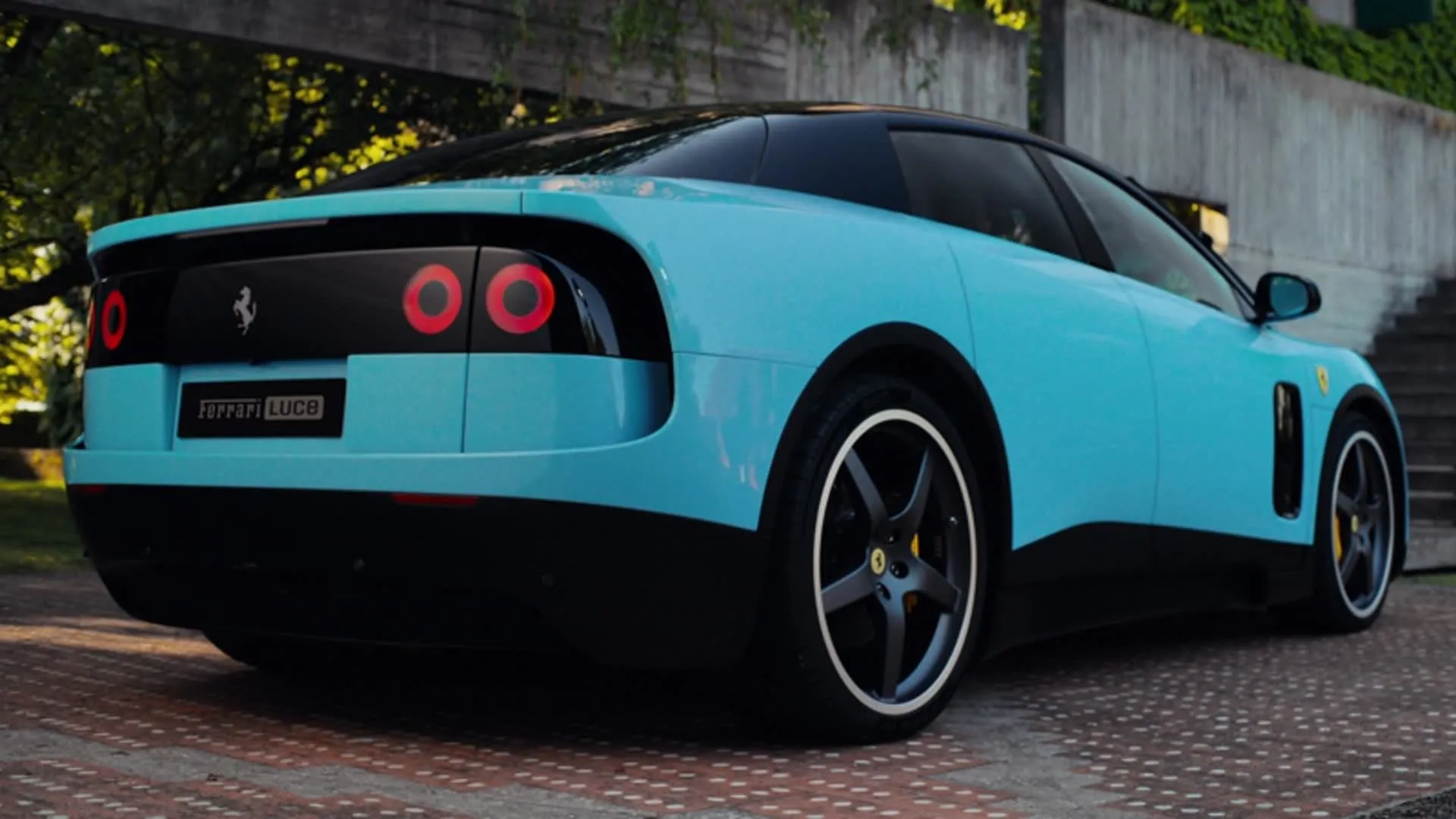
The Ferrari Luce, launched back in May 2026, has sold for a groundbreaking $40 million - around three times the price of the usual Sotherby sales. That’s like buying over a thousand Tesla Model Y EVs - for the price of one Ferrari Luce.
Although not beating the $142 million Mercedes Benz 300 SLR Uhlenhaut Coupe sale in 2022, the Ferrari Luce takes the prize for most expensive auction sale of an EV to date.
Designed by the iconic Sir Jony Ive, this new series of sports car hoped to express innovation, and style, while embracing the 2026 electric tech. Squiggly careers have nothing on Ive: from iPhone to royal emblems, and now a Ferrari. It’s like a designer’s dream bucket list item.
"With Ferrari Luce, we are once again redefining the limits of what is possible. Today, we are not simply unveiling a new car, we are inaugurating a chapter that turns our vision into reality, strengthening Ferrari’s tradition of anticipating and shaping the future.”
Here’s what you need to know about the Ferarri Luce:
Length = 5026 mm | Width = 1999 mm | Height = 1544 mm
Weight = 2260 kg
Weight distribution = 47% front/ 53% rear
Max power = 772 kW
Range = 530 km
0-100 km/h = 2,5 s
Charging time (10%-80%) = 18-23 minutes (DC fast charger)
ITechnical Innovation: why’s the Ferrari Luce so cool?
Other than the Ferrari yellow colour option of this new car, what makes the technology interesting in the world of e-mobility?
Four engine architecture
Essentially two engines per axle: 310 kW in the rear, and 105 kW in the front. The goal was not just to optimise power, but increase the torque control. For the rest of us non-car experts, this means the control of the twisting power. In the interest of safety, and a smooth drive, multiple engines allow for optimal torque (twisting) control.
Four engine architecture is more than the power, it helps, efficiency, thermal control, and longevity of the car - in true Forever Ferrari style.
VCU
The Vehicle Control Unit is a new phenomenon for Ferrari, and what better way than in their first EV.
The new choices:
Range: high frequency rear-axle torque alternation
= optimise efficiency
Perfo: Power Development Control, prevent electrical and thermal stress
= extends high level performance for longer
Sounds of fuel
One of the most popular complaints against the electric transition is the EV’s lack of sound. Big car fans enjoy the rumbling energy and power sounds of an ICE vehicle, using it as an excuse against making the switch to electric. As a legend in the luxury and sports car space, Ferrari not only addressed these issues, but did it with intention and authenticity. Rather than adding formulated sounds to mimic a combustion engine, they use the real sounds of the axle movements, and engine functions to enhance the driving experience. It creates a traditional Ferrari drive, and allows drivers to hear the functions of their car while on the road - like if they need to fix something!
However, in the Range option of the VCU, the Luce has the ability to go into EV mode - creating the desired silent drive associated with electric cars. Designed and built for driver preference, you can experience the best of both worlds with this new design.
Luce App
Talk about bringing Ferrari into the new world of mobility - the Ferarri Luce comes with its own app! With a range of statistics, from charging to range, to driving miles, Luce drivers can keep track of all areas of their EV, right from their phone. Even more important, it offers climate control - get those seat warmers ready before you even unlock the car.
Electric trucks are proving they can handle more than you might think
Electric trucks are no longer just a city-delivery story. New real-world trials in Scotland suggest battery-electric HGVs could already handle the vast majority of local and regional wholesale routes, while a new electric truck from Czech manufacturer Tatra is taking the technology into construction and mining.
Together, the developments show just how quickly electric power is moving into the heavier end of road transport.
95% of wholesale routes could go electric
A year-long trial involving Scottish wholesalers United Wholesale (Scotland) and Creed Foodservice found that up to 95% of their short and regional delivery routes could be completed using electric HGVs.
The companies tested 18-tonne Renault Trucks E-Tech D trucks across real-world, multi-drop food and drink deliveries, including different seasons and operating conditions.
The results have been encouraging!: the electric trucks consistently matched or even exceeded the performance of their diesel equivalents on local routes.
The surprising bit? Range
One of the biggest findings was how little of the available battery capacity the trucks actually needed.
On average, the electric HGVs used just 36% of their available battery capacity during the trial. In other words, there was considerably more range available than the vehicles needed for the routes they were operating.
For fleet operators worried about whether an electric HGV can make it through a busy day, that's an important finding. It suggests that for predictable routes where trucks return to a depot, range may be less of a barrier than some operators expect.
And there's a financial benefit too
The trial wasn't just good news for emissions.
United Wholesale (Scotland) reported savings of around £10-£20 per 100km compared with diesel.
Creed Foodservice estimated an annual saving of £6,630 based on February 2026 energy and fuel prices.
Each vehicle could save around 10-13 tonnes of CO₂ a year.
Charging at the depot helped keep running costs down.
Of course, electric HGVs won't be the right fit for every fleet. Charging infrastructure, payloads, route lengths and vehicle utilisation all need to be considered. But the trial suggests that operators with regular local and regional routes could already have a strong case for testing the technology.
Instead of asking whether an entire fleet can switch to electric, operators may be better off looking at which individual routes are ready to make the change today. Octopus Fleet can help you on your journey to electrification no matter what stage you’re at!
From food deliveries to 22-tonne off-roaders
And electric trucks aren't stopping at the supermarket depot. Tatra Trucks has unveiled its first fully electric truck, the Force e-Drive BEV - an 8x8 prototype designed for some seriously tough jobs in construction and mining.
The truck packs a 480 kWh battery, up to 550 kW of power and a claimed range of 300–400 km. It can carry up to 22 tonnes and tow a further 18 tonnes, while its eight-wheel-drive setup is designed to tackle challenging off-road terrain.
It's still a prototype, so there's no guarantee it will enter series production. But its development is another sign that manufacturers are exploring where battery-electric power can work in heavy-duty applications that once seemed firmly tied to diesel.
Colombia introduces first electric buses in Bogotá
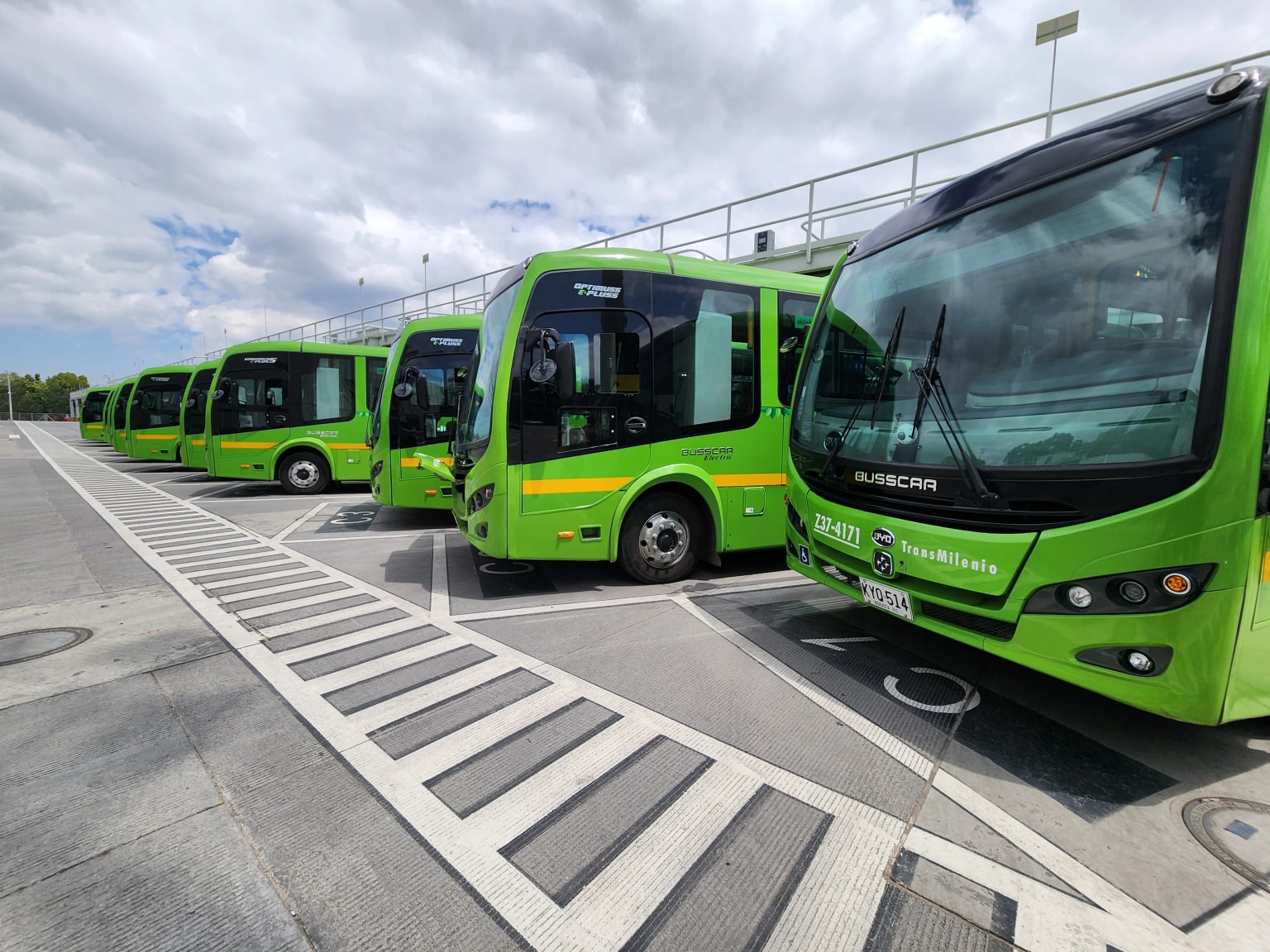
South America continues building momentum in electrifying its public transport, with the region now boasting over 10,000 electric buses. To add to the tally, Colombia has added their first electric articulated buses to their TransMilenio network.
The 50 new buses feature all the mod cons, including WiFi, USB charging port, cameras, blind-spot monitoring, real-time telemetry, and digital rear-view mirrors. It comes as Bogotá kicks off a massive electrification programme, planning to get 900 new battery-electric buses into its TransMilenio public transport network between 2026 and 2029.
Here’s how the rollout stacks up:
631 shiny e-buses are stepping in to replace ageing, internal-combustion predecessors.
Another 269 electric articulated buses are earmarked for phase two, extending the TransMilenio network right out towards Soacha.
The latest procurement batch brings 147 new vehicles into the mix (including 97 electric minibuses and standard buses already rolling around).
Once all 900 EV buses are out on the streets, TransMilenio expects to save roughly 57,500 tonnes of CO₂ emissions every single year.
Irish EV drivers could be paid to charge at home
The goal: to balance the national grid. The benefit: getting paid to charge your vehicle?
ESB Networks have partnered with Ohme to launch EV Flex to help drivers optimise their home charging habits. It works with the Ohme home charging data to offer suitable charging times to work with driver preferences and the grid availability.
July 2026 saw a 98% increase in EV registrations compared to the previous year, with EVs holding a 26.1% share of the Irish EV market. As more make the move to electric, the charging infrastructure needs to keep pace. In comes EV Flex: get paid to charge your vehicle at home.
The aim is to encourage sustainable charging habits (such as plugging in more often) and reducing the pressure on the grid at peak times where possible. The trial started on the 10th August 2026 with hand picked Ohme drivers in the Republic of Ireland. By utilising Vehicle To Grid technology, it optimises the cost of charging the vehicle, while pushing energy back through the grid. Essentially, the more times you plug in, the more rewards you can earn. Drivers could earn up to €12 a month in rewards at over 50 retailers in Ireland.
3 Plug-ins per week = €1
4 Plug-ins per week = €2
5+ plug ins per week = €3
There’s a few technical bits to know if you’re on the trial:
Charge as often as you can, the more you plug in the more you could gain
It needs to be a different day each time, 3 times in one day doesn’t work
There’s a minimum time of 6 hours each plug in to enhance the energy transfer
The Ohme app helps drivers find their cheap charging slots and keep up to date with their plug-in opportunities. They’ve even included a charge target in their app, to help drivers maintain their regular driving habits. The trial is set to run for just over 5 weeks, with up to €70 rewards to be won by any driver.
Find out more about bi-directional charging (aka V2G) - check out the Electroverse guide for how it all works.
This isn’t the first time Ohme is making moves to support home charging on the Irish grid. Early 2026 saw the Ford and Ford Pro partnership with Ohme, offering the Ford Power Promise, offering a complimentary home charger install for select models. This was a direct response to a Ford survey across 5000 drivers in Europe, finding 25% of customers were uncertain about making the switch to EV and were nervous about charging. As the education around electric cars and home charging tech grows, this partnership helped boost the trust in EV charging and V2G education.
Although the offer is now closed for both consumer and businesses, Ford Ireland reported a 500% year-on-year increase in EV sales. The deal included access to over 2,127 charging points across the Ford BlueOval Charge Network for drivers to stay charged on the public network.
What’s available in the UK?
The UK version of this is run by our very own Octopus Energy Group.
Announced in June 2025, Octopus, BYD, and Zaptec, powered together to offer the Power Pack Bundle - revolutionising charging for UK drivers. Offering free home charging covering the lease of the vehicle, drivers could save an annual £620 on charging, and up to £1000 compared to petrol cars.
What you’ll need to save on this deal:
Be an Octopus Energy customer OR be willing to switch
A G99 licence - can take up to 12 weeks
Be able to plug your EV in for 12 hours a day x 20 days a month
Although a big time commitment, it not only saves you money, but supports the share of energy across the grid.
Lucky for UK EV drivers, this deal is still available! There’s quite a few checks and bits to sort before you start saving, but Octopus Electric Vehicles explain it on their Power Pack Bundle page.
Feeling enlightened or do you think something was missing? Let us know by sharing your feedback.