Electro Beat: Your monthly dose of EV news (July 2026)
We're back with another edition of Electro Beat – your monthly roundup of the biggest stories driving the electric vehicle world. This month, we're looking at Germany's historic EV tipping point, ENVO's Lego-style modular EV, the world's first electric ice cream van, and plenty more electrifying news.
Let's get plugged in…
The Multi-Tasking EV - how ENVO are changing the game
Have you ever wanted to unleash your inner child and create a life size Lego car? Canadian company ENVO is making these dreams a reality. This Modular-EV is changing the way people view their vehicle needs. Rather than selling one vehicle for one job, drivers can build any vehicle to fit their desired purpose. In other words, you can have your very own Lego EV.
Electric vehicles are as easy to use as your bog standard vehicle, but ENVO are yet again proving that EV is nothing like ICE. Revolutionizing the way we look at e-mobility, the goal is in:
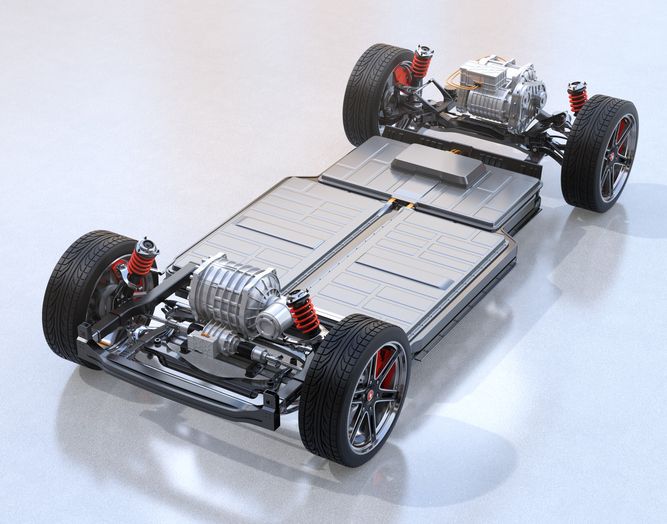
By simplifying the vehicle to its original parts, the opportunities are endless. Titled the “skateboard platform” it has a fully validated rolling platform, with the possibility to adapt to almost 20 different use cases. Supporting battery, motors, suspension, steering, brakes, controls, it allows for a variety of vehicle types to work with and function around the required purpose.
The techy bit - here’s how this innovation works
T-Slot Frame: can extend out or shrink down, changing the length or width and allowing for any bolt ons, allowing drivers to reconfigure for any job.
Minimal space: collapses down to easily transport between use-cases.
Swappable batteries: to easily match the function, without fundamentally changing the vehicle.
From medical resources, to agriculture to filming equipment - this little EV can do it all. Designed for personal use for local and recreational travel, it can be developed into a functional business strategy. The ENVO headline states this creation is “For every fleet, every builder, every industry.” For a business with multiple moving parts, the ability to invest in one vehicle that can scale and grow as the business does is instrumental for future-proofing light weight vehicle logistics.
It doesn’t stop there! When stripped back to the bare bones, this bit of tech is being used for Canadian university projects. By removing the time spent creating the base of the vehicle and allowing for more detailed student innovations, it’s supporting the creativity and success for these trainee technicians.
From ENVO’s business standpoint, the adaptability of this product removes the low volume production issue, by mass producing the base vehicle and allowing customers to design for their own needs, rather than trying to create a one-size-fits all product.
Benefits of the Modular EV:
It removes unnecessary waste and overconsumption: buy one and adapt it to your daily needs.
The power is put back into the customer. The advanced technology allows drivers to adapt their own vehicles rather than needing extra people and steps to be involved.
The options are endless, and therefore supports a growing ecosystem of vehicles - even for light vehicle fleets!
Reviews are comparing it to the smartphone of e-mobility by combining multiple vehicles in one - the ultimate multi-tasking EV. Build your electric vehicle for today, and adapt it for your driving of tomorrow.
Charging infrastructure is outpacing EV sales in Europe
New data from clean transport group, Transport & Environment (T&E), reveals a major shift across the continent: public charger installations are now exceeding EV sales in almost every EU member state!
Range anxiety is becoming a thing of the past now European charging networks are getting ahead of the curve. With the new EU charging infrastructure law: Alternative Fuels Infrastructure Regulation (AFIR), which requires member states to have at least 1.3kW of public charging capacity for every EV in the national fleet, driver concerns of getting stuck in charger ‘dead-zones’ are being long forgotten.
Where?
The expansion isn't just happening in a few isolated countries; it's a widespread trend across Europe!
In virtually every EU country - 26 out of 27 Member States - the pace of public charger deployment is now moving faster than the rate at which new battery electric vehicles (BEVs) are hitting the road.
This means that almost all member states are currently meeting or exceeding the benchmarks laid out by the AFIR!
Under the EU's AFIR guidelines, major highway corridors must have fast DC chargers (150kW or higher) placed no more than 60 km apart. According to T&E, nearly four fifths (79%) of these routes already meet this standard!
What does this mean for electric vehicle owners?
Fewer queues - shorter waiting times at charging sites due to an increase in infrastructure!
Pricing transparency - with more chargers available, private charging operators need to rethink their prices to ensure they’re the charger you choose!
Whilst local gaps still exist, an increase in charging infrastructure can only mean positive things for electric vehicle owners!
“Today EV drivers do not have far to go for a public charger. The charging targets are working as intended and have enabled huge growth in the EV market.” - Lucien Mathieu, T&E Cars Director
The future of ice cream has arrived... and it's electric
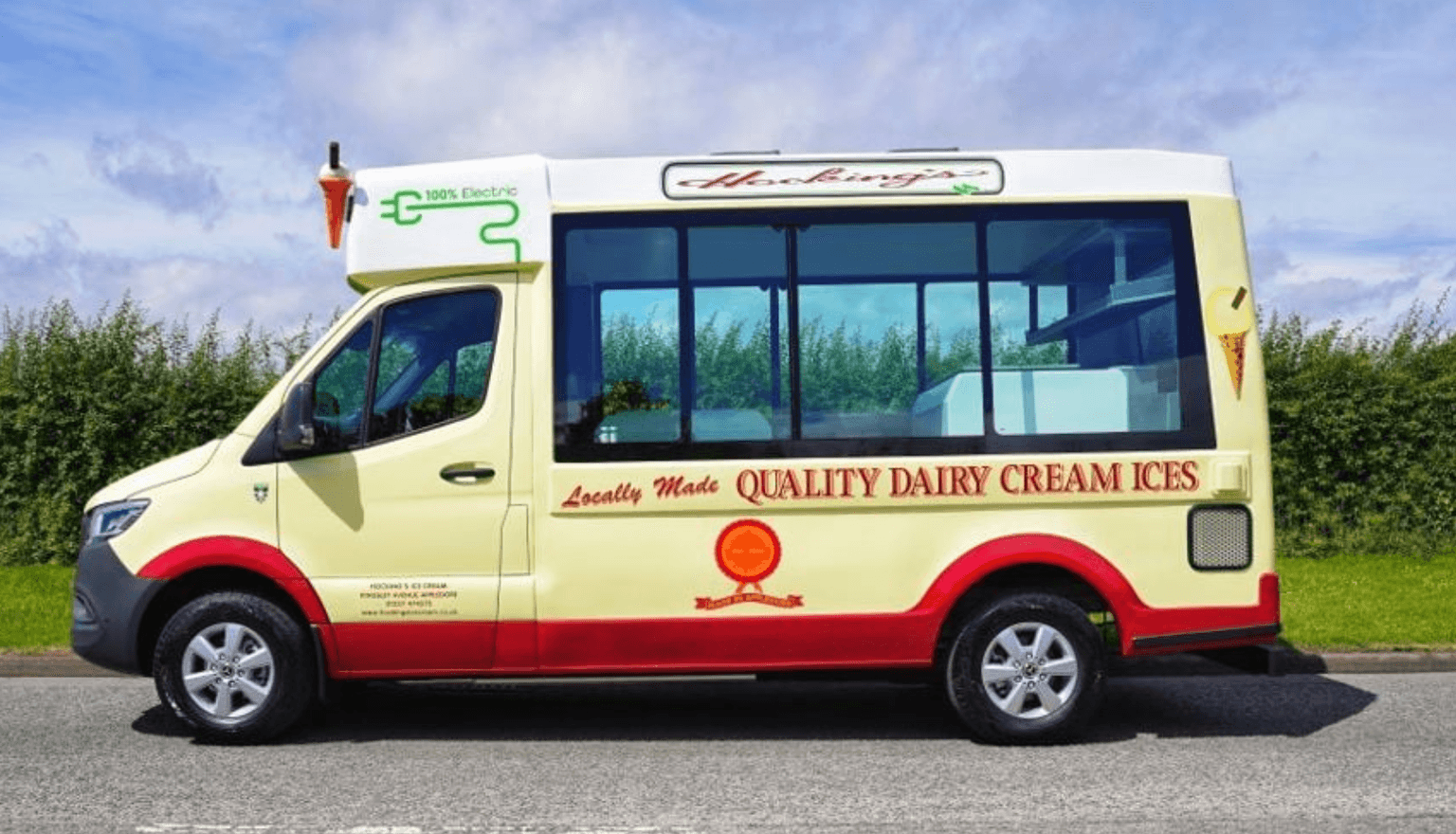
Who said EVs can't be cool? The world's first fully certified electric ice cream van has officially hit the road, swapping the familiar diesel engine for an all-electric Mercedes-Benz eSprinter.
Built by UK specialist Whitby Morrison, the new van delivers everything you'd expect from an ice cream van - just without the engine noise or tailpipe emissions. That makes it ideal for parks, town centres, schools and other busy public spaces where quieter, cleaner vehicles are a welcome sight.
Here's the scoop:
Built on the all-electric Mercedes-Benz eSprinter
Charges from 10% to 80% in around 34 minutes
Zero tailpipe emissions
Quieter operation for parks, events and neighbourhoods
The first electric ice cream van has already been delivered to Hocking's of North Devon, a family-run business that's been serving up cones for generations.
While it might seem like a small step, it's another reminder that electrification isn't just transforming cars. From delivery vans to emergency vehicles - and now even ice cream vans - EV technology is finding its way into more everyday jobs.
The UK has thousands of ice cream vans on the road. If more make the switch to electric, summer treats could become a little quieter and a lot cleaner.
Spain doubles down on EVs with new grants and a major manufacturing boost
Spain is giving its electric vehicle ambitions a serious push. Alongside announcing a brand-new Auto+ grant scheme worth €400 million, the country has also secured a major manufacturing partnership between Ford and Geely that could see new electric models rolling off production lines from 2028.
Together, the announcements are a sign that Spain is investing in both sides of the EV journey.
Auto+ replaces MOVES III
Spain has officially launched Auto+, a new electric vehicle incentive scheme designed to make buying an EV simpler, quicker and more attractive. Replacing the previous MOVES III programme, Auto+ will run until the end of 2030, giving drivers and manufacturers greater confidence about the future of EV support.
One of the biggest improvements is how the grants will be managed. Unlike MOVES III, which was administered regionally and often left buyers waiting months for their payments, Auto+ introduces a single national online application system. The aim is to cut processing times from months to just a few weeks, making the incentive much more accessible.
What's on offer?
Drivers buying an eligible electric vehicle could receive:
Up to €4,500 towards a new electric car
Up to €5,000 for an electric van
Up to €1,100 for electric motorcycles
Higher grants for self-employed drivers, micro-businesses and companies, with support of up to €12,000 available for some electric vans
The €400 million scheme also applies retroactively to eligible vehicles purchased from 1 January 2026, meaning many recent EV buyers could still benefit once applications open.
Unlike the previous scheme, Auto+ focuses solely on vehicle purchases. It no longer includes grants for home or public charging infrastructure, with funding instead concentrated on helping more people get behind the wheel of an electric vehicle. To qualify, vehicles must also meet Spain's ZERO emissions environmental standard.
Long-term funding until 2030, faster grant payments and a simpler application process could remove some of the biggest barriers to EV adoption. For buyers, it means greater certainty when planning an electric car purchase, while manufacturers gain a more stable market to invest in.
More EVs could soon be built in Spain
Backing up the new incentives, Ford and Geely have announced plans to create a joint venture at Ford's Valencia factory.
The partnership will transform the site into a shared production hub for next-generation low- and zero-emission vehicles destined for European roads.
Among the models expected from 2028 are:
A new Ford family crossover
A new member of the Bronco family
Two all-electric Geely SUVs
Germany’s EV tipping point: EVs outsell fuel cars for the first time
As a natural next step for the country that brought us the internal combustion engine, battery electric vehicles (BEVs) have officially snatched the crown as Germany’s favourite vehicle. According to recent data from the motoring association ADAC, Europe’s largest car market has finally reached its long-awaited tipping point: pure EVs have outsold traditional petrol and diesel cars, setting a new sales record in the process.
The numbers speak for themselves. BEV registrations hit 84,057 for the month, while traditional petrol cars lagged with 60,796 units, followed by diesel at 33,862 and plug-in hybrids (PHEVs) at 32,212. This electric surge gives purely battery-powered cars a 28.4% market share, and when you add PHEVs to the mix, they make up 39.3% of all new car sales.
This marks a big milestone in Germany’s EV adoption, and the environmental payoff is already showing up in the data - with average CO2 emissions for new cars in Germany dropping by 13.6% year-on-year.
Rank
Brand
BEV 2026 (HY)
Total Sales 2026 (HY)
% Share Electric
Total market
368 006
1 484 393
100,0
1
VW
49 495
273 747
13,4
2
SKODA
36 654
128 218
10,0
3
BMW
30 943
126 766
8,4
4
TESLA
28 857
28 857
7,8
5
MERCEDES
26 133
125 960
7,1
New EV charging Innovations coming for fleets looking to electrify
Deploying EV infrastructure isn’t about creating a one-size-fits-all solution. Two major announcements this week highlight a dual strategy emerging across commercial fleet electrification: ultra-high-power fast hubs for heavy transport on the go, and low-friction charging for vehicles parked overnight or at the office.
Here’s how two companies are tackling both challenges for fleets!
The low-friction charging set-up
Schneider Electric has introduced Schneider Charge Pro, an end-to-end commercial EV charging solution targeting commercial fleets, workplaces, retail, multi-family housing, and hospitality facilities. The goal is an integrated ecosystem designed to remove deployment headaches for site managers.
What are the key features?
Depot power: Delivered in 48-amp or 80-amp configurations (up to 19.2 kW), capable of adding 60 to 100 miles of range per hour - ideal for overnight fleet dwell times.
Combines outdoor-rated hardware, firmware, and cloud software (EV Connect Software+) under a single vendor to reduce the total cost of ownership and remove the risk of cross-vendor troubleshooting.
Supports both NACS and J-1772 connectors. Drivers start sessions via a QR code scan.
Partners with Qmerit (who have ~24,000 certified installers across North America) to handle installation and scaling.
While this project is targeted at North America, it’s a positive move for global fleet electrification - showing that there’s more flexibility coming to charging solutions for fleets!
The high-power fast hubs
Meanwhile in Europe, Portuguese infrastructure maker i-charging has kicked off commercial deliveries of its flagship MAX charging platform, shipping its first units in Portugal with upcoming deployments planned for Germany and Switzerland.
What are the key features?
Built on a modular cabinet architecture that scales from 50kW all the way up to 1.6MW.
It uses proprietary dynamic power allocation to share output across up to eight connected vehicles at once, automatically tuning power flow based on real-time vehicle demand.
Developed in partnership with SOLUM (a Samsung spinoff), leveraging their high-density EV Power Modules to pack extreme power into a compact footprint.
Supports CCS, NACS, GB/T, and MCS (Megawatt Charging System for heavy-duty trucks).
The opportunity: While few vehicles today can draw 1.6MW on their own, the system’s real value lies in enabling high-density, multi-vehicle fast charging for busy logistics corridors and fleet depots.
Feeling enlightened or do you think something was missing? Let us know by sharing your feedback.