Electro Beat: Your monthly dose of EV news (June 2026)
We’re back with another edition of Electro Beat – your monthly roundup of the biggest stories driving the electric vehicle world. This month, we’re looking at the UK reaching a major EV sales milestone, Tesla’s futuristic charging diner, second-life EV batteries, and plenty more electrifying news.
Let’s get plugged in…
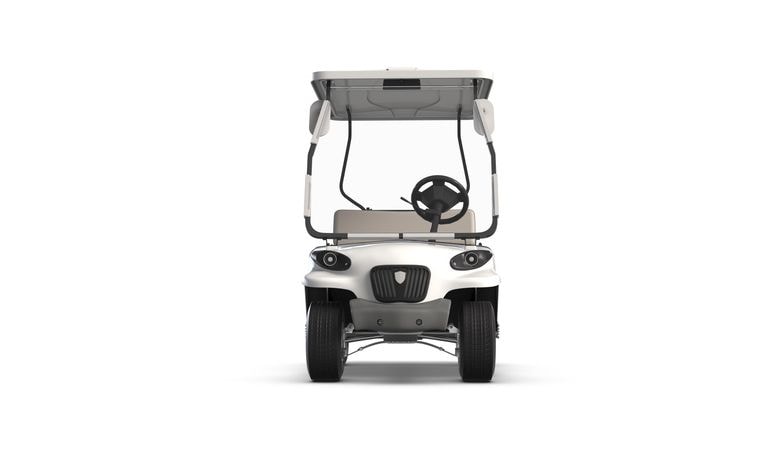
Minimalist, Doorless, and Street-Legal: Meet the Amble One
A swing but not a miss: this golf buggy is fully electric and road ready.
Minimalist, simple, back to the basics of driving. The love child of an E-bike, a golf cart, and a moon buggy - this stripped back and minimalist model goes back to the basics of driving. Without all the frills and tech associated with the modern day automobiles, the Amble One keeps it simple.
Created by the Portugal-based startup Amble, this new tech combines the skills of former Apple designer Julian Hoenig and Forpeople founder Michael Tropper, alongside entrepreneurs José António Uva and Adrien Roose.
Designed for quick journeys the intention of this buggy is to optimise hotel and resort travel around the larger sites. However, the designers want to remarket it as an everyday option for short range travel. Road ready, with a max speed of 65 mph! The school drop off never looked so simple.
Spec:
battery12 kWh lithium-ion
range>100 km
charge time 5,5h (ac 220/230v)
Motor 15 kW | 48V | RWD
Weight 450 kg
Top speed 65km/h
The lightweight efficiency means the cart weighs only a third of the classic mini cooper - optimising the drive for local errands and site seeing.
Amble aren’t the only ones designing simple and lightweight EVs. Former Ferrari-designer Lowie Vermeersch argues “making electric cars is not enough” and hopes to revolutionize the E-bike market. The Komma model aims to follow a stripped back approach to electric transport by keeping the model high tech but minimalistic. With the comfort of a car but the size of a bike, this model looks to ignite a change in electric mobility.
Moon buggy or glorified golf cart - take your pick. This newest addition to the EV tech is aimed to revolutionise local driving and strip back the over-engineered 21st century generation of cars.
Ban ICE: German Software company’s all electric fleet
SAP, already considered the most valuable company on the DAX index, are beating their national targets for fleet electrification. By banning employees from choosing ICE or hybrid vehicles, the push to electric has accelerated. The aim is to be climate neutral by 2030 - and they’re well ahead of the game.
“Electrification structurally reduces our dependence on fossil fuels and sustainably improves the overall costs of our fleet. This systemic approach is at the heart of our strategy."
With over 19,000 vehicles in their fleet, over a third already transitioned makes a huge impact in the company CO2 targets. With the ban, this number is only heading up.
Key factors for inclusion in SAP's program are:
fuel consumption,
workshop network and costs,
spare parts availability
aforementioned leasing rates.
Strategic planning since 2021, it's not an overnight fix, it requires momentum and planning to future proof a fleet. By putting the planning and ground work in early, not only are SAP on their way to meet their targets, but are seeing results almost immediately across the board.
Considered a radical approach to electrification, the German tech team looked back on their successes. With results seen in just 6 months, SAP report they’ve found a positive balance and experienced cheaper running costs with EVs and wide appreciation and success with the staff - a win-win!
Although driven by cost savings, it’s more than the money - it’s about the people. The way electric cars work is revolutionising the way people travel. The stops, especially on long journeys are now considered “more consciously, more slowly." In an increasing world of fleet burnout - from a driver and management level - the electric transition may change the way time is prioritised.
Is this the future for fleets? Find out how you can support your fleet electrification with Octopus Fleet.
Tesla’s diner is the ultimate charging destination
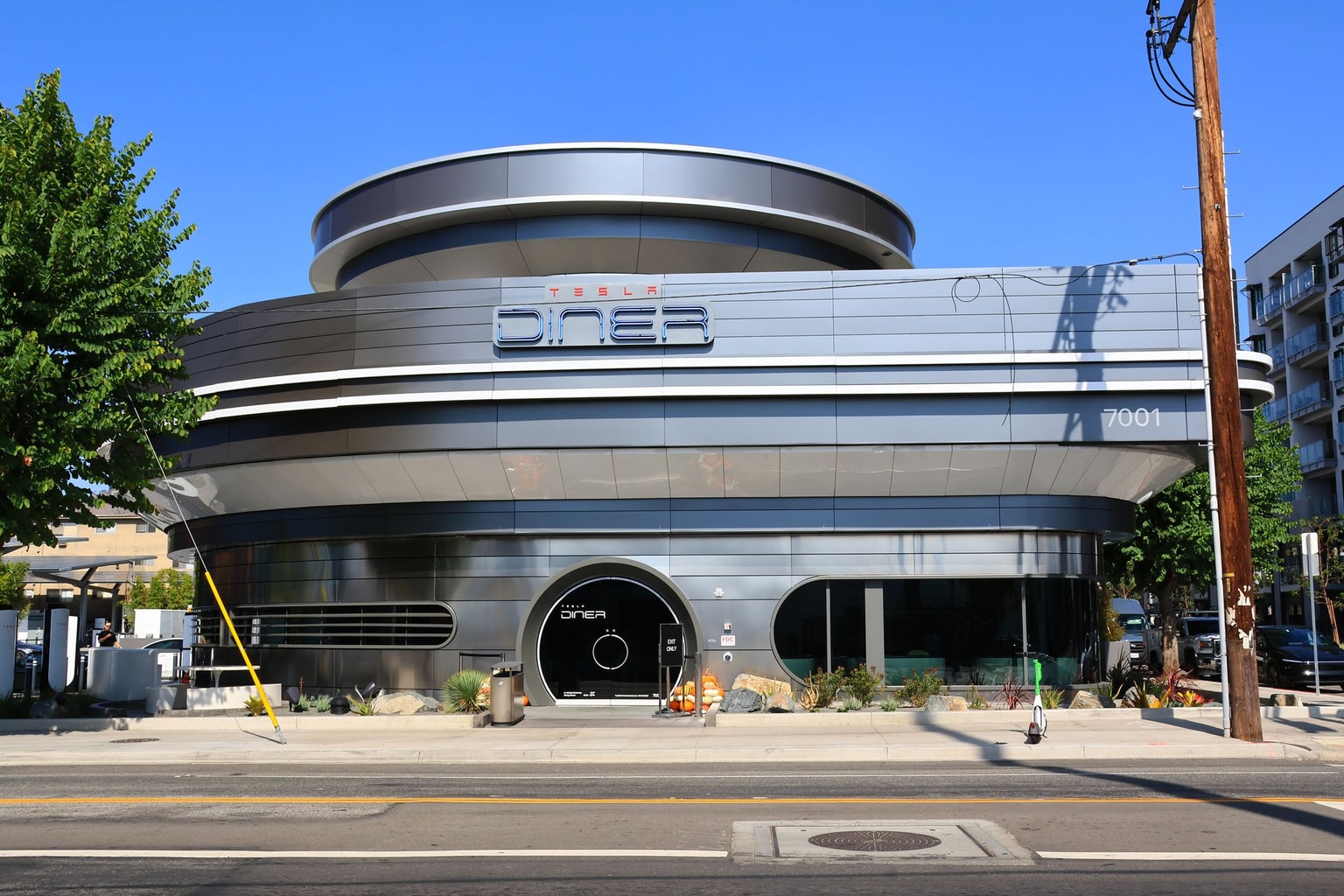
Have you heard of Tesla’s Hollywood diner? Located on Santa Monica Boulevard, this amalgamation of the retro and futuristic is a crazy concept brought to life by architecture firm Stantec. The silver building has a distinctive, spacelike silhouette, giving the impression of a flying saucer just landed.
Not only is this diner a restaurant with over 250 seats, but it’s currently the largest, urban Supercharger station in the world. With 80 Supercharger stalls on site, charger options are decent, plus the 80 V4 Supercharger stalls are open to both Tesla owners and NACS-compatible non-Tesla electric vehicles.
Due to the nature of the site, you have multiple options when choosing what to do whilst charging:
If you have a Tesla, you could stay in your car and order food via your touchscreen interface (there’s a Tesla Diner App you can download) and watch one of the 66-foot LED movie screens (audio streamed inside your car) - like a drive-in cinema.
Head into the restaurant and eat some food on the lower level, perhaps have a (non-alcoholic) drink at the bar.
Go up to the open-top second floor and watch the screens from the ‘theater-style viewing seats’, along with some food and maybe even some ‘Tesla diner merch’ for the road.
So far, it may not have triggered an immediate global wave of automated drive-ins, but it does successfully prove that EV charging infrastructure can blend seamlessly into traditional roadside car culture.
EV sales overtake petrol cars in the UK for the first time
The UK has reached a major milestone in its transition to electric mobility. For the first time, annual EV sales have overtaken petrol car sales over a rolling 12-month period, signalling a significant shift in consumer demand.
Between June 2025 and May 2026, more than 516,000 new electric vehicles were registered in the UK, compared to just over 504,000 new petrol cars.
A changing market
The latest figures suggest EVs are becoming the preferred choice for more new car buyers.
516,490 new EVs were sold over the last 12 months
504,010 new petrol cars were registered during the same period
EV sales grew by 34% year-on-year in May 2026
Petrol car sales fell by 14% over the same month
While hybrids continue to play an important role in the market, fully electric vehicles are now leading the way.
More drivers are making the switch
The UK first saw monthly EV sales exceed petrol car sales in late 2022, but this is the first time electric vehicles have maintained that lead across an entire year.
The milestone comes despite ongoing discussions around the UK's Zero Emission Vehicle (ZEV) mandate, with some manufacturers calling for changes to future sales targets. Even so, demand for EVs has continued to grow.
Why this matters
Passing petrol sales over a full 12-month period is more than just a symbolic achievement. It suggests the UK's EV market is moving beyond early adopters and becoming firmly established in the mainstream.
As more electric models become available and charging infrastructure continues to expand, this trend is likely to strengthen.
We’re not flying solo
The UK isn't alone. Similar milestones have already been reached across Europe, while global EV sales continue to rise year-on-year.
Together, these trends highlight the continued momentum behind electric mobility, even as governments and manufacturers debate the pace of the transition.
Have EVs permanently overtaken petrol cars?
This is the first time EV sales have exceeded petrol sales across a rolling 12-month period in the UK. While monthly figures will continue to fluctuate, it marks an important milestone.
Are hybrid vehicles included in these figures?
No. The comparison looks specifically at battery electric vehicles (BEVs) versus traditional petrol cars, with hybrids counted separately.
What does this mean for UK drivers?
It reflects growing confidence in EVs, supported by an increasing choice of models and continued investment in charging infrastructure.
World's largest EV battery repurposing facility opens in Canada
As more electric vehicles reach the end of their first life, attention is turning to what happens to their batteries next. A new facility in Vancouver hopes to provide the answer, with the opening of what's being described as the world's largest EV battery repurposing factory.
Rather than recycling batteries immediately, the facility gives them a second life by turning them into large-scale energy storage systems for businesses, hospitals and power grids.
Giving EV batteries a second life
Although an EV battery may no longer deliver the driving range expected by motorists, it often retains enough capacity to store and supply electricity for years to come.
The new facility will:
Test and assess retired EV batteries
Repurpose suitable batteries into energy storage systems
Support applications such as power grids, factories and data centres
Build a regional supply chain for battery reuse in North America
The factory is expected to reach a capacity of 1GWh by 2030, creating more than 100 skilled jobs along the way.
Why battery repurposing matters
As EV adoption continues to grow, so will the number of batteries reaching the end of their automotive life. Finding new uses for these batteries could reduce waste while helping meet the increasing demand for energy storage.
Repurposing batteries before recycling them also helps maximise the value of the materials already used to manufacture them, supporting a more circular battery economy.
Is this the future for EVs?
The future of EV batteries doesn't end when they leave the road. Giving batteries a second life could help reduce pressure on raw material supplies while providing the energy storage needed to support renewable electricity and growing energy demand.
It's another example of how the EV industry is evolving beyond vehicles alone, with battery technology playing an increasingly important role in the wider energy system.
Battery repurposing is still an emerging industry, with challenges around testing, safety and standardisation. However, as more EV batteries become available over the next decade, facilities like this could become a vital part of the battery lifecycle.
Instead of moving straight from the road to recycling, many EV batteries may go on to power homes, businesses and critical infrastructure for years to come.
Why aren't EV batteries recycled straight away?
Many still retain a significant amount of their original capacity, making them suitable for stationary energy storage before they're eventually recycled.
What can second-life EV batteries be used for?
They can store electricity for power grids, renewable energy projects, factories, hospitals and data centres.
Does this replace battery recycling?
No. Repurposing extends a battery's useful life before it is eventually recycled to recover valuable materials like lithium, nickel and cobalt.
Delhi EV Policy gets greenlit for 95% new EV target
The Delhi Cabinet has approved the highly anticipated Electric Vehicle (EV) Policy 2.0, committing a massive Rs 15,000 crore (around $1.8 billion) to be deployed over the next four years. Kicking off from July 1, 2026, and running through March 2030, the policy's goal is to combat extreme vehicle pollution by ensuring 95% of all new vehicle registrations in the capital are electric by 2027.
What does this mean for vehicle segments?
The policy includes strict deadlines to phase out internal combustion engines (ICE) in high-polluting brackets:
Three-wheelers & N1 trucks: Only electric auto-rickshaws and commercial N1 goods carriers can be registered from January 1, 2027.
Two-wheelers: Registration of new petrol and CNG two-wheelers will be entirely phased out starting April 1, 2028.
Not to forget the school buses: Institutional fleets must transition at least 10% of their buses to electric within two years.
What are the financial incentives?
To boost the transition and lower the upfront costs of switching to electric, the government has introduced purchase and scrappage incentives:
Pure electric vehicles (including cars priced up to Rs 30 lakh) get a 100% exemption on road tax and registration fees.
People buying e-two-wheelers will get a subsidy of Rs 30,000 in the first year, Rs 20,000 in the second year and Rs 10,000 in the third year.
Buyers of electric three-wheelers will be eligible for incentives of Rs 50,000, Rs 40,000 and Rs 30,000 in the first, second and third years, respectively.
Owners of BS-IV four-wheelers or below standard who scrap their vehicles and switch to electric vehicles will get a scrapping incentive of Rs 1 lakh.
Buyers of N1 category electric trucks will receive a purchase incentive of up to Rs 1 lakh.
All of this will be available for applicants to apply for via an online portal.
The Infrastructure Goal
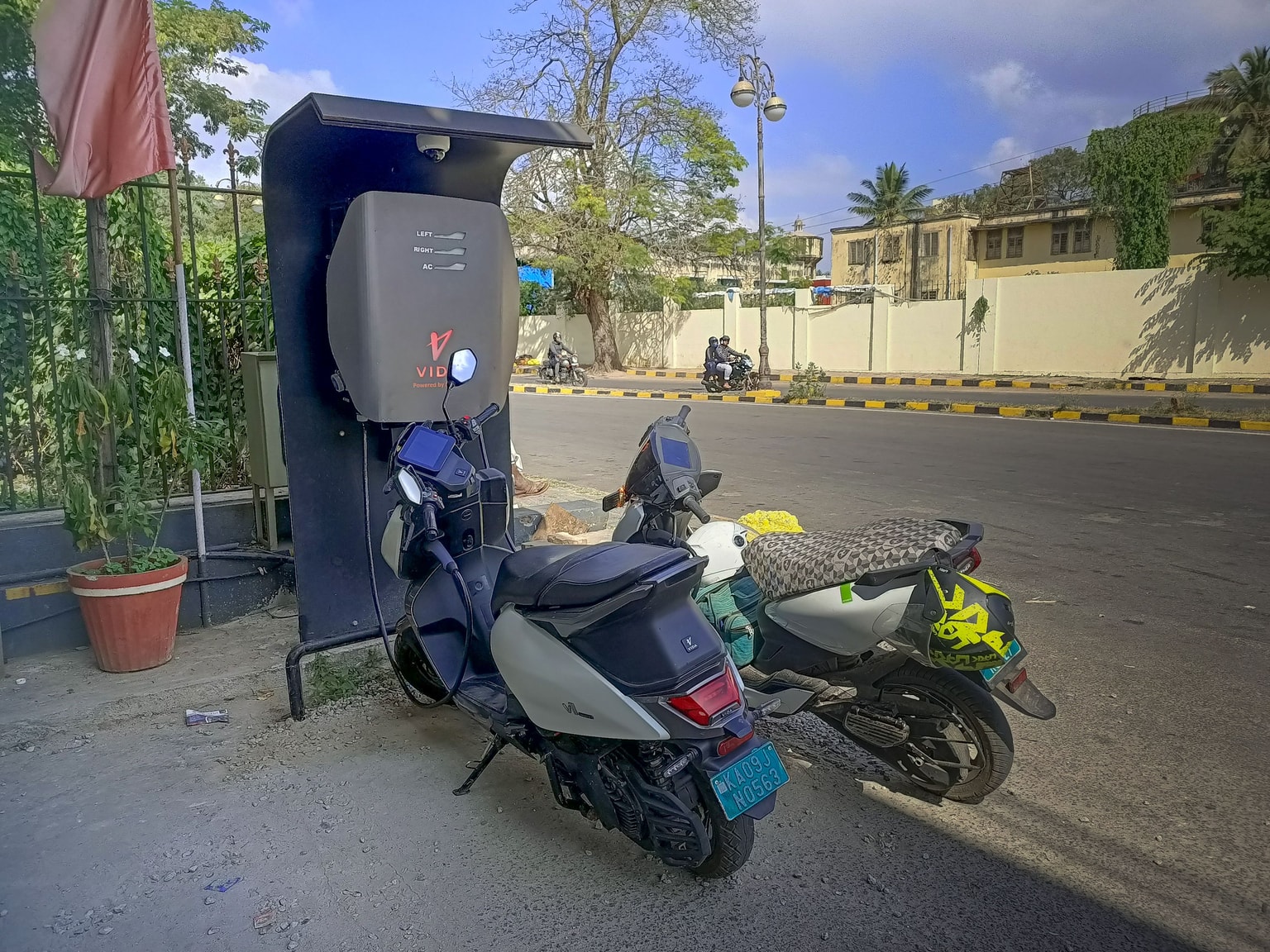
Recognising that these vehicles need power, the policy also includes a pot of federal funding schemes to install 32,000 public EV charging points across the city over the next four years. The policy has a clear ambition - to accelerate the transition to electric mobility across the city of Delhi!
Feeling enlightened or do you think something was missing? Let us know by sharing your feedback.