Electro Beat: Your Monthly Dose of EV News (May 2026)
The world of electric mobility never stands still, and May has delivered plenty to talk about. From record-breaking Formula E race cars and groundbreaking battery technology to solar-powered roads and major fleet electrification projects, innovation is accelerating across every corner of the industry!
Let’s get plugged in…
Formula 1 meets it’s match with the new Gen4 race car
The future of car racing is here and it’s … electric!
Formula E racing gets a new look with the Gen4 era of race cars. Unveiled in the Monaco e-Prix, it’ll make its debut in the 2026/7 season of the ABB FIA Formula E World Championship. Hoping to be 50% more powerful than current F1 cars, these new stats set the benchmark for Formula E speed, and are redefining the race for the audience.
Gen4 Spec
Race power: 450kW (~600bhp) up 50% on the GEN3 Evo’s 300kW (~400bhp)
Speed: >208mph (335kmh)
Acceleration: ~1.8s to 100kmh (62mph)
Maximum power: 600kW (~800bhp) in ATTACK MODE (up 71% on GEN3 Evo’s 350kW)
Regenerative braking: 700k up 17% on GEN3 Evo
The initial push from the start line hopes to beat traditional F1 speeds: hitting 0-62mph in only 1.8 seconds. This rivals even the fastest F1 car by 0.6 seconds - small but mighty in the world of racing. Although this tech looks to beat Formula 1 racing numbers, it doesn’t look to compete in a full race. There’s still little pressure to change the F1 race into electric just yet.
The main purpose is to boost EV technology and see if any of the new speedy drive tech can be utilised on the road. The investment in Formula E tech is seen as a “global laboratory for electric mobility” - the faster these race cars become, the more likely we can see improvements in our everyday EVs.
Formula E bosses are also hoping it’s a way for audiences to connect with the sport - by showing the everyday EV experience.
Similarly, Japan is bringing back real and traditional car racing - taking a road built car and putting it on a track. If you want to get an audience feeling like they’re watching their own car on the road, this is the way to do it.
Filled with pre-production models, these races are built to work with, not against, the electric car structure, with an optimised length of 60km. The races are split into power categories, creating a super optimised experience for the audience.
Rather than the complex battery tech as seen in F1 races, these models are pre-production versions of the everyday brands you’d see on the street:
Tesla Model S Plaid
Model 3 Performance
Hyundai Ioniq 5 N
Honda e
BMW i3 REx
JEVRA is not trying to completely redo the F1 we know and love, it’s bringing back the magic of traditional racing and introducing it to the future of EVs.
AI-Powered software could boost EV battery life by 23%
In the ever-changing world of electric vehicles, automakers have been pushing for faster charging speeds. However, frequent DC fast charging has been known to accelerate battery degradation, meaning older batteries usually lose their ability to handle more aggressive charging. Thankfully, an exciting new breakthrough from researchers at Sweden’s Chalmers University of Technology could offer a clever AI-driven solution.
Introducing the “health-aware” charging algorithm
Published by the IEEE, the study introduces a "health-aware" charging algorithm that actively reads an EV battery's state of health as it ages and seamlessly adapts its charging behaviour. It’s designed to optimise batteries: by monitoring vital signs and looking for early trouble indicators, the software automatically tweaks voltage limits to enhance the charging process.
The results from the team's initial simulations are incredibly promising for the future of EV longevity. Using this new method, the simulated battery lasted through 703 charge and discharge cycles before its capacity dropped below 80%. In contrast, a battery charged using standard, constant-voltage methods only managed 572 cycles.
That is a massive 23% increase in usable battery life! The best part is this extended lifespan doesn't require drivers to sacrifice their time; the AI-managed charge time took 24.12 minutes, virtually identical to the traditional method’s 24.15 minutes. Even better, researchers note the software is advanced enough to eliminate the need for costly, dedicated internal sensors.
While this project is currently in the simulation phase, the technology behind real-time, adaptive charging software is already heading into production. Companies like Breathe are already partnering with major automakers like Volvo to integrate similar smart-charging software into upcoming vehicles, promising to preserve battery health while boosting charging speeds by up to 30%. The future of EV ownership is getting longer, smarter, and more efficient!
Ford confirms five new vehicles for Europe by 2029
After several years of model discontinuations and a quieter presence in Europe, Ford has unveiled a new product roadmap that includes five new vehicles arriving by the end of the decade. The line-up will feature two small EVs, two electrified crossovers, and a new Bronco model built in and for Europe.
The announcement forms part of Ford's new "Ready, Set, Ford" strategy, which aims to strengthen the brand's position in the European market while leaning into its motorsport heritage.
New electric models are on the way
Ford has confirmed plans for:
A new electric supermini
A small electric crossover
Two electrified crossovers
A European-built Bronco
The two smaller EVs will be developed using Renault's AmpR Small platform, the same architecture underpinning the latest generation of compact electric vehicles. Ford says the models will feature unique styling and driving characteristics designed to feel distinctly Ford.
There is also speculation that the electric supermini could become a spiritual successor to the Fiesta, although Ford has not yet confirmed whether the iconic name will return.
Inspired by Ford's rally heritage
A major theme of Ford's new strategy is what it describes as "rally-bred" engineering. While that doesn't necessarily mean high-performance models, it does point towards a greater focus on driving dynamics.
Ford says its engineers will have control over areas such as suspension tuning, steering feel and overall vehicle handling. The company has also suggested future models could retain more physical controls inside the cabin, making them easier to use while driving.
What this means
Ford's latest announcement is a strong signal that the company remains committed to Europe, despite recent cuts to its traditional passenger car line-up.
With affordable EVs, electrified crossovers and a renewed focus on driving enjoyment, the next few years could mark a significant reset for one of Europe's most recognisable automotive brands.
The bigger picture
As competition in the EV market intensifies, manufacturers are looking for ways to stand out beyond battery size and range figures. Ford is betting that brand identity, driving experience and recognisable models will help attract buyers as the transition to electric continues.
Will the Fiesta return as an EV?
Ford hasn't confirmed a name yet, but the company says a decision will be made in the coming months.
Will all five new vehicles be fully electric?
No. While two will be battery-electric models, Ford has said some of the larger vehicles will also offer hybrid powertrains.
When will the new models arrive?
Ford plans to launch the vehicles progressively between now and 2029.
Solar panels in the ground? The renewable energy under our wheels
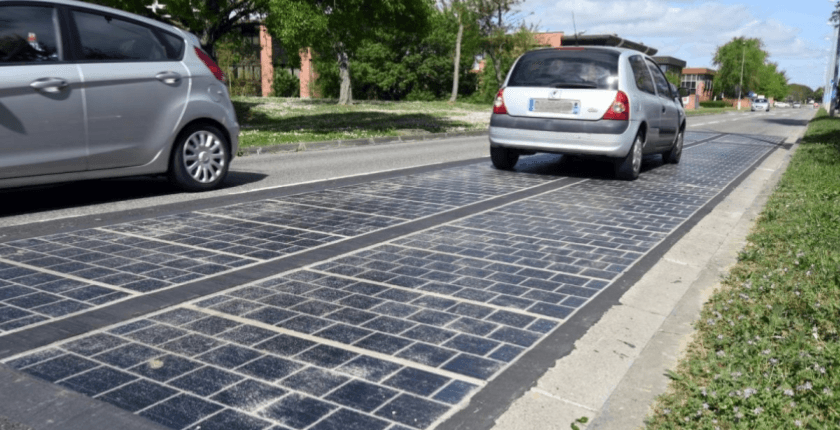
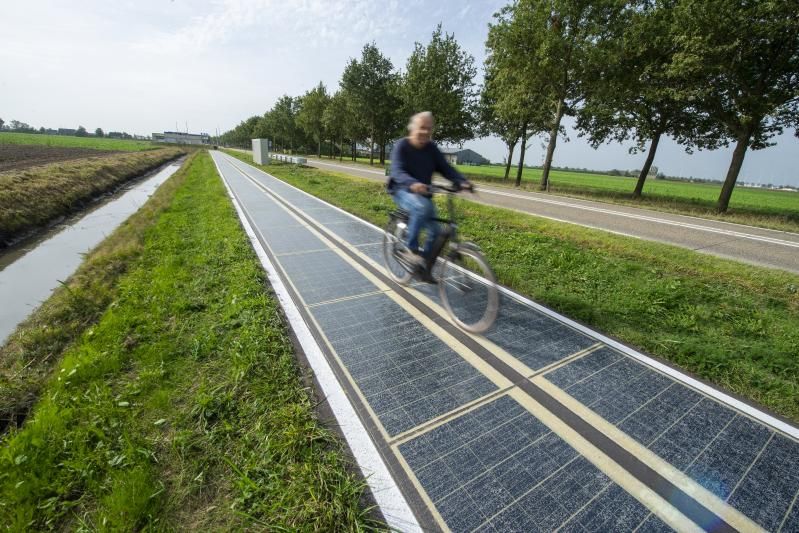
Underfoot solar technology is being deployed in places across Europe: cycle paths, parking areas, pedestrian zones and transport hubs! Wattway technology is focusing on turning underused surfaces into clean energy generators.
One of the most exciting recent projects can be found in the Netherlands, where two 1,000 square metre cycle paths have been equipped with Wattway photovoltaic coatings*. The installations are expected to generate around 160 MWh of renewable electricity annually while making use of infrastructure that already exists.
Photovoltaic coatings are small, protective layers which are applied to solar panels for three main reasons: they’re anti-reflective, self-cleaning and protection from the external environment (scratch and weather proof).
The Wattway projects highlight a growing trend across Europe: finding innovative ways to produce renewable energy without consuming additional land. With more than 35,000 kilometres of cycle paths across the Netherlands alone, the potential scale is significant!
The big Octopus Electroverse x Autotrader survey has launched: comparing fuel-driver fears with EV-driver realities
If you’re still not sure what the reality of owning an electric vehicle looks like, you might be surprised to learn that the "hassle" of electric vehicles (EVs) is largely a myth. A major new report from Octopus Electroverse and Autotraderhas exposed a massive divide between what fuel drivers think and what EV owners actually experience.
The survey of 11,500 drivers from across the UK reveals that while fuel drivers are hesitant, those who have made the switch are enjoying a smoother, cheaper ride.
1. The Great Cost Disconnect
One of the most eye-opening findings is the financial gap. Fuel drivers are nine times more likely to think EVs are expensive to maintain and eight times more likely to assume running costs are higher.
The reality? EV owners are saving an average of £5,850 a year.
2. Satisfaction by the Numbers
The data shows that the "range anxiety" and reliability fears held by many are rarely felt by those behind the wheel of an EV:
Overall Satisfaction: 85% of EV drivers are satisfied, with 48% saying they are "extremely satisfied" (compared to just 31% of petrol/diesel drivers).
Reliability: EV owners are nearly twice as likely to rate their car as more reliable than a fuel vehicle.
Charging: While 50% of fuel drivers dread the thought of charging, 87% of EV owners find home charging easy and convenient.
3. A Rapidly Growing Network
The legacy "where do I plug in?" question is also near redundancy. With over 110,000 public chargers now installed across the UK, two-thirds of current EV drivers report that finding a public charger is now both quick and easy.
The biggest hurdle to going electric isn't the technology, it's the information. There is a fundamental misunderstanding about electric vehicles. And when it comes to preconceptions vs lived experience, the divide deepens.
Fuel drivers are worried about range, they are worried about charging, and they are worried about the fun of driving and performance being lost to a battery.
However, combined research from Octopus Electroverse and Autotrader reveals that almost everything fuel drivers fear about these vehicles is disproven by the people driving them, and remains consistently higher than for fuel drivers the longer a vehicle is owned.
New York passes major fleet electrification milestone
New York State has deployed more than 1,850 zero-emission vehicles (ZEVs) across its government fleet and installed over 1,300 EV charging ports on state-owned properties, marking a significant step in its transition to cleaner transport.
The milestone means that more than 10% of the state's light-duty, non-emergency fleet is now electric, as New York works towards a target of fully electrifying these vehicles by 2035.
Building the infrastructure to support EVs
Alongside expanding its fleet, New York is continuing to invest in charging infrastructure to support future growth.
The state's charging network includes:
More than 1,300 charging ports already installed
Over 550 additional charging ports in development
A mix of Level 2 and DC rapid chargers
Solar-powered charging systems paired with battery storage
This growing network is designed to support both current EV deployments and the next wave of fleet electrification.
More than just emissions reductions
While cutting emissions remains a key objective, fleet electrification is also helping public organisations reduce fuel and maintenance costs over time.
The initiative forms part of a wider strategy to decarbonise transport operations while improving the long-term efficiency of state-owned vehicles.
What does this mean for drivers in NYC?
Large-scale fleet electrification isn't just happening in the private sector. Governments are increasingly leading by example, investing in both vehicles and the infrastructure needed to support them.
By rolling out EVs alongside charging infrastructure, New York is taking a practical approach to ensuring the transition is sustainable over the long term.
New York's fleet programme is part of a broader push to accelerate EV adoption across the state. Recent measures include additional incentives for EV buyers and further expansion of public fast-charging infrastructure.
Together, these initiatives show how vehicle deployment, charging access and financial incentives can work hand-in-hand to support the shift to electric mobility.
How many EVs are in New York's state fleet?
More than 1,850 zero-emission vehicles have been deployed so far.
What types of chargers are being installed?
The network includes Level 2 chargers, DC fast chargers and some solar-powered charging systems with battery storage.
What is New York's electrification target?
The state aims to transition all light-duty, non-emergency government vehicles to zero-emission models by 2035.
Electric fleet takeovers in South and East Africa
E-mobility is sparking change in the fleet industry across the globe - spearheading the electric fleet in Africa!
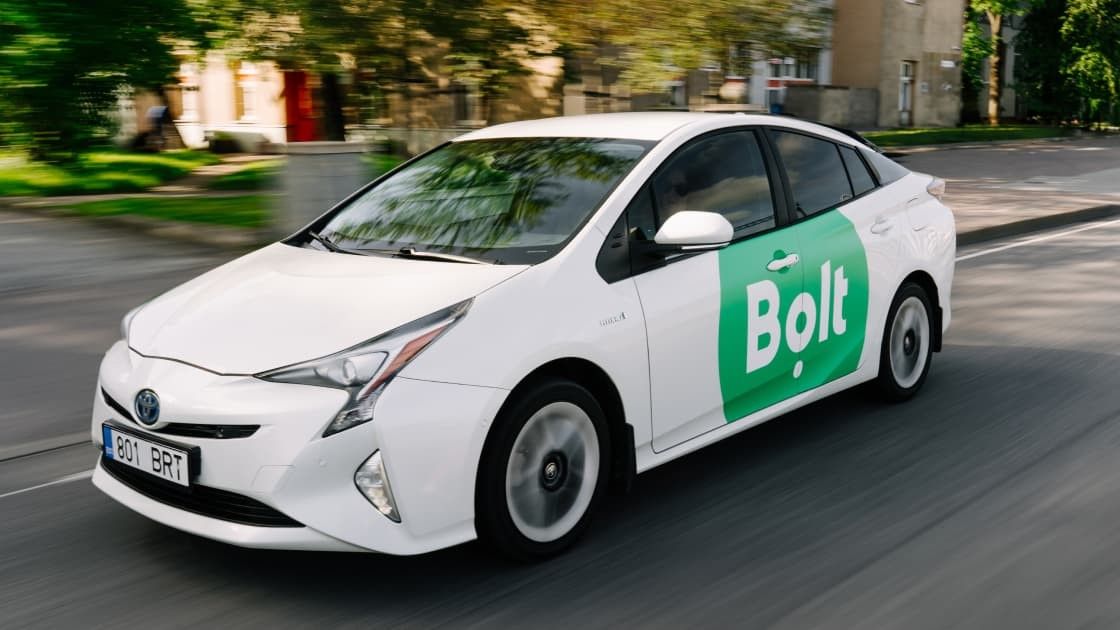
Bolt is increasingly positioning itself as a global powerhouse in shared mobility - and no more so than in fleet electrification. Pushing out their e-mobility strategy into Cape Town with goals to expand to Johannesburg, they are hoping to aggressively scale the category to 500 EVs by the end of 2026.
This is not Bolt’s first rodeo in Africa, launching electric motorbikes in Kenya in 2024. This push to E-mobility is more than just reducing emissions, it hopes to address the rising stress of fuel prices and traditional fuel maintenance - bringing global e-mobility into the future of fleets.
Regional director, Caroline Wanjihia is pushing this new tech and fleet structure forwards with the Bolt statement:
“We are not simply talking about electric mobility in Africa; we are actively building it.”
E-mobility is no longer the concept, it’s becoming the here and now! Uganda’s new strategy echos this with an ambitious $1.7 billion investment in National E-Mobility. The goal is a complete push away from fossil fuels by 2030.
With the push to new electric vehicles, comes the massive infrastructure build to go with it. The government plans to deploy up to 3,500 public EV charging stations across the country.
Currently there’s fewer than 1% of Ugandan vehicles that are electric - mostly motorbikes. However, this push is not limited to the two-wheel solo drive hoping to invest in the fleet's network of public transport buses and the country's massive network of boda bodas (motorcycle taxis).
There’s potential for huge success with this strategy, already successfully piloting 37 electric buses on the Jinja-Iganga corridor. The 2030 goals hope to not only slash transportation emissions by 25%, but create over 500,000 green manufacturing jobs across the nation.
Are you a fleet? Check out our business platform for all your charging needs. Keeping fleet electrification simple with Octopus Fleet.
Feeling enlightened or do you think something was missing? Let us know by sharing your feedback.