Electro Beat: Your Monthly EV News (September 2026)
Welcome to the September 2026 edition of Electro Beat, your quick catch up on everything electric! This month, EV technology reaches huge new milestones - from an Audi e-tron covering a record-breaking 1,338 km on a single charge to clever new city cars designed for urban streets. Plus, we explore major fleet breakthroughs, including Deutsche Post’s 40,000-vehicle fleet milestone, megawatt HGV charging, and how used EVs are going mainstream.
Let’s get plugged in…
Proving EVs are built for the long haul: Audi does 1,338 km on a single charge
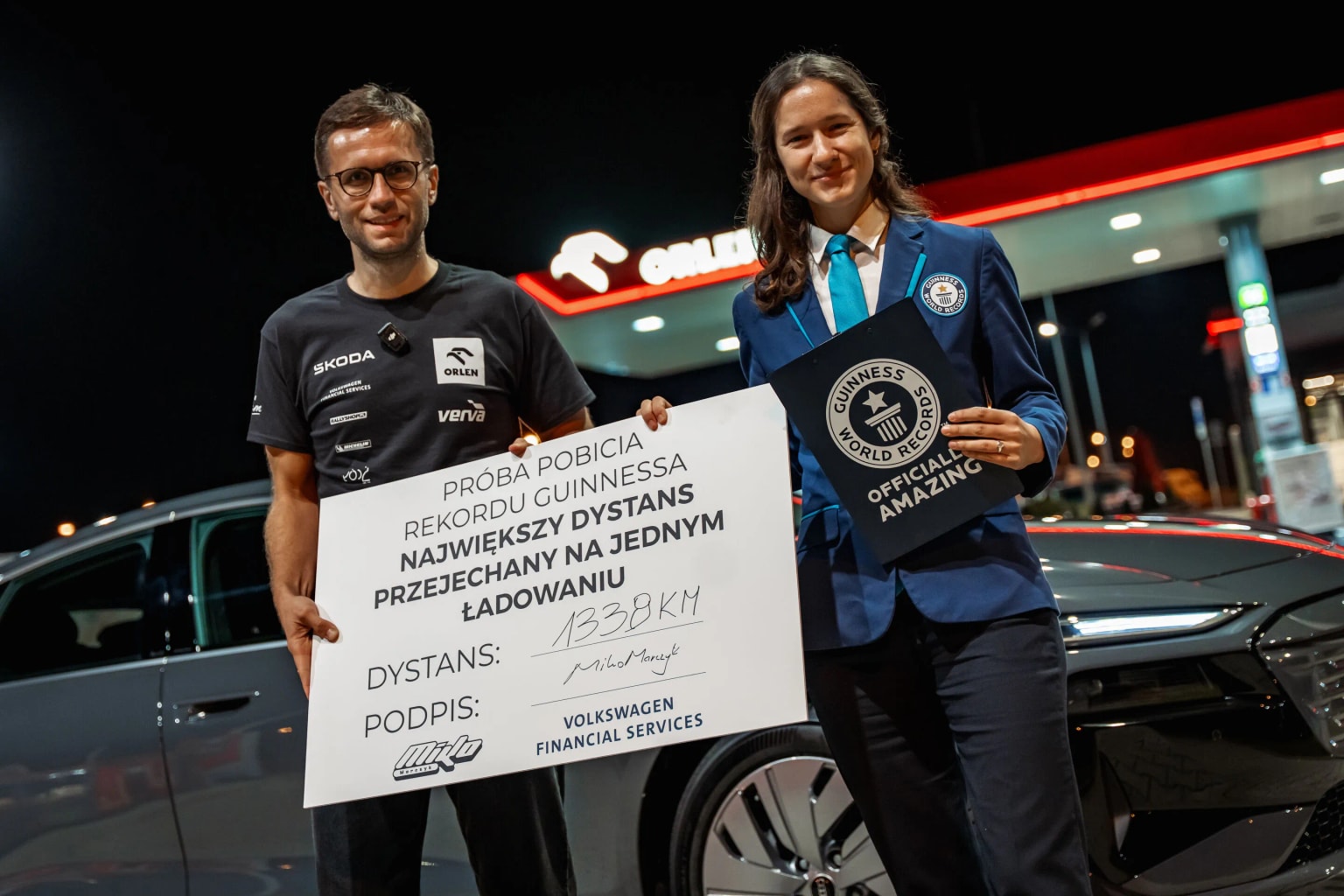
European Rally Champion Miko Marczyk has recently set a seriously impressive Guinness World Record by driving an Audi A6 Sportback e-tron performance a whopping 1,338 kilometres (approx. 831 miles) on a single battery charge.
To put that into context, that’s roughly the distance from London to Marseille without stopping once to plug in.
What was the journey?
What makes this record particularly impressive isn't just the distance; it’s the conditions it was achieved in. Hyper-miling attempts often take place on smooth, temperature-controlled test tracks. Marczyk, however, took to public roads.
Starting on September 11, his route followed the Vistula River from Kraków up to Hel on the Baltic coast, and then back again. Over a 45-hour journey, he navigated everyday road conditions, urban traffic congestion, and chilly early-morning temperatures dropping down to 7°C.
The vehicle itself wasn't a lightweight prototype either. It was a standard 367 hp executive EV with a 94.9 kWh usable battery pack. You can pick up the same car in showrooms right now.
What actually made it possible?
The Audi A6 Sportback e-tron performance carries an official WLTP rating of 777 km (482 miles). Marczyk managed to carve off nearly 72% of that baseline figure, finishing with an average consumption rate of just 7.09 kWh per 100 km (approx. 8.8 miles per kWh).
Achieving that level of frugality came down to a combination of cutting-edge vehicle engineering and some conscious driving habits:
Aerodynamic Dominance: With a drag coefficient (Cd) of just 0.21, the A6 Sportback e-tron is Audi’s most aerodynamic production vehicle ever. Given that wind resistance accounts for about 40% of energy consumption at higher speeds, sleek design does a lot of the heavy lifting.
Maximised Energy Recovery: Modern EV powertrains handle up to 95% of deceleration through regenerative braking. Smooth, gradual slowing allowed power to feed constantly back into the battery.
Predictive Driving: Maintaining optimal tyre pressures and reading the traffic ahead to avoid sudden acceleration kept rolling resistance and wasted kinetic energy to a minimum.
A masterclass in the future of EV tech
In the real world, nobody is likely spending two straight days driving at hyper-frugal speeds to get where they need to go; but this record serves as some incredible proof of the future of EV tech.
It showcases just how rapidly battery technology, thermal management, and aerodynamics are advancing. As vehicle platforms evolve, energy efficiency continues to leap forward - offering an exciting peek at the reality of what next-gen electric mobility can deliver!
The little EVs making a big impression
Not every EV needs to be enormous. Meet two small electric cars bringing a little more fun to city driving.
Two new electric city cars are bringing compact dimensions, quirky styling and a bit of fun back to the EV market. Nissan's new Pixo and Honda's Super-N are both designed for urban driving, with enough range for everyday journeys and interiors that make surprisingly good use of their tiny footprints.
And, perhaps most importantly, neither takes itself too seriously.
Meet the Nissan Pixo
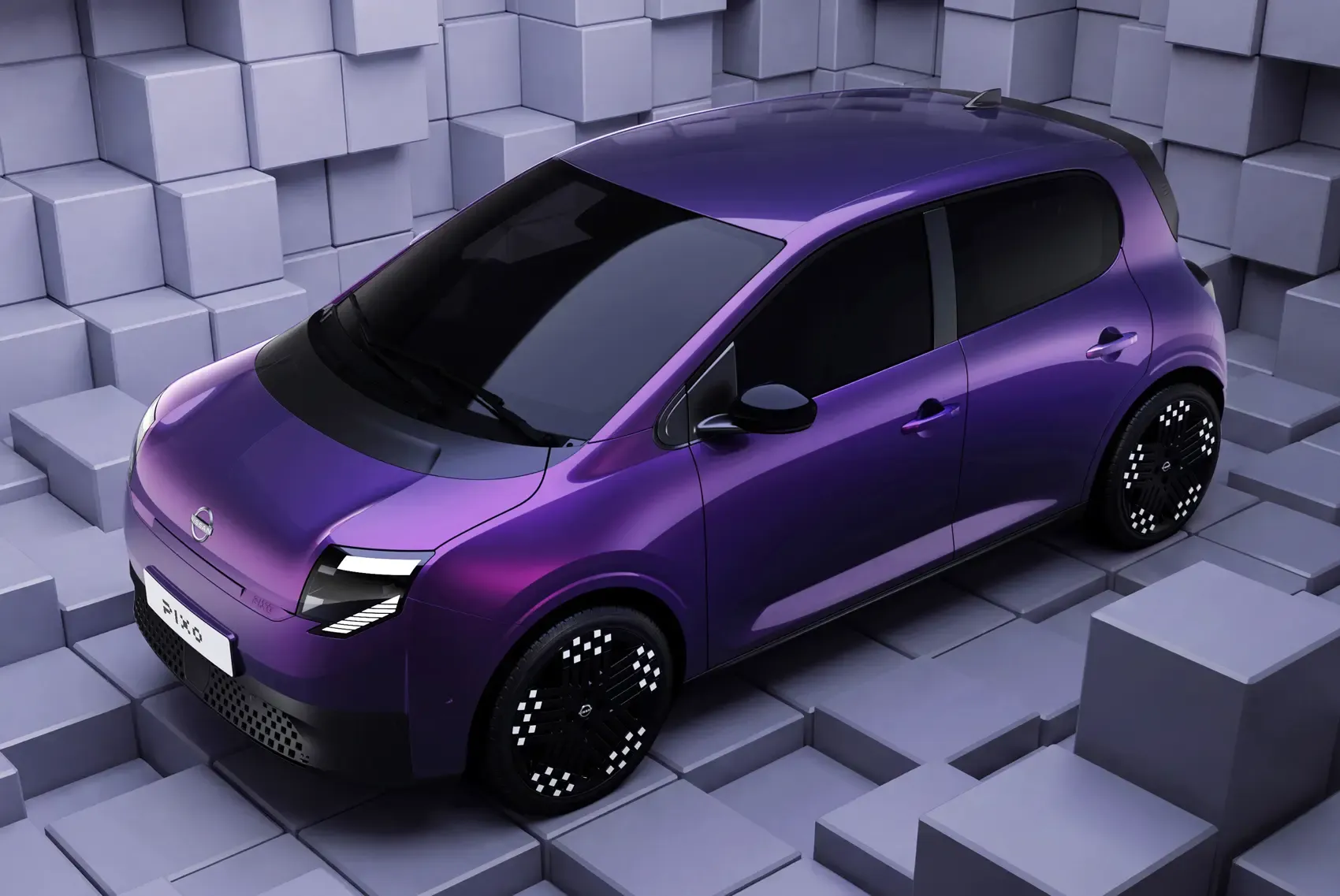
Arriving in the UK in early 2027, the new Nissan Pixo is a cube-shaped supermini with a distinctly retro-futuristic look - think pixel-style lights, funky square alloys and what Nissan calls a "robot face".
Underneath the playful styling is a 27.5 kWh battery offering up to 161 miles of range. There's also 50 kW DC rapid charging, taking the battery from 15-80% in around 28 minutes.
It's small, but Nissan hasn't forgotten about practicality. Sliding and folding rear seats help free up as much as 356 litres of boot space, while a 9.9-metre turning circle should make squeezing into tight city streets and parking spaces a doddle.
Nissan hasn't confirmed UK pricing yet, but the Pixo is expected to be one of the more affordable new EVs when it arrives.
Tiny battery, useful range: The Pixo's 27.5 kWh battery is considerably smaller than those found in many new EVs, but its claimed 161-mile range shows how a lightweight, compact car doesn't necessarily need a huge battery to cover everyday journeys.
Honda's Super-N joins the party
The Pixo isn't the only small EV turning heads. Honda's Super-N has already arrived with a similar recipe: compact dimensions, retro-inspired styling and a focus on making city driving fun.
Starting at around £19,000, the Super-N uses a 29.6 kWh battery and delivers around 120 miles of real-world range. Its small footprint makes it easy to manoeuvre and park, while Honda has packed in some clever touches inside.
The rear "Magic Seats" can fold flat or flip upright, creating considerably more flexibility than you'd expect from such a small car. There's even a Sport and Boost mode for when you fancy making your commute a little more entertaining.
Why go small?
There's a bigger idea behind these tiny EVs. Cars have been getting larger and heavier for years, but not every journey needs a huge SUV and a massive battery.
For drivers who mainly commute, nip around town or have access to another car for longer trips, a smaller EV can mean:
Easier parking and manoeuvring
A smaller battery to charge
Lower energy consumption
Less space needed on increasingly crowded streets
A potentially lower purchase price
What Deutsche Post’s 40,000 EVs mean for the EV revolution
On International Green Postal Day, Deutsche Post AG announced a massive milestone: they now have 40,000 electric vehicles delivering post and parcels across Germany! Paired with a depot network powered by over 44,000 charging points running on 95% renewable energy, Deutsche Post now officially operates the largest electric delivery fleet in a single market anywhere in the world.
This isn't just a win for Germany, it's a huge step forward for global zero-emission transport!
International Green Postal Day was created in 2019 by the CEOs of postal operators participating in the IPC Sustainability Measurement and Management System (SMMS) program. In order to celebrate and highlight the effectiveness of industry-wide collaboration when it comes to reducing CO2 emissions!
Big fleets, bigger impact
Postal providers across the International Post Corporation (IPC) network have also been sharing their progress towards reducing their CO2 output and the broader picture is even more encouraging:
Emissions down 41%! Participating postal networks have slashed total annual emissions by 41% compared to 2008 levels.
This progress puts the global sector well on track to hit its target of a 50% CO₂ reduction by 2030.
In Germany alone, Deutsche Post delivers completely carbon-free in more than 1 in 3 delivery districts.
"Climate change is a physical challenge, not a political one... The successful electrification of delivery operations shows what is already achievable today." - Tobias Meyer, CEO of DHL Group
What’s next?
Getting zero-emission vans into neighborhood streets is a positive move in the right direction, but electrification shouldn’t end at local delivery. The next big target is long-haul freight!
Deutsche Post is already racing ahead, by having 50 electric HGVs (Heavy Goods Vehicles) and 570 bio-CNG (Biological Compressed Natural Gas) vehicles travelling on high traffic roads. In September, the IPC also released a helpful tool: the Carbon Footprint Calculator, which tracks emissions on millions of individual shipments. With the help of this calculator, e-commerce merchants and shoppers are getting the transparent, clean supply chains they deserve! Data has already been collected for over 95 million parcel shipments.
How a US university is putting its car park to work
Parking lots aren't usually the most exciting places. But at the University of Washington in Seattle, one is getting a rather clever upgrade: a solar canopy that generates renewable electricity while keeping the parking spaces underneath in use.
The university has installed an 86.4 kW solar canopy over part of its E18 parking lot, with 20 EV charging spaces underneath. The solar power currently feeds into the university's electricity grid, while the charging points give students, staff and visitors somewhere to plug in.
Parking + solar + EV charging
The clever bit is that the university hasn't had to sacrifice valuable parking space to make room for the solar installation. The panels sit above the existing spaces, providing some shelter for cars while turning otherwise unused overhead space into a source of renewable energy.
And this is only the beginning.
The current canopy is a pilot project, but the University of Washington is exploring expanding solar canopies across the E18 lot and neighbouring E01 lot. If fully built out, the combined installation could generate up to 8 MW of solar power – enough to provide around 5% of the university's total electricity use.
A brighter use for parking space: The project is a neat example of how existing infrastructure can do more than one job. Instead of choosing between parking, solar generation and EV charging, a solar canopy can bring all three together in the same space.
For now, the 20 charging spaces are already up and running. If the larger solar project goes ahead, a parking lot best known for cars - and football tailgating - could become a significant source of renewable electricity for the campus too.
BMW inspires the next generation of EV engineers with primary school sessions
In the UK, the automaker BMW has just launched Apprentice 2036, an educational initiative designed to introduce children as young as five to the world of electric vehicle engineering and green technology.
The project is centred around The Spark Lab, a hands-on, practical EV engineering workshop tailored specifically for five- and six-year-old primary school students.
What happens in The Spark Lab?
The Spark Lab gives children a hands-on introduction to how clean mobility works. Through interactive building, basic electrical concepts, and team problem-solving, kids get to experiment with how power moves from energy storage to motion.
The goal is to help break down the enigma around engineering and show young learners that STEM (science, technology, engineering, and maths) is creative, approachable, and fun.
Why is this so important?
The initiative is grounded in some eye-opening research. A survey of 2,500 UK parents conducted by BMW revealed that 58% of parents start thinking about their child’s future career while they’re still in primary school (ages 4 to 11). In fact, ages four to six were the single most common starting point cited by parents.
Compare that to previous generations, where half of parents only started career conversations when their kids hit 15 to 18.
76% of parents believe primary pupils should have more opportunities to visit workplaces and engage in practical science and engineering.
78% of parents expect artificial intelligence and technology to radically reshape available jobs by the time their children enter the workforce.
For an industry transforming as rapidly as clean transport, closing the skills gap is a long game. Children starting primary school today will be entering the workplace right around 2036 - a milestone year when zero-emission transport will be the standard baseline across the globe.
By sparking curiosity early, initiatives like this help demystify technology, encourage girls and boys alike to explore engineering, and ensure the next generation grows up viewing electric mobility not as a novelty, but as normal.
Renault España to invest €600 million on EV production
and regional public funding, combined with Renault’s own investment, this huge drop is aimed at industrial transformation, not just in the vehicles but in the manufacturing structure.
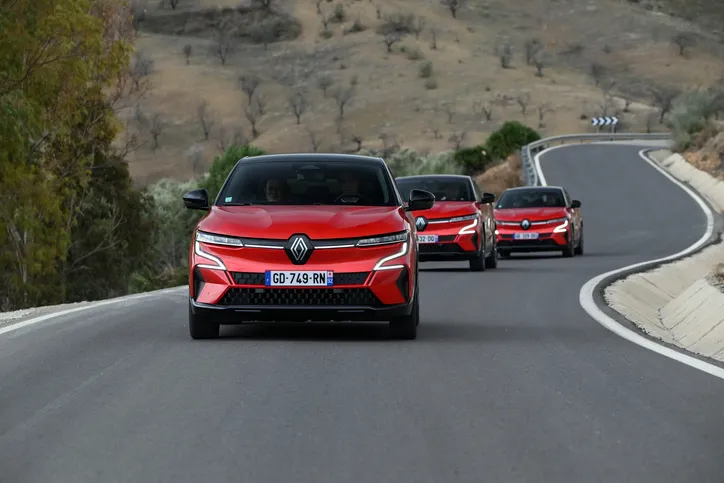
The main aim is sustainable mobility, with 2 out of the 5 new models being fully electric - a first for Renault Spain. The Palencia plant will host the production of the EV models, using a native EV platform with 800-volt architecture and 750km WLTP range, with up to 1,400km range extenders. Simply put, this allows for longer drives between charges, and faster charging times when you do.
Renault explained their strategic decision based on 3 main factors:
Competitiveness in the market
Long term commitment to Spain
Creating over 6,000 jobs within Spanish automobility.
The History of Renault‘s Electric Journey in Spain
Twizy Era 2011-2019
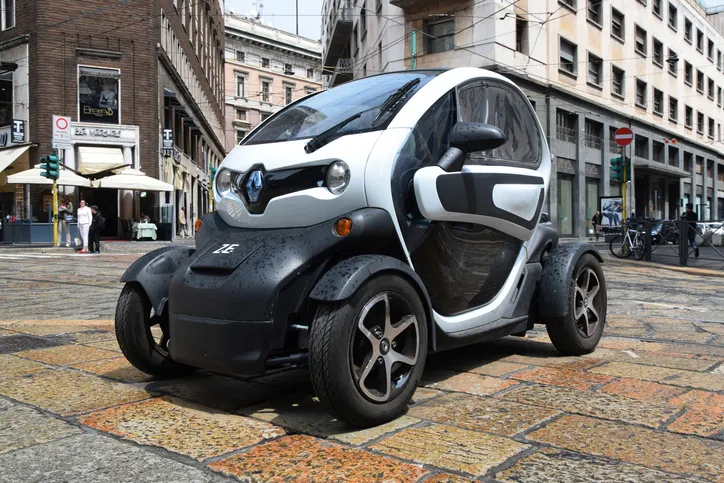
Renault Spain’s first electric vehicle was surprisingly not a traditional EV. The Renault Twizy, a 2 seater electric quadricycle. It was traditional Renault style shaped into a mini vehicle. Although not a high volume winner, it was the start of Renault Spain’s intro into electric batteries.
Are used electric vehicles the future of transport?
Used EVs are rapidly becoming the go-to choice for drivers and commercial operators! They are affordable, increasingly accessible, and deliver lower running costs alongside zero tailpipe emissions.
The market reflects this: Octopus Electric Vehicles (OEV) says the used EV demand jumps by 150% every year! On top of this, Car360 and EV Experts have shared that the average time it takes to buy, prepare, and sell a used EV has dropped from 57 days down to under 30 days.
What’s changing?
Dealership knowledge: Retailers like Greenhous Group are building dedicated, tech-focused teams to deliver clear, accurate advice on battery health and charging setups.
First-hand experience: Companies like Johnsons Fleet Services encourage sales teams to drive EVs as company cars, giving staff direct experience with daily charging and real-world range to pass on to customers.
Informed buyers: Customers are walking into showrooms having already done their homework on batteries, charging speeds, and running costs.
Fewer returns: Return rates at specialist retailers have plummeted below 2%, with most returns driven by lifestyle adjustments (like needing a larger boot) rather than regret over making the electric transition.
"When we first started, finding dealerships that were genuinely enthusiastic about EVs wasn't easy. That's changed beyond recognition. The best aren't trying to convince people to go electric - they're helping them choose the right car and making the switch simple." - Gurjeet Grewal, CEO of Octopus Electric Vehicles
It’s not just cars!
Auctions for commercial, electric vans that were once dominated by a handful of specialist buyers now attract a much broader base of operators and fleet managers! Plus, the valuation of these vehicles has only taken a -0.7% adjustment over the past three years, demonstrating the stability of the market.
Used electric vehicles are taking over! By offering modern battery technology and lower operating costs at accessible prices, used EVs are making zero-emission driving available to a much wider audience!
Charging for fleets in all shapes and sizes
Welch transport is on track to have 12% electric vehicles by January 2027, but more than that are the site of huge HGV charging infrastructure steps. Working alongside the eFreight 2030 project, Welch became the first operator to put an electric tractor on the road with a 42-tonne Renault Trucks E-Tech T.
What is eFrieght 2030? It’s the UK government funded scheme to promote e-mobility across all sizes of fleet vehicles. So far, they’ve electrified 26 eHGV and 1380.74 tonnes of CO2 saved (as per the website stats). It’s part of their aim to introduce 88 electric HGVs and 25 megawatt-scale hubs nationwide
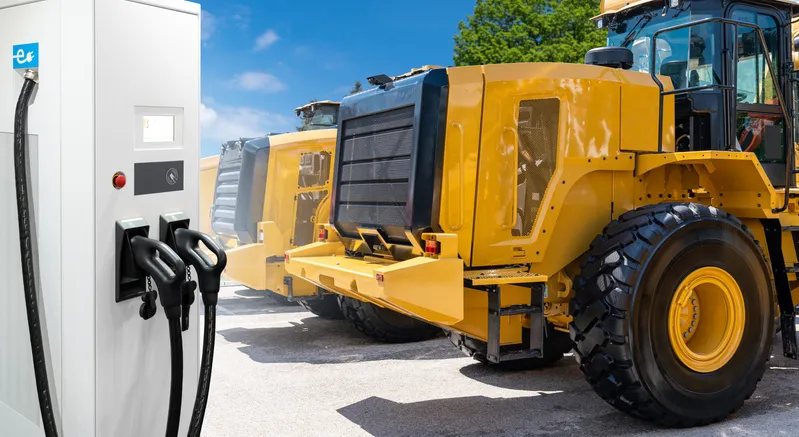
Working in partnership with Voltempo’s HyperCharger tech, Welch has introduced its first megawatt charging hub in their depot. With six charging bays, and two full-length drive-ins, it’s designed for complete tractor and trailer combinations and delivering up to 1MW of power across the site!
“We made the decision early on that we wanted to be at the forefront of electric freight, but it has always had to make commercial sense. We’ve invested in the trucks, learned how to operate them in the real world and now have the high-power infrastructure at Cambridge and Bedford to support the next stage.”
“Combining high utilisation with access to competitively priced energy helps drive down charging costs and strengthens the business case for electric HGVs, and demonstrates how the investment made through eFreight 2030 is having an impact far beyond the consortium itself.”
This work in Cambridge towards larger vehicle charging, on the fleet scale is, setting the groundwork for UK rollout. Although, with fleets there’s always multiple moving parts to consider when looking at charging. Here’s some of the features Welch are considering in their production:
Depot flexibility software, using real shift patterns, the actual vehicle specs, and comparing with the site limitations to ensure smooth and realistic charging.
Working with the operational schedules of Welch’s own fleet, including the 42-tonne trucks, to recharge on site.
And it doesn’t stop with the home fleet! The site offers extra capacity to offer charging to third party commercial fleets.
This tech is not only revolutionary to Welch Transport’s fleet electrification, but it sets the precedent and growth to support expansion across UK sites - and can even serve the wider fleet community.